Brazil Hyperlocal Delivery and Dark Kitchen Market Size and Forecast (2021–2030) - Trends and Growth Drivers with Analysis by Sector, Nature of Services, Categories of Food, Consumer Profiles, and Geography
Brazil hyperlocal Delivery Market Size
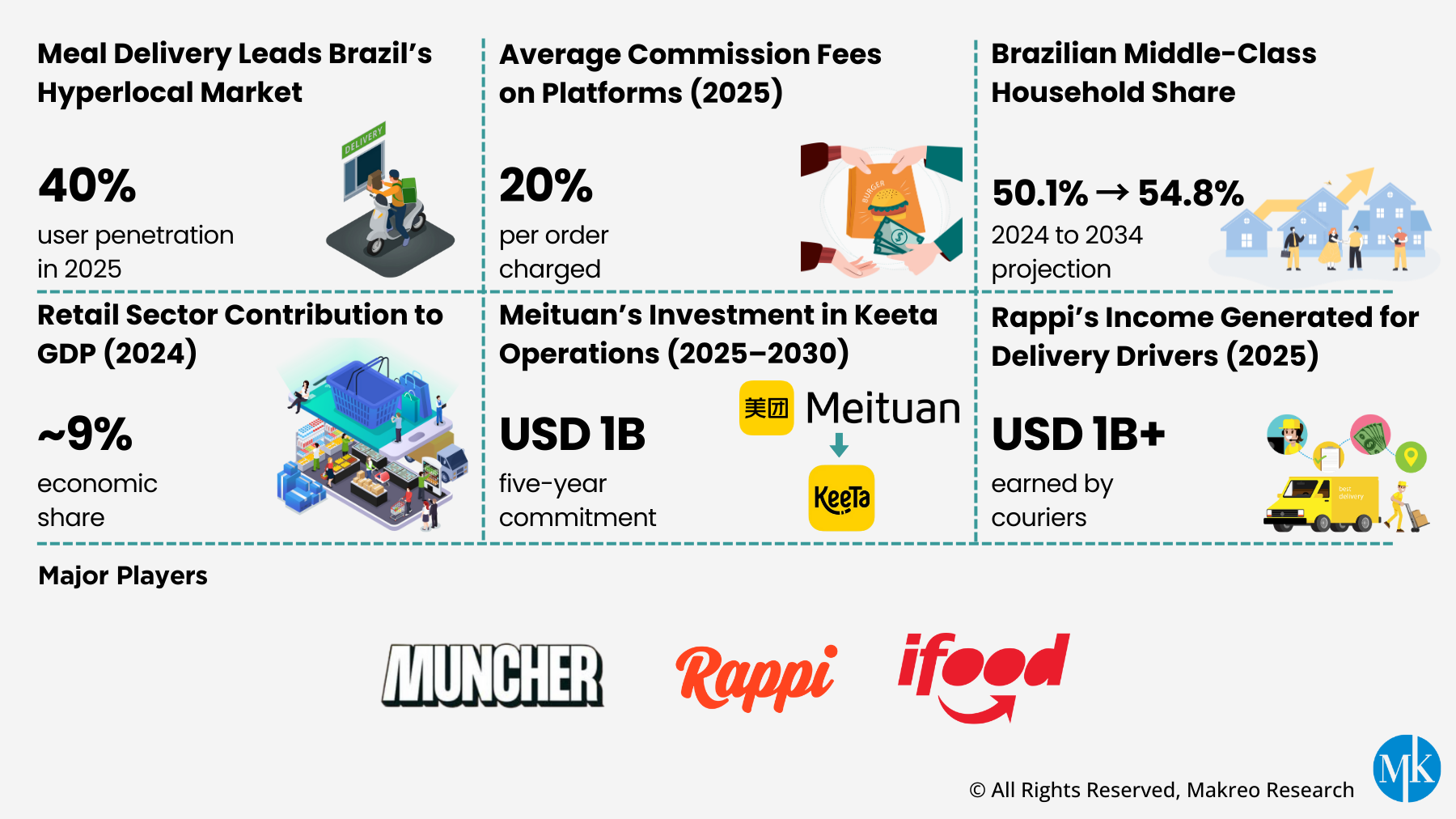
In 2024, Brazil’s hyperlocal delivery market and dark kitchen sector demonstrated robust momentum, achieving a CAGR of 18.6% (2021–2025), highlighting the rapid expansion of last-mile delivery services. The country’s evolving socioeconomic landscape further supports this growth, with nearly half of households classified as middle class in 2024, a figure projected to exceed 50% by 2034.
Brazil’s e-commerce sector continues its rapid expansion and is forecasted to reach USD 40 billion by 2025, supported by an estimated 100 million online shoppers and a user penetration rate rising from 68.7% in 2024 to nearly 70% by 2030.
Within this landscape, dark kitchens in Brazil are emerging as a significant driver of food-tech growth. On leading online food delivery platforms, dark kitchens now constitute about one-third of listed restaurants, while in major metropolitan hubs such as São Paulo, they account for over 35% of all meals delivered via apps.
Brazil Retail Industry and Supermarket Market Overview
-
The Brazil retail industry is poised for continued growth, with supermarket revenues projected to reach USD 100 billion by the end of 2025, according to the Brazilian Supermarket Association (ABRAS). The sector comprises 414,663 retail outlets, serving approximately 30 million consumers daily.
-
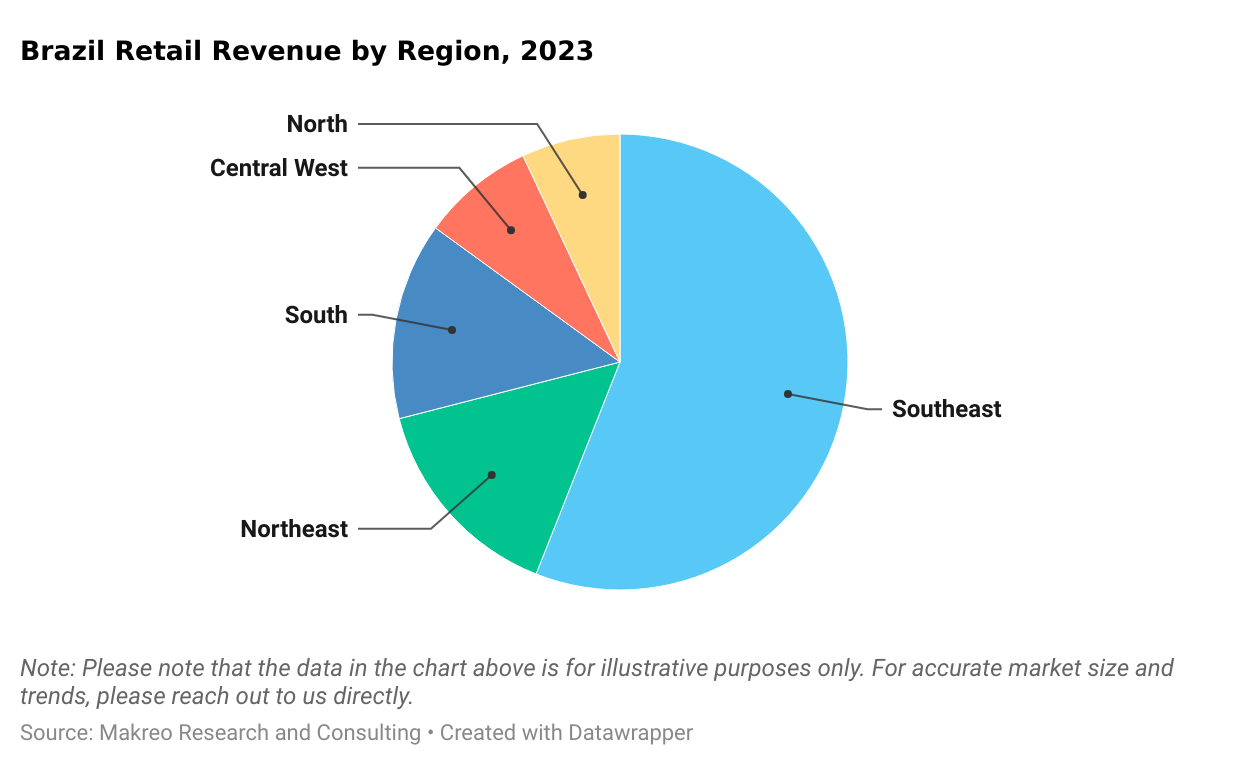
The Southeastern region of Brazil has the largest share of the retail industry, with more than 1/3rd of revenues and ~7,000 stores.
Brazil Hyperlocal Delivery and Dark Kitchen Industry Insights
Brazil E-Commerce Market - Scale, Consumer Penetration & Key Growth Driver
-
Brazil hosts the largest e-commerce market in Latin America, with B2B e-commerce accounting for the majority of transactions.
-
In Brazil, online sales of perishable goods are becoming commonplace with well-established players (Shopee, Amazon, AliExpress, and Shein).
-
Key growth drivers include a rising middle class, improvements in logistics and online marketplaces, and consumers embracing the convenience and price savings of online shopping.
Brazil Consumer Trends Driving Hyperlocal Delivery & Dark Kitchens
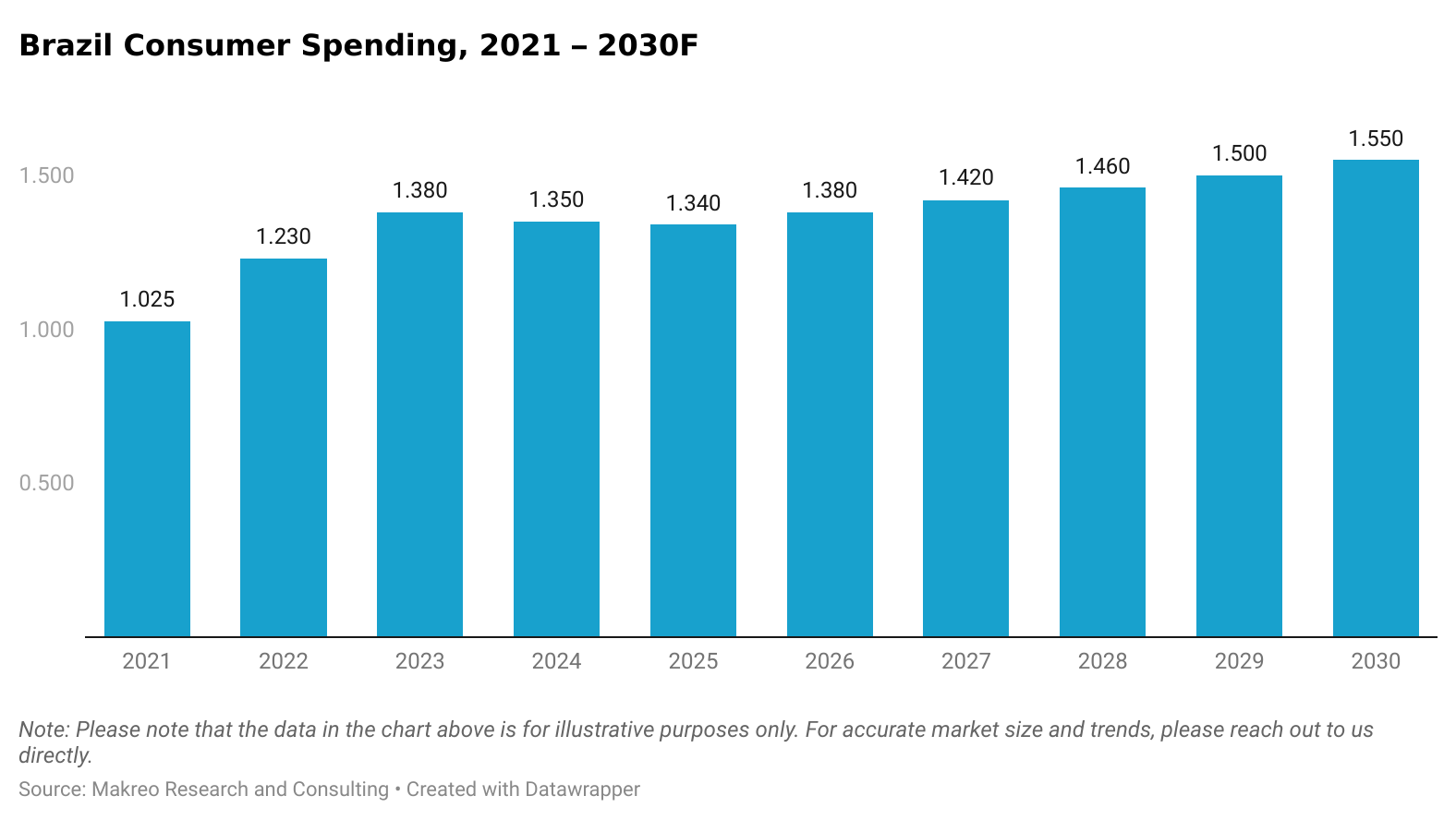
Brazil’s consumer spending is projected to grow to USD 1.55 trillion by 2030, reflecting steady economic expansion and rising purchasing power. This upward trend provides a strong tailwind for the hyperlocal delivery and dark kitchen sector, as higher disposable incomes boost spending on convenience-driven services such as food delivery.
With consumers increasingly valuing speed, variety, and digital-first experiences, dark kitchens are well positioned to capture a larger share of this expanding wallet.
Scope of the Study for Brazil Hyperlocal Delivery and Dark Kitchen Market
Makreo Research has published a comprehensive report titled “Brazil Hyperlocal Delivery and Dark Kitchen Market Size and Forecast (2021–2030) - Trends and Growth Drivers with Analysis by Sector, Nature of Services, Categories of Food, Consumer Profiles, and Geography”, offering an in-depth assessment of Brazil’s rapidly expanding food-tech ecosystem and last-mile delivery market.
Key Growth Drivers
-
Performance metrics across meals, groceries, and pharmacy delivery segments.
-
Expansion trends of dark kitchens by region and food category.
-
Market sizing and usage data, including order volumes, average revenue per user (ARPU), and adoption patterns across generations.
-
Key growth drivers, such as increasing urbanization, rising internet penetration, and higher consumer spending.
-
Influence of e-commerce and retail growth, alongside evolving lifestyle trends, on the adoption of hyperlocal delivery services in Brazil.
The report also includes:
-
Competitive Landscape Assessments
-
Business Model Analysis
-
Delivery Network Evaluation
-
Restaurant Participation Insights
-
Market Forecasts
-
Scenario Analysis
-
Actionable Insights for stakeholders such as policymakers, investors, platforms, and restaurants.
Brazil Hyperlocal Delivery & Dark Kitchen Market Outlook
-
The report provides a forward-looking analysis of Brazil’s hyperlocal delivery market and dark kitchen sector, forecasting sustained double-digit growth through 2030.
-
It examines the impact of quick commerce in Brazil, regional diversification, and technological adoption in shaping the future trajectory of the industry.
-
The outlook is designed to support strategic planning, capacity expansion, and investment decisions, enabling stakeholders to align with evolving consumer preferences.
-
Emphasis is placed on Brazil’s expanding food-tech ecosystem, which will continue to redefine last-mile delivery and restaurant operations.
Strategic Insights for Brazil Hyperlocal Delivery & Dark Kitchen Market
-
The study provides actionable recommendations for platforms, dark kitchen operators, policymakers, and investors.
-
It underscores the importance of diversified service offerings, stronger delivery networks, and ecosystem partnerships to capture market opportunities.
-
Highlights the need for regulatory clarity, digital infrastructure, and payment ecosystem development to sustain industry growth.
-
These insights are crafted to guide operational strategies, market entry, and policy frameworks, supporting a competitive and resilient Brazil hyperlocal delivery and dark kitchen market through 2030.
-
2021 – 2025: Past and Present Scenario
-
2025: Base Year
-
2026 – 2030: Market Outlook
Brazil Hyperlocal Delivery & Dark Kitchen Market Segmentation
-
Platform Meal Delivery
-
Grocery and Retail Delivery
-
Quick Commerce
-
Goods Delivery
-
Utility Services
-
Gen Z (16–24 years)
-
Millennials (25–39 years)
-
Gen X (40–54 years)
-
Boomers (55+ years)
Geography Assessed
-
São Paulo
-
Campinas
-
Limeira
-
Others
-
Brazilian Food
-
Snacks & Desserts
-
Other Categories
-
Customer base & order volumes
-
Pricing strategies & service accessibility
-
Regional coverage
-
Partnerships with restaurants and merchants
-
Company profiles of leading domestic and international operators
-
Strategic direction, business models, technology adoption, and financials
-
Recent developments include:
-
Mergers & acquisitions
-
Funding rounds
-
Partnerships
-
Expansion into new cities and food categories
-
Companies Covered in the Brazil Hyperlocal Delivery and Dark Kitchen Market
-
iFood
-
Rappi Brasil Intermediação de Negócios Ltda.
-
Muncher Brasil Ltda.
There are 13 players covered in this report. To know more, please reach out to [email protected]
Looking for a Section from Report? Start your Partial Purchase Request
Table of Contents
- 1.Research Methodology
- 1.1.Objective of the Study
- 1.2.Research Design and Procedure
- 1.3.Data Collection Methods
- 1.4.Methodology of Research
- 1.5.Analytical Framework
- 2.Brazil Hyperlocal Delivery and Dark Kitchens Market Past and Present Performance
- 2.1.Brazil Hyperlocal Delivery and Dark Kitchens Market - An Overview
- 2.2.Brazil Hyperlocal Delivery and Dark Kitchens Market Past and Present Performance
- 2.3.Brazil Hyperlocal Delivery Market Past and Present Performance
- 2.4.Brazil Dark Kitchens Market Past and Present Performance
- 3.Brazil Hyperlocal Delivery and Dark Kitchens Market Segmentation
- 3.1.Brazil Hyperlocal Delivery and Dark Kitchens Market Segmentation
- 3.1.1.Brazil Hyperlocal Delivery Market Segmentation by Sectors
- 3.1.2.Brazil Hyperlocal Delivery Market Segmentation by Sector ARPU
- 3.1.3.Brazil Hyperlocal Delivery Market Segmentation by Nature of Services
- 3.1.4.Brazil Hyperlocal Delivery Market Segmentation by Age and Generations
- 3.1.5.Brazil Dark Kitchens Market Segmentation by Region/Cities
- 3.1.6.Brazil Dark Kitchens Market Segmentation by Categories of Food
- 3.1.Brazil Hyperlocal Delivery and Dark Kitchens Market Segmentation
- 4.Brazil Key Industry Analysis
- 4.1.Brazil E-commerce Industry Analysis
- 4.2.Brazil Retail Industry Analysis
- 5.Brazil Hyperlocal Delivery and Dark Kitchens Market Competitive Landscape
- 5.1.Customer/User Base of Major Brazil Hyperlocal Delivery and Dark Kitchens Market Players
- 5.2.Brazil Hyperlocal Delivery and Dark Kitchens Market Key Players by Order Volume
- 5.3.Brazil Hyperlocal Delivery and Dark Kitchens Market Delivery Partners and Merchants of Key Players
- 5.4.Brazil Hyperlocal Delivery and Dark Kitchens Market Players Geographical Presence
- 5.5.Brazil Hyperlocal Delivery and Dark Kitchens Market Players Business Focus Areas
- 5.6.Brazil Hyperlocal Delivery and Dark Kitchens Market Developments and Future Plans
- 6.Brazil Hyperlocal Delivery and Dark Kitchens Market Mergers /Acquisitions/ Investments/ Divestments
- 6.1.Mergers /Acquisitions/ Investments/ Divestments
- 7.Brazil Hyperlocal Delivery and Dark Kitchens Market Funding Timeline
- 7.1.Funding Timeline
- 8.Brazil Hyperlocal Delivery and Dark Kitchens Market Company Profiles
- 8.1.iFood - Business Overview
- 8.1.1.iFood – Company Timeline
- 8.1.2.iFood - Business Highlights
- 8.1.3.iFood – Key Operational Highlights
- 8.1.4.iFood – Business Financials
- 8.1.iFood - Business Overview
- To enquire other players covered, review sample report
- 8.10.Brazil Hyperlocal Delivery and Dark Kitchens Market – Other Key Companies
- 9.Brazil Hyperlocal Delivery and Dark Kitchens Market Case Studies and Success Stories
- 9.1.Case Studies and Success Stories of key Players
- 9.2.Case Studies and Success Stories of key Players
- 9.3.Case Studies and Success Stories of key Players
- 10.Brazil Hyperlocal Delivery and Dark Kitchens Market - Challenges
- 10.1.Brazil Hyperlocal Delivery and Dark Kitchens Market Challenges – An Overview
- 10.1.1.Brazil Hyperlocal Delivery & Dark Kitchens Market Challenges - Six Sigma Analysis
- 10.1.Brazil Hyperlocal Delivery and Dark Kitchens Market Challenges – An Overview
- 11.Brazil Hyperlocal Delivery and Dark Kitchens Market – Opportunities
- 11.1.Brazil Hyperlocal Delivery and Dark Kitchens Market Opportunities – An Overview
- 11.1.1.Brazil Hyperlocal Delivery and Dark Kitchens Market Opportunities
- 11.1.Brazil Hyperlocal Delivery and Dark Kitchens Market Opportunities – An Overview
- 12.Brazil Hyperlocal Delivery and Dark Kitchens Market Future Outlook (2025–2030)
- 12.1.Brazil Hyperlocal Delivery and Dark Kitchens Market Future Outlook
- 12.2.Brazil Hyperlocal Delivery Market Future Outlook
- 12.3.Brazil Dark Kitchens Market Future Outlook
- 12.4.Brazil Hyperlocal Delivery and Dark Kitchens Market Scenario Analysis
- Limitations of the Study
Related Reports - Automotive & Transportation