
Not All Saturated Fats Are Equal - Moving Beyond a Simplified Nutritional Category | White Paper Part 3
Palm oil white paper Part 3. Reviews saturated fatty acid biology, Diet-Heart Hypothesis evolution, triglyceride structure and ICMR-INDIAB dietary data across 18,090 Indian adults.
Table of Contents
PART 3: NOT ALL SATURATED FATS ARE EQUAL
3.1 Framing the Issue
3.2 From Chemical Classification to Biological Behavior: Understanding Differences Within Saturated Fatty Acids
3.2.1. Chain Length is a Major Determinant of Physiological Behavior
3.2.2. The "Slot" Theory: Understanding Why Fat Position Matters More Than Fat Type
3.3 Why Quantity and Dietary Patterns Matter More Than Type of Cooking Oil
3.3.1. Dietary Profiles and Associated Metabolic Risk Factors in India from the ICMR-INDIAB Survey
3.4 Implications for Evaluating Edible Oils
3.4.1. Global Health Perspectives on Palm Oil
3.1. Framing the Issue
In public discourse and in much of popular nutrition messaging, “saturated fat” is commonly treated as a single, uniform category with broadly similar physiological effects. This simplification has shaped dietary advice for several decades and has contributed to the widespread perception that all foods containing saturated fat should be minimised or avoided in a similar manner.
However, the scientific literature indicates that this categorical treatment obscures important biological, structural, and metabolic differences among individual saturated fatty acids. From a biochemical and physiological standpoint, saturated fats differ in chain length, molecular structure, digestion, absorption pathways, and downstream metabolic effects. These differences have meaningful implications for how various saturated fats influence lipid metabolism, cellular function, and overall cardiometabolic risk.
The Shift in Dietary Lipid Science
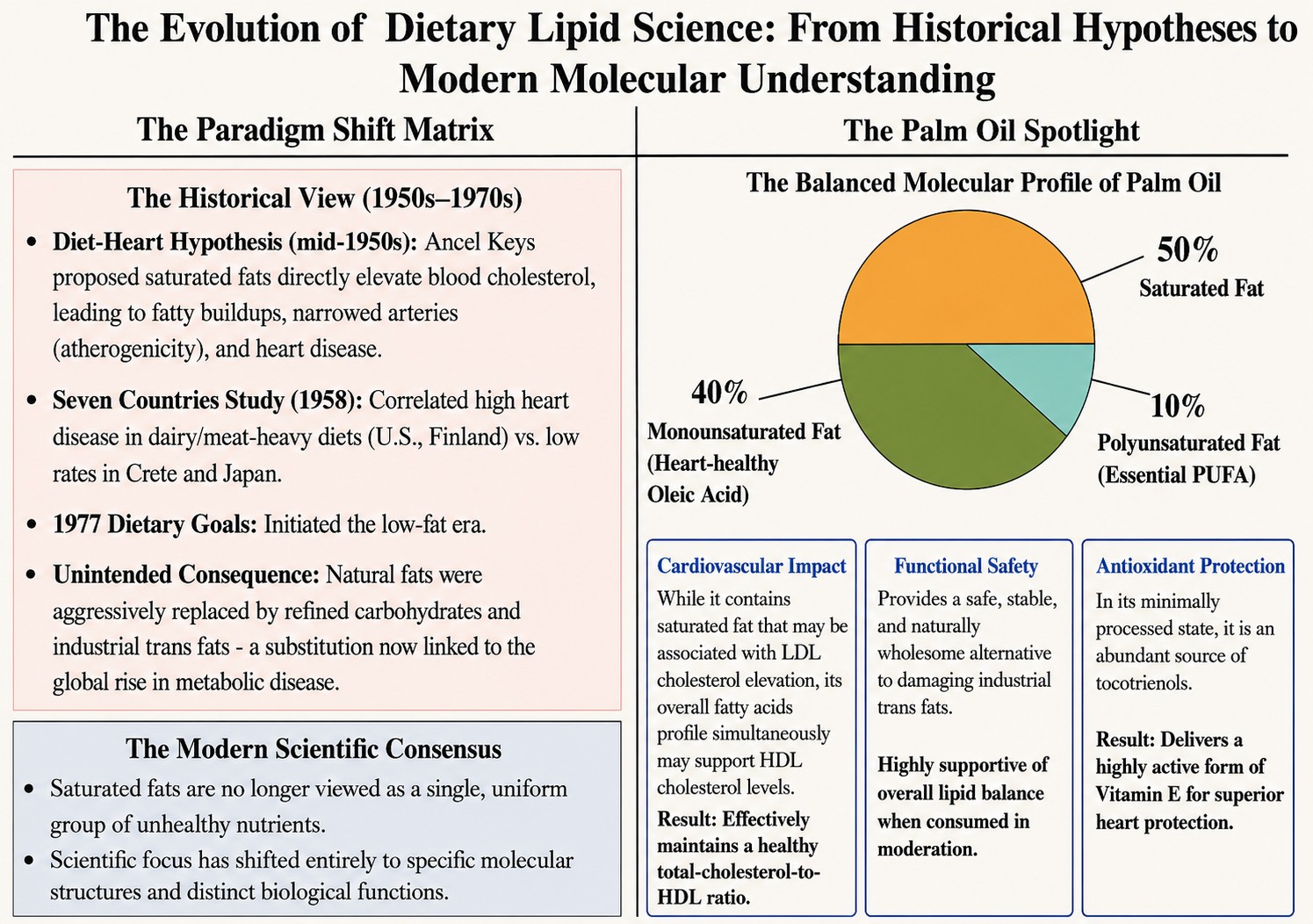
The trajectory of our understanding regarding dietary fats, specifically saturated fats and palm oil represents a significant shift in modern nutritional science. This evolution began with the Diet-Heart Hypothesis, introduced by Ancel Keys in the mid-1950s. Keys proposed a direct chain of events: the consumption of saturated fats leads to elevated blood cholesterol, which contributes to the formation of fatty buildups that clog and harden the artery walls, narrowing the path for blood flow (atherogenicity) and increasing the risk of heart disease.
To provide evidence, Keys launched the Seven Countries Study in 1958. He observed a striking correlation: populations in Finland and the U.S., where diets were heavy in dairy and red meats, suffered high rates of heart disease, while those in Crete and Japan showed remarkably low rates. This became the foundation for the 1977 Dietary Goals, ushering in a "low-fat" era where natural animal fats were widely replaced by refined carbohydrates and industrial trans fats substitutions that are now closely linked to the global rise in metabolic disease.
However, in-depth studies and research encompassing current scientific consensus no longer views saturated fats as a single, uniform group of "unhealthy " nutrients. Instead, the focus has shifted toward the specific molecular structure of fats and how they function in the body.
As shown in Table 6, palm oil occupies a uniquely beneficial space in this modern view. It features a remarkably balanced composition: approximately 50% saturated fat, nearly 40% heart-healthy monounsaturated fat (oleic acid), and roughly 10% essential polyunsaturated fat (PUFA). This natural blend makes its impact on the body highly stable and, when consumed in moderation, supportive of overall lipid balance.
Importantly, palm oil provides a safe, highly functional alternative to the damaging industrial trans fats that once dominated our food supply. While it contains saturated fat that may be associated with LDL cholesterol elevation, its overall fatty acids profile simultaneously may support HDL levels relative to trans fat containing alternatives, effectively maintaining a healthy total-cholesterol-to-HDL ratio. Furthermore, palm oil is an abundant source of tocotrienols, a highly active form of vitamin E that offers excellent antioxidant protection for the heart. Ultimately, palm oil stands out as a stable, wholesome lipid that naturally fits into a balanced and nutritious diet. This composition places palm oil between highly saturated fats (such as coconut oil or butter) and largely unsaturated oils (such as sunflower or soybean oil). In other words, from a purely compositional perspective, palm oil does not represent an extreme case among dietary fats.
Table 5: Evolution of Dietary Fat Science and the Emerging Role of Palm Oil
 Evidence from Peer-Reviewed Literature
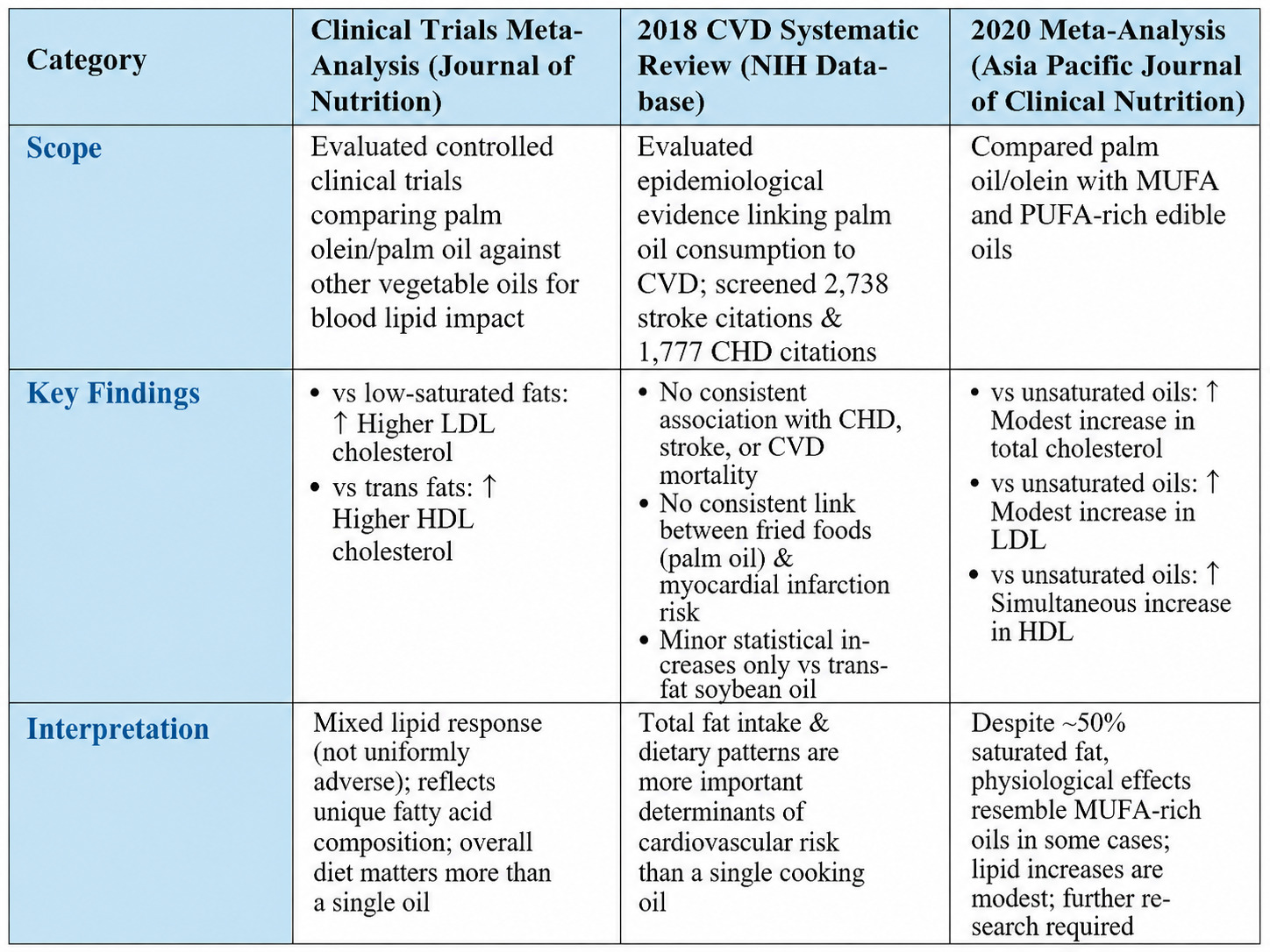
i. A meta-analysis published in 2015 in The Journal of Nutrition, reports that palm oil is associated with higher LDL-cholesterol compared with polyunsaturated and monounsaturated oils, but higher HDL-cholesterol when compared with trans fat containing fats, indicating a mixed and non-uniform lipid profile rather than a single-directional effect [10].
Objective: Systematically reviewed the effect of palm oil consumption on blood lipids compared with other cooking oils using data from clinical trials.
Conclusion: Palm oil intake can increase LDL (“bad”) cholesterol relative to vegetable oils low in saturated fat. At the same time, it elevates HDL (“good”) cholesterol compared with trans fat containing oils, supporting a relatively more balanced cholesterol profile. The effects of palm oil on blood lipids are mixed, as expected based on its fatty acid composition. Given its association with increases in LDL cholesterol, saturated fat intake is generally approached with caution. In applications where products are consumed in small quantities and rely on trans fats for specific sensory properties, palm oil may be considered a suitable trans fat free alternative due to its comparatively more favorable influence on HDL cholesterol.
ii. As per the 2018 systematic review and meta-analysis, palm oil consumption and the risk of cardiovascular disease published in an international peer-reviewed journal highlights no consistent association between palm oil consumption and coronary heart disease, stroke, or cardiovascular mortality, emphasizing the primary role of overall dietary patterns [11].
Background: The high amount of saturated fatty acids (SFA) coupled with the rising availability and consumption of palm oil have led to the assumption that palm oil contributes to the increased prevalence of cardiovascular diseases worldwide.
Scope of evidence: Researchers screened:
-
2,738 citations related to stroke
-
1,777 citations related to coronary heart disease
-
Only a limited number of studies met the inclusion criteria, indicating that direct epidemiological evidence specifically examining palm oil consumption remains limited.
Key Findings
-
The review found no consistent association between palm oil consumption and coronary heart disease, stroke, or cardiovascular mortality.
-
Some analyses comparing palm oil with soybean oil containing trans fat showed slightly higher risk estimates; however, these findings were statistically imprecise and not robust.
-
Studies evaluating fried foods, where palm olein is widely used, did not demonstrate a consistent relationship with myocardial infarction risk (Risk of heart attack).
Conclusion: Systematic review reports no consistent association between palm oil consumption and coronary heart disease, stroke, or cardiovascular mortality, emphasizing the primary role of overall dietary patterns.
iii. A systematic review and meta-analysis published in 2020 under Asia Pac J Clin Nutr [12], reports modest increases in total cholesterol, LDL-cholesterol, and HDL-cholesterol with palm oil relative to unsaturated oils, and notes variable evidence quality across studies. The intervention included palm oil or palm olein in the diet.
Background: Current guidelines recommend reducing intake of diets rich in saturated fats and replacing it with diets rich in unsaturated fats. Palm oil contains a high amount of saturated fatty acids, but its effect on serum lipid levels is unclear. The study aimed to compare the effects of palm oil consumption with other edible oils rich in monounsaturated fatty acids (MUFAs) and polyunsaturated fatty acids (PUFAs) on serum lipid profiles.
One recently published opinion paper questions the current dietary guidelines recommendations. The authors pointed out that different saturated fatty acids have different health effects. As for palm oil, emerging evidence suggests that although it contains 50% saturated fat, it behaves like a MUFA in terms of its effects on serum cholesterol levels.
Conclusion: Palm oil and palm olein produce moderate changes in blood lipid profiles, consistent with their fatty-acid composition.
-
Evidence linking palm oil consumption directly with cardiovascular disease outcomes remains limited and inconsistent.
-
Most researchers emphasize that overall dietary patterns, total fat intake, and lifestyle factors are more influential determinants of cardiovascular health than the consumption of a single edible oil.
Table 6: Palm Oil and Cardiovascular Health: Evidence Summary
 Clinical Perspective from Interviews
-
Cardiologists consistently state that available clinical evidence does not establish a direct, independent causal relationship between palm oil consumption and cardiovascular disease. They note that its negative public image is shaped more by simplified narratives and historical perceptions than by clearly demonstrated clinical harm.
-
The Cardiologists emphasize that major dietary guidelines focus more stringently on the reduction of industrial trans fats rather than naturally occurring saturated fats, and that palm oil’s higher thermal stability is relevant in Indian cooking conditions because it reduces the likelihood of harmful compounds formation during high-temperature use.
-
The Cardiologists also acknowledge that limited India-specific clinical trials and inconsistent nutrition education have contributed to persistent misconceptions and highlight the need for better dissemination of evidence and further Indian-context research.
-
Gastroenterologists note that palm oil is often perceived negatively mainly because it is low cost and widely available, and that affordability is frequently and incorrectly equated with inferiority. They also point out that no guideline states palm oil should not be used.
3.2. From Chemical Classification to Biological Behavior: Understanding Differences Within Saturated Fatty Acids
“Saturated fat” is a chemical classification defined by the absence of double bonds in the fatty acid chain. While analytically useful, this label does not, by itself, describe how a fatty acid behaves in the human body. Biological effects are determined not only by saturation status, but also by chain length, molecular structure, position within triglycerides, and interactions with digestive and metabolic systems.
3.2.1. Chain length is a major determinant of physiological behavior
Short-, medium-, and long-chain saturated fatty acids differ in digestion, absorption, transport, and metabolic handling. Even within long-chain saturated fatty acids, important distinctions exist. Common dietary forms-lauric, myristic, palmitic, and stearic acids do not behave identically, making it scientifically unsound to treat “saturated fat” as a single, uniform nutritional category.
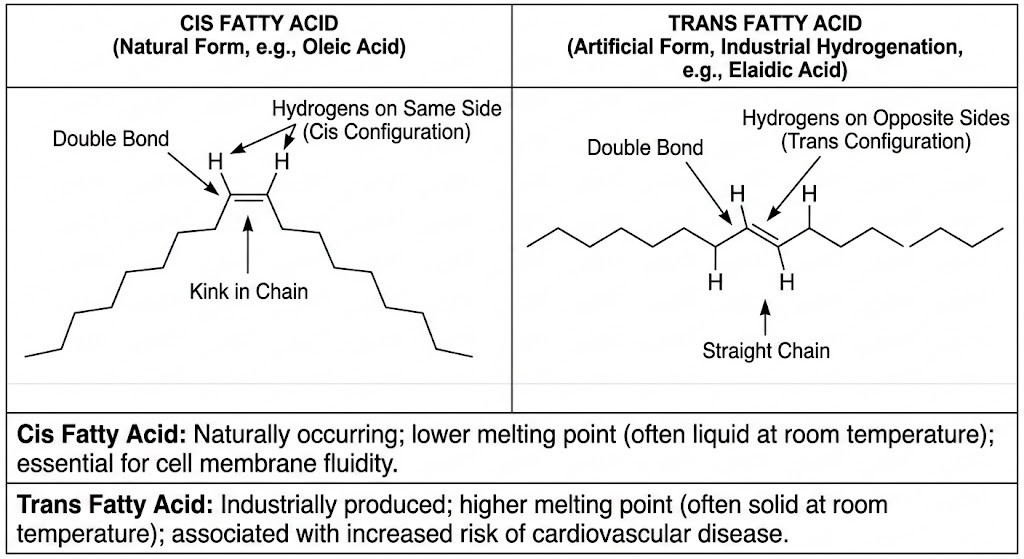
From both a biochemical and a public health standpoint, it is essential to distinguish naturally occurring saturated fatty acids from industrially produced trans fatty acids. Although these categories are often conflated in public discourse, they differ fundamentally in molecular structure, metabolic handling, and physiological effects. Trans fats, produced primarily through partial hydrogenation, alter lipid metabolism in a manner that is distinct from naturally occurring saturated fats and have been consistently associated with adverse cardiometabolic outcomes. Failure to maintain this distinction has contributed to persistent confusion in dietary messaging and to the misattribution of risk across fundamentally different classes of fats.
Figure 3: Comparison of the Molecular Structures of Cis and Trans Fatty Acids
Palmitic Acid in Context: Within the category of saturated fatty acids, palmitic acid is the main saturated fatty acid present in palm oil and in several other commonly consumed foods such as butter and cheese, meat and poultry fats, cocoa butter used in chocolate and confectionery products, and several plant-based oils. From a physiological perspective, however, palmitic acid cannot be evaluated in isolation from the dietary matrix in which it is consumed, the presence of accompanying unsaturated fatty acids, and the broader metabolic context of the individual. Contemporary nutritional science increasingly recognizes that the health implications of palmitic acid depend not only on its absolute intake, but also on substitution patterns, total fat intake, and overall dietary quality [10].
Table 7: Fatty Acid Compositional Profile of Palm Oil
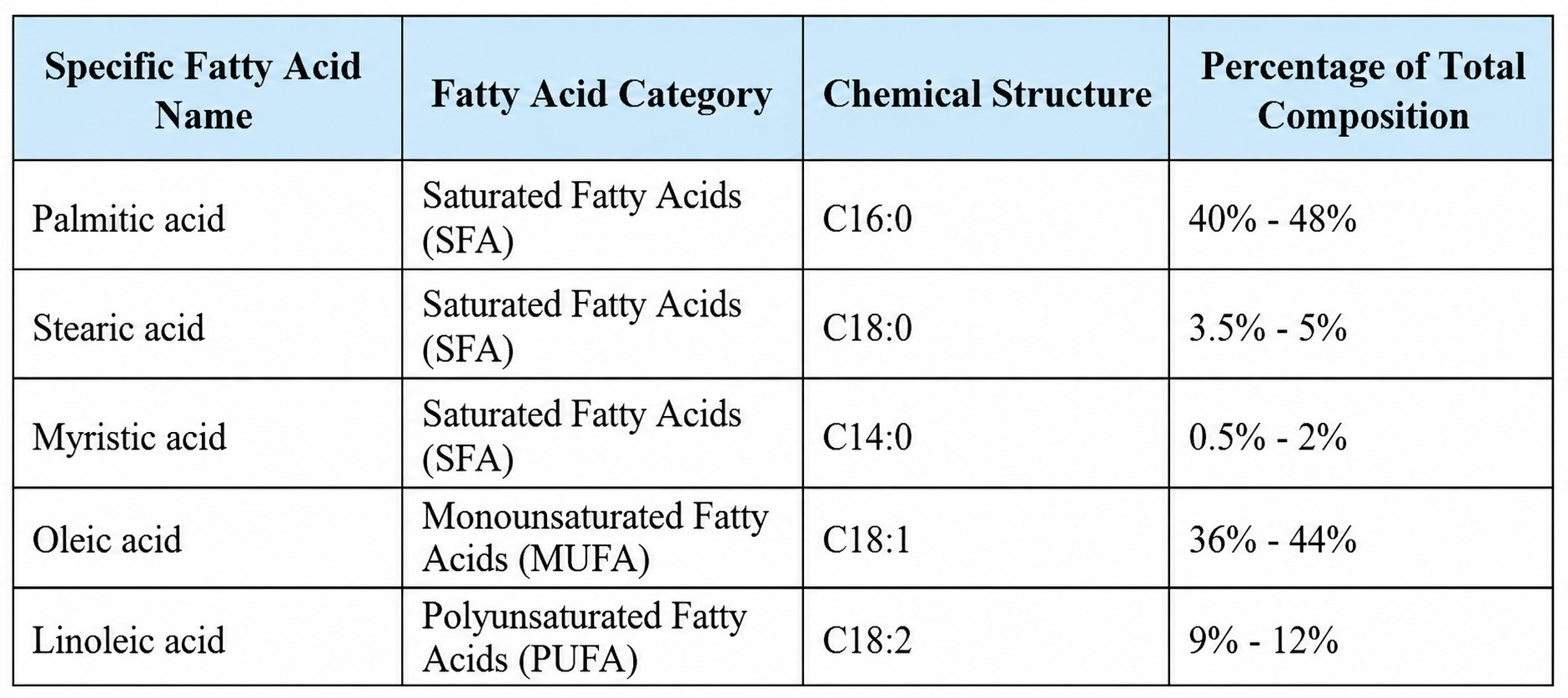 Source: Palm Fruit Chemistry and Nutrition. Asia Pacific Journal of Clinical Nutrition [9]
Evidence from Peer-Reviewed Literature
-
A WHO expert report notes that individual saturated fatty acids differ in their biological effects and identifies lauric, myristic, and palmitic acids as having different cholesterol-raising potentials, confirming that “saturated fat” is not biologically uniform. A WHO expert consultation further distinguishes among palmitic, myristic, and lauric acids and documents differing effects on blood cholesterol, demonstrating heterogeneity within the category [13].
-
The review “Palm Oil and the Heart” reports that palmitic acid does not consistently produce the same lipid responses as other saturated fatty acids and, in some dietary contexts, shows effects closer to those of oleic acid, underscoring the importance of dietary context and food matrix [14].
-
A meta-analysis in The Journal of Nutrition reports that palm oil yields a more favorable lipid profile than trans fat containing fats [10].
3.2.2. The "Slot" Theory: Understanding Why Fat Position Matters More Than Fat Type
Introduction: Beyond the Nutritional Label
The physiological impact of a dietary lipid is not determined by its "bulk composition", the simple ratio of saturated to unsaturated fatty acids but by its molecular architecture. The human body does not merely read the "name" or classification of a fat; it reads the physical geometry of the molecule. Just as the same set of bricks can be used to construct either a reinforced arch or a precarious stack, the way fatty acids are arranged on a molecule determines whether they are utilised for health or contribute to disease.
The Big Idea: the health impact of dietary fat is governed by its precise molecular geometry-specifically, the positioning of fatty acids on the glycerol backbone rather than its simple classification as saturated or unsaturated.
To grasp this shift, we must examine the physical structure of a fat molecule and how the body’s internal machinery interacts with that specific shape.
The Anatomy of a Fat Molecule: The Three-Slot Model
In biochemical terms, the majority of dietary fats exist as triacylglycerols. A triacylglycerol consists of a glycerol "backbone" featuring three specific "slots" where fatty acids are attached. These positions are designated by their stereospecific numbering (sn):
Table 8: Triglyceride Structure: Positional Arrangement of Fatty Acids
 From a molecular nutrition perspective, these slots are not treated equally. The body uses regiospecific enzymes biological tools designed to recognize and "unlock" specific locations on the molecule to determine the fate of each fatty acid during the digestive process.
Figure 4: Structural Arrangement of Fatty Acids in Triglycerides: sn-Positioning
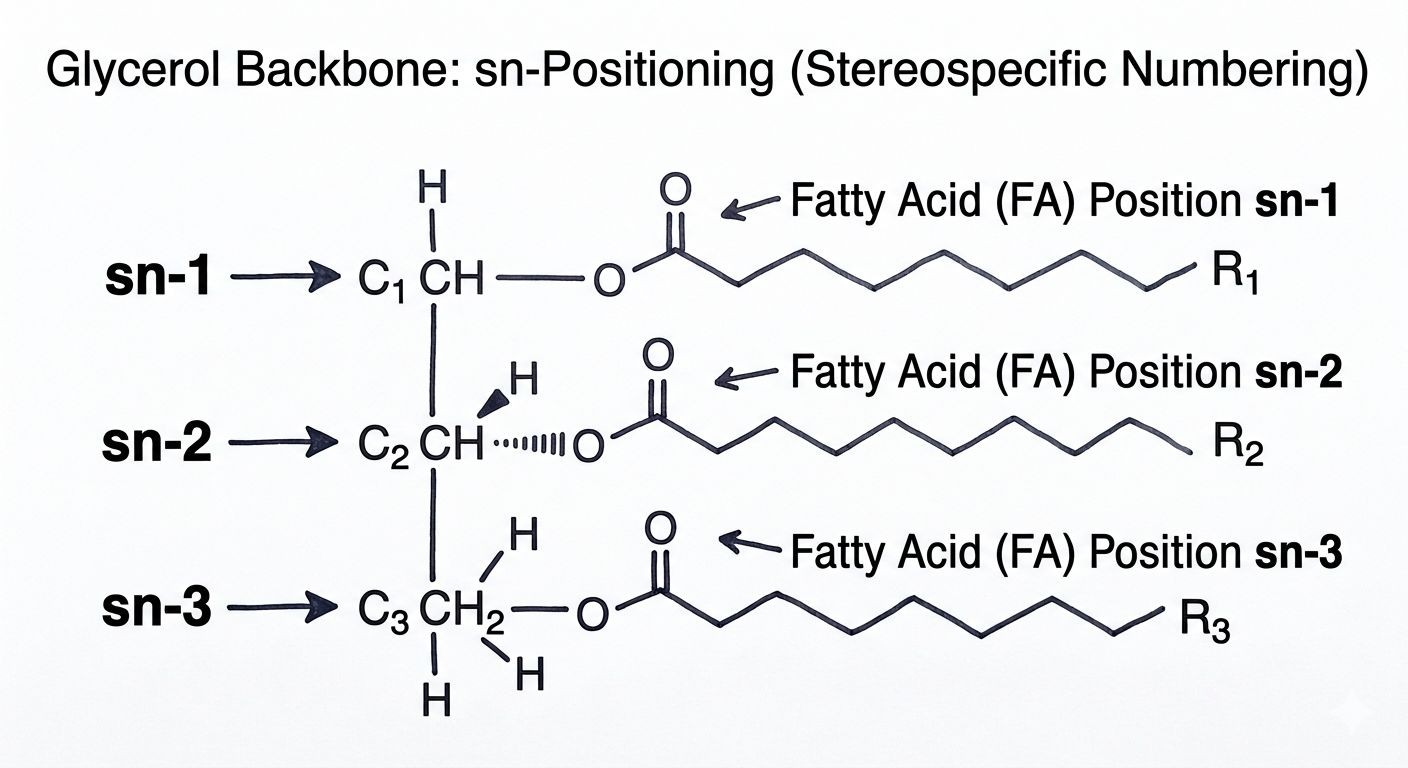 The Natural Design of Native Palm Oil
Native palm oil is frequently misunderstood due to its saturated fat content. However, its natural regiospecific structure makes it a biological outlier. Unlike many other fats, palm oil strategically positions its "heart-healthy" oleic acid (a monounsaturated fat) in the protected center slot [9][10].
Table 9: Positional Structure of Fatty Acids in Palm Oil and Their Metabolic Fate
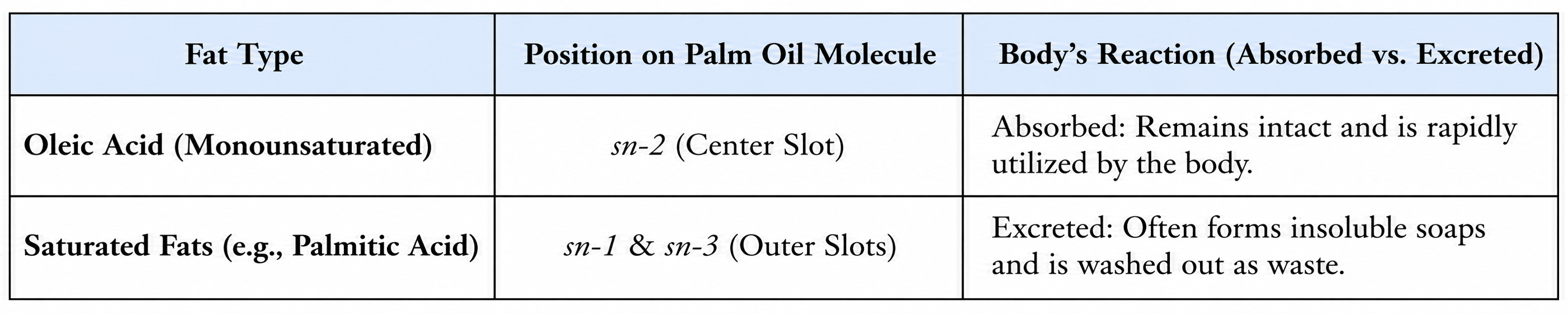 The uniqueness of palm oil’s molecular structure directly dictates its cardiovascular neutrality, transforming what appears to be a "heavy" fat on a label into a metabolically benign fuel source once inside the body.
The Health Impact: Why "Position" Protects Your Heart
Because of its specific triglyceride structure, palm oil behaves in a "metabolically neutral" manner. This stands in stark contrast to animal-derived fats like lard or butter; in those fats, the logic is often "inverted," with saturated fats frequently occupying the highly absorbable sn-2 position, leading to greater systemic exposure.
Mitigated Saturated Fat Absorption: The body’s actual exposure to saturated fat from palm oil is significantly lower than a standard nutritional label suggests. This is because the saturated acids are sequestered in the outer slots (sn-1 and sn-3), they are poorly absorbed and naturally excreted.
Preservation of "Good" HDL Cholesterol: By placing oleic acid in the protected center slot, palm oil ensures the efficient delivery of monounsaturated fats. This specific absorption pattern is associated with maintaining or elevating HDL cholesterol levels, promoting a healthier lipid profile.
Neutral LDL Cholesterol Impact: Unlike fats that place saturated acids in the center slot (causing predictable spikes in "bad" cholesterol), palm oil’s structural configuration prevents the sharp increases in LDL cholesterol typically associated with saturated fat intake. Thus the "Slot Theory" provides a modern, scientifically validated framework for evaluating dietary lipids.
The sn-2 positional distribution of triglycerides in olive oil and palm olein is illustrated in Figure 5. The proportion of unsaturated fatty acids at the sn-2 position is approximately 94% for palm olein and 98% for olive oil.
Figure 5: The sn-2 Fatty Acids of Palm Olein and Olive Oil
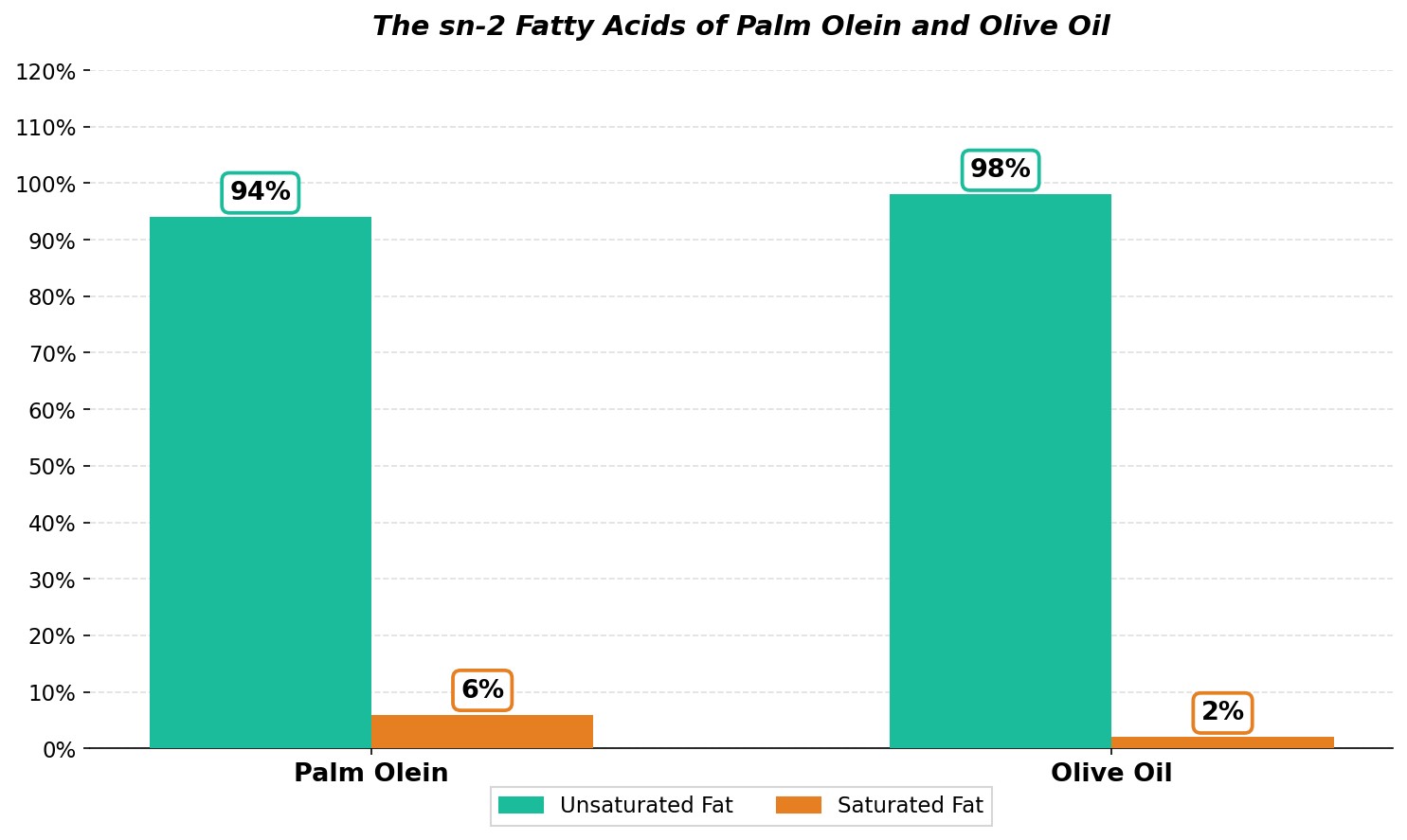 Source: Palm Oil Developments, MPOB [15]
Clinical Perspective from Interviews
-
Gastroenterologists emphasize that, in practice, clinical outcomes are driven primarily by total fat intake, the balance among saturated, monounsaturated, and polyunsaturated fats, and overall dietary pattern, rather than by any single oil in isolation. They also note that each oil has a practical upper threshold of intake.
-
Gastroenterologists explain that palm oil does not require partial hydrogenation and therefore does not generate industrial trans fats.
-
Neurologists underscore that dietary fats are essential components of neuronal membranes, myelination, and synaptic function, and that complete avoidance of fats is inconsistent with basic neurobiology. They highlight that plant-based fats which aid absorption of fat-soluble vitamins A and E are physiologically important, particularly during brain development and aging.
-
Neurologists describe tocotrienols as an area of growing scientific interest but emphasize that evidence in stroke recovery and neurodegeneration remains emerging and not part of formal guidelines.
3.3. Why Quantity and Dietary Patterns Matter More Than Type of Cooking Oil
From a clinical and physiological standpoint, the metabolic impact of any dietary fat is determined not by its identity in isolation, but by total fat exposure, cumulative caloric balance, and long-term patterns of intake. Across both metabolic and gastroenterological literature, adverse outcomes such as liver fat accumulation, dyslipidaemia, and weight gain consistently correlate more strongly with chronic energy surplus and excess fat consumption than with the use of any single specific cooking oil.
In real-world dietary environments, this distinction is critical. The human digestive and hepatobiliary systems respond to load, frequency, and duration of exposure, not to theoretical classifications of ingredients. As a result, modern clinical dietary guidance increasingly emphasizes portion discipline, cooking practices, and overall dietary structure, rather than narrow substitution-based strategies.
3.3.1. Dietary Profiles and Associated Metabolic Risk Factors in India from the ICMR-INDIAB Survey
While palm oil plays a dominant role in India’s edible oil mix, the broader dietary context reveals how overall fat and carbohydrate consumption patterns influence metabolic health. Insights from the ICMR- INDIAB survey published under PubMed, shed light on these evolving dietary risks [2].
Rapid dietary transitions in India have been associated with an alarming rise in cardiometabolic diseases. Using data from the national Indian Council of Medical Research-India Diabetes survey (18,090 adults), we examined India’s dietary profile and the effect of isocaloric substitution of carbohydrates with other macronutrients on metabolic risk. Indian diets are characterized by high intakes of refined carbohydrates (white rice, milled wholegrains and added sugar), elevated levels of saturated fat and low intakes of protein.
Clinical Perspective from Interviews
-
In alignment with this framework, the gastroenterologists consistently note that in individuals already using palm oil as part of habitual cooking, the primary clinical focus should be on quantity control and overall dietary context, rather than reflexive oil replacement.
-
Based on physicians’ observations, when total fat usage, repeated overheating and reuse of oils, and overall caloric excess are not addressed, simple oil substitution rarely produces meaningful or durable metabolic improvement.
-
In this framework, edible oils act as modifiers of risk rather than primary determinants. The same oil, when used within recommended quantities within a balanced dietary pattern, behaves very differently from when it is consumed excessively within a hypercaloric, nutrient-poor diet.
-
From a biochemical and physiological perspective, broad classifications such as “saturated” and “unsaturated” fats represent chemical groupings rather than unified biological entities. The scientific literature clearly demonstrates that fatty acids differ substantially in chain length, absorption kinetics, hepatic handling, and effects on lipoprotein metabolism and cellular signaling pathways.
-
Taken together, both scientific evidence and clinical experience indicate that “saturated fat” cannot be regarded as a single, uniform biological exposure. This explains why simplistic categorical judgments repeatedly fail to predict clinical outcomes in real patient populations.
3.4. Implications for Evaluating Edible Oil
In both nutritional biochemistry and applied public health, there is increasing recognition that edible oils should be evaluated based on:
-
Heat and oxidative stability,
-
Performance under real cooking conditions,
-
Nutrient delivery characteristics,
-
And metabolic response within habitual diets, rather than on reputational or broad category-based classifications alone.
However, translation of this nuanced framework into everyday medical discourse remains incomplete.
Clinical Perspective from Interviews
-
Neurologists consistently observe that, even within the medical community, palm oil continues to be characterised by a degree of conceptual ambiguity, reflecting a lacuna in the integration of contemporary nutritional science into clinical risk assessment frameworks.
-
Many practitioners are not fully aware that, in its natural form, crude and red palm oil contains: Tocotrienols (biologically active forms of vitamin E), and Carotenoids (pro-vitamin A compounds).
-
This persistent knowledge gap contributes to over-simplified narratives that fail to reflect either biochemical composition or real-world functional behavior. From a clinical and policy standpoint, this reinforces the need to assess edible oils based on physiological performance in population use-context, rather than on abstract categorical labels.
3.4.1. Global Health Perspectives on Palm Oil
a) Comparative Analysis of Nutritional Composition - Palm Oil Vs Other Common Edible Oils
b) Positive health findings (provitamin A from red palm oil, tocotrienols in brain & cancer protection).
c) Negative health concerns (CVD, LDL cholesterol, obesity, diabetes)
Table 10: Comparative Analysis of Nutritional Composition - Palm Oil Vs Other Common Edible Oils (Global Level)
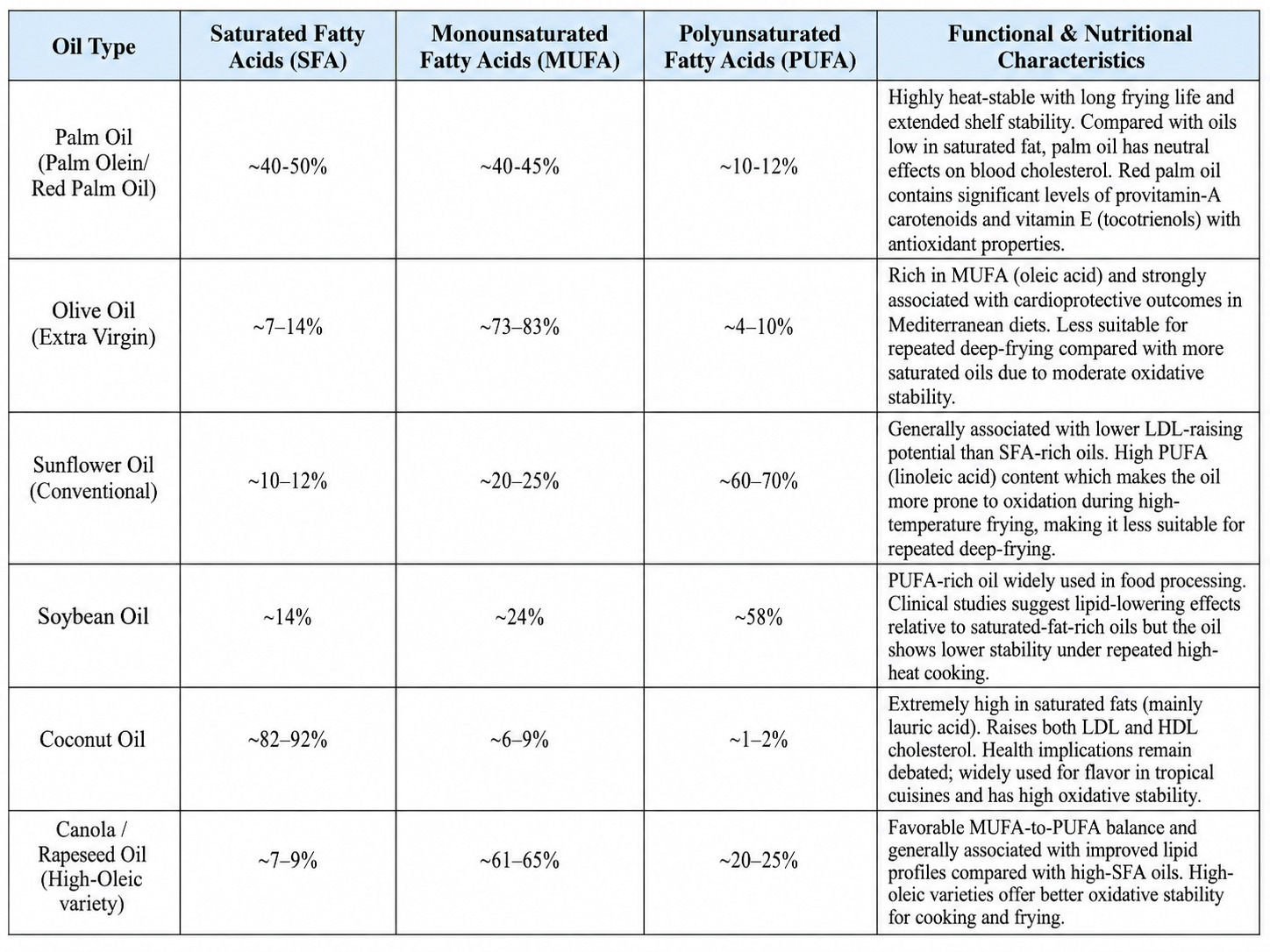 Source: Fats and Fatty Acids in Human Nutrition [13]
Note: SFA = saturated fatty acids; MUFA = monounsaturated fatty acids; PUFA = polyunsaturated fatty acids. Percent ranges are indicative; refer to specific laboratory analyses for exact numbers. For frying and industrial use, thermo-oxidative stability matters (lower PUFA -> usually more stable)
Table 11: Comparative Table of Oils (Nutrients, Cooking, Health, and others)

The discussion continues in Part 4 "Functional and Nutritional Superiority of Malaysian Palm Oil"
Palm Oil Saturated Fat, Palm Oil Health Effects, Palm Oil Cardiovascular Health, Saturated Fat Science, Saturated Fatty Acids, Palmitic Acid Health Effects, Palm Oil Fatty Acid Composition, Palm Oil Lipid Profile, Palm Oil LDL Cholesterol, Palm Oil HDL Cholesterol, Palm Oil And Heart Health, Palm Oil Trans Fat Alternative, Palm Oil Triglyceride Structure, SN-2 Fatty Acid Positioning, Palm Oil Metabolism, Dietary Fats India, Cooking Oil Health India, Palm Oil Oxidative Stability, Palm Oil Cooking Stability, Palm Oil Tocotrienols, Palm Oil Vitamin E, Palm Oil Oleic Acid, Edible Oil Nutritional Comparison, Palm Oil Dietary Patterns, Palm Oil Clinical Evidence