
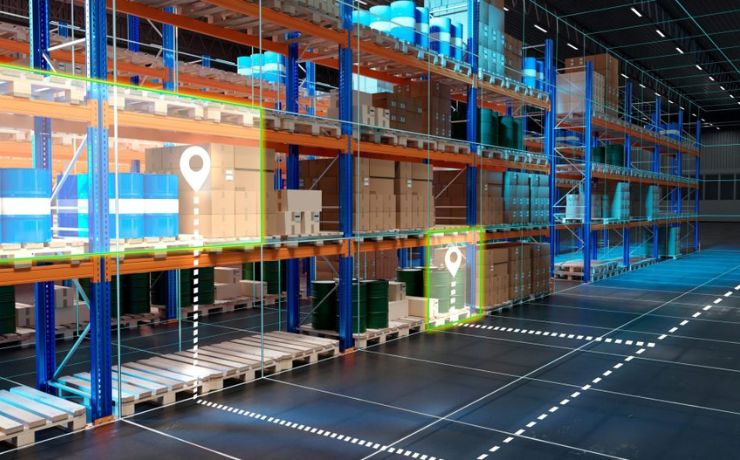
How Vision 2030, E-Commerce, and Urban Growth Are Powering the Saudi Arabia Warehousing and Cold Chain Market
Discover how Vision 2030, e-commerce, and urban expansion are transforming Saudi Arabia’s warehousing and cold chain market with strong growth across major sectors.
The Saudi Arabia Warehousing and Cold Storage Market is undergoing a major transformation, driven by strategic national initiatives, rapid digital adoption, and rising consumer demand. Backed by Vision 2030 and the National Industrial Development and Logistics Program (NIDLP), Saudi Arabia is witnessing sustained growth in logistics infrastructure. With expansion across e-commerce, healthcare, retail, and food sectors, both the Saudi Arabia Warehousing Market and Cold Chain Industry are scaling rapidly, poised for strong double-digit CAGR growth through 2027.
Vision 2030: Strategic Impetus Behind Warehousing and Cold Chain Expansion
Under Vision 2030, Saudi Arabia aims to reduce hydrocarbons dependency, diversify its economy, and emerge as a global logistics and supply hub. With plans to attract over USD 103 billion in annual foreign direct investment (FDI) and USD 450 billion in domestic investment by 2030, logistics lies at the heart of this national pivot, especially the Saudi Arabia Cold Chain Industry and Warehousing Industry. The NIDLP has prioritized industrial zones, ports, and airports, channeling capital into Grade A warehousing and chilled/frozen storage tailored to food, pharmaceuticals, and retail sectors.
Key Drivers Shaping the Saudi Arabia Warehousing and Cold Storage Market
Rising Consumption and Demographics
Saudi Arabia’s predominantly young and urban population, with 67% under the age of 35, is fueling strong growth in consumption across sectors such as perishables, fashion, pharmaceuticals, and e-commerce. Additionally, the rise of dual-income households is elevating consumer expectations, driving increased demand for expedited last-mile delivery and advanced temperature-controlled logistics solutions.
E-Commerce Boom Reshaping Warehousing
In 2023, digital penetration was near saturation: 91% of Saudis shopped online, with 14% making daily purchases. This persistent surge continues to transform warehousing into tech-enabled micro-fulfillment hubs equipped for cold chain needs. A landmark example: in mid‑2024, CEVA–Almajdouie launched 14 high-tech fulfillment centers in Jeddah, specifically targeting temperature-sensitive e-commerce goods.
Urban Expansion and Infrastructure Development
Riyadh, Jeddah, and Dammam/Eastern Province now dominate national logistics. Jeddah remains the hub for Red Sea trade routes, while Riyadh’s new industrial zones (RILZ near King Khalid International Airport, Modon parks, and inland dry ports) are creating integrated storage ecosystems. The Saudi Ports Authority’s SAR 1 billion logistics park at King Abdulaziz Port, spanning over one million square meters, is set to become a logistics anchor for Dammam and regional trade.
Growth of the Saudi Arabia Cold Storage Market
The Saudi Arabia Cold Storage Market recorded an impressive 8.7% year-on-year growth in 2024, with capacity rising 5.4% by January 2025 in Riyadh, Makkah, and the Eastern Province. With significant reliance, up to 80% in some food categories, on imports, reinforced cold infrastructure is vital for reducing spoilage, extending shelf-life, and securing national food supply chains.
Major Cold Chain Investments Include:
-
Modon warehouses in Jeddah equipped with advanced refrigeration
-
Pharma-grade cold rooms in Riyadh supporting healthcare distribution
-
Integrated cold storage planned within Dammam logistics parks
These developments not only serve internal demand but also help position Saudi Arabia as the Middle East’s premier cold chain logistics hub.
Strategic Investments and Key Industry Players in Saudi Arabia Cold Chain Industry
E-Commerce & Private Logistics
-
Amazon is expanding its footprint across Saudi Arabia, building multiple state-of-the-art warehousing facilities focused on dark stores and e-commerce fulfillment.
-
Modon has committed to 14 high-tech warehouses in Jeddah specifically designed for global e-commerce players.
Public-Private Partnerships and Port Infrastructure
-
The Saudi Ports Authority and Saudi Global Ports are deploying SAR 1 billion in a logistics park at King Abdulaziz Port, catalyzing Dammam’s cold storage capacity.
-
DB Schenker–Kaden Joint Venture is developing custom logistics solutions in Jeddah, strengthening refrigerated and dry storage networks.
-
Gulf Islamic Investments (GII) and Logipoint are rolling out a SAR 1 billion Grade A logistics platform in Jeddah, accelerating warehousing capacity.
-
Arcapita Capital and Flow Progressive Logistics are building an 80,000 m² mixed-use logistics complex in Riyadh, encompassing dry and cold storage.
Urban-Scale Projects
Riyadh’s giga-projects, Diriyah Gate, King Salman Park, New Murabba, and Qiddiya, are dramatically pushing demand for warehousing of construction materials, chilled supplies for hospitality, and supply chains for entertainment infrastructure.
Infrastructure and Industrial Support for Saudi Arabia Warehousing Market
Integrated Transport Networks
Saudi Arabia is expanding its end-to-end logistics via strategic rail and road connectivity. The North-South and East-West railway corridors support rapid freight movement. Riyadh’s RILZ offers direct access to King Khalid International Airport and the city’s dry port, streamlining cold chain operations.
Industrial Clusters and Grade A Facilities
Modon industrial parks in Riyadh and Jeddah are being outfitted with plug-and-play warehousing, dedicated cold zones, and multi-tenant leasing models, facilitated through public-private partnerships.
Market Opportunities in Saudi Arabia Warehousing and Cold Chain Market
-
Tech-Driven, Grade A Warehouses: Increasing demand for automated warehouses with IoT integration, capable of handling pharmaceuticals, cosmetics, fresh foods, and quick-commerce.
-
Growth Beyond Tier-1 Cities: Secondary cities such as Taif, Tabuk, and Abha offer cost-effective opportunities for regional warehousing hubs, with lower land and energy costs.
-
Supportive Public-Private Ecosystem: Government strategies like NIDLP and the National Investment Strategy offer incentives and funding for private-sector logistics infrastructure partnerships.
-
Green & Energy-Efficient Solutions: With energy consumption a critical factor, solutions like solar-powered cold vaults, AI energy optimization, and waste-heat recovery present investment potential.
-
Workforce and Technology Upskilling: As automation expands, training and international tech transfer programs will be essential to bridge the talent gap in warehouse management and cold chain logistics.
Challenges Confronting the Cold Chain Industry in Saudi Arabia
Despite growth, several challenges could limit scalability:
-
High energy costs for temperature-controlled facilities
-
Infrastructure gaps in emerging cities
-
Dependence on food imports, increasing cold chain pressure
-
Fragmented last-mile delivery in some regions
-
Workforce skill limitations in cold chain management and automation
Addressing these will require policy harmonization, tariff reforms, skill development initiatives, and advanced public-private partnership models.
Market Transformation Driven by Vision 2030 and Strategic Investments
Saudi Arabia’s warehousing and cold storage market is entering a transformative decade. Propelled by Vision 2030, the National Investment Strategy, digital transformation, and the government’s push to enhance regional connectivity, the sector is expected to witness significant structural advancements between 2025 and 2030.
Makreo Research forecasts robust growth in both warehousing and cold storage markets, driven by key factors:
-
Investment Momentum: With over USD 103 billion in annual FDI and USD 450 billion in domestic capital targeted by 2030 at the national level, warehousing and logistics infrastructure, especially in Riyadh, Jeddah, and Dammam, is set for exponential growth.
-
Tech-Integrated Infrastructure: The rise of AI data centers, driven by tech giants like Nvidia, Humain, AWS, Oracle, and Equinix, is fostering a logistics-tech convergence requiring temperature-controlled storage and high-grade warehousing to support data-driven industries.
-
Sector-Wide Modernization: From public-private partnerships (PPPs) and high-specification logistics parks to automated storage and retrieval systems (AS/RS), the warehousing landscape is moving toward automation and efficiency, especially for e-commerce, food, and pharmaceutical sectors.
-
Regional Trade Dynamics: With Jeddah acting as a Red Sea gateway and Riyadh transforming into an integrated logistics corridor, Saudi Arabia is positioning itself as the logistics capital of the Middle East.
Market Segmentation
-
By Type of Cold Storage
-
By Industry / End-use Application
-
By Geography / Industrial Clusters
Market Players Covered
-
Agility logistics
-
United Warehousing Company (UWC)
-
Cold stores group of Saudi Arabia
-
Advanced storage Co.
-
Logipoint
-
Hala Supply Chain Services
-
Mosanada Logistics
-
A.P. Moller – Maersk
-
Tamer Logistics
-
Almajdouie Logistics
-
Wared Logistics
-
SAL Saudi Logistics Services Company
According to Makreo’s findings in the “Saudi Arabia Warehousing and Cold Storage Market Size and Forecast (2019–2030),” warehousing capacity, cold chain coverage, and sectoral demand are all expected to witness robust growth through 2030. The report presents granular city-level outlooks and detailed analysis of:
-
Warehousing capacity growth (by city and sector)
-
Cold storage infrastructure expansion
-
Market penetration by industry verticals
-
Evolving pallet storage capabilities and logistics automation trends
-
Strategic investments and financial performance of key industry players
As consumer preferences evolve and infrastructure modernizes, the Saudi Arabia Cold Chain Market will become increasingly essential to national supply chain resilience, food security, pharmaceutical delivery, and temperature-sensitive e-commerce fulfillment.
#WarehousingMarket #ColdChainLogistics #ColdStorageSolutions #TemperatureControlledLogistics #EcommerceFulfillment #LogisticsInfrastructure #SupplyChainSolutions #SaudiArabia #SaudiVision2030 #NIDLP #MiddleEastLogistics #SmartWarehousing #LogisticsTech #InfrastructureInvestment #PublicPrivatePartnership #GreenLogistics #AutomationInLogistics #MarketGrowth #FDIinSaudiArabia #UrbanExpansion