
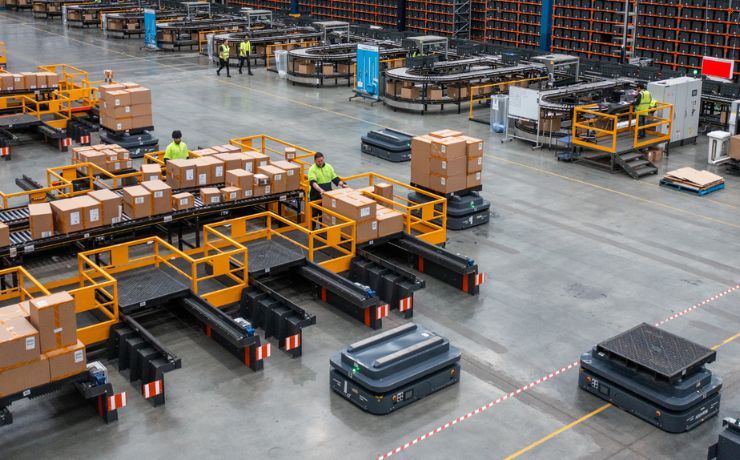
How Is the Philippines Cold Chain and Warehousing Market Adapting to E-Commerce Growth and Infrastructure Modernization?
Philippines cold chain and warehousing market is rapidly growing, driven by e-commerce, infrastructure upgrades, and rising demand for temperature-controlled logistics.
As Southeast Asia witnesses a wave of supply chain transformation, the Philippines logistics market is emerging as a strategic focal point. With demand for temperature-sensitive logistics on the rise and new infrastructure projects in the pipeline, the Philippines cold chain warehousing market is positioning itself as a resilient, technology-driven backbone for the nation’s growing consumption and trade ecosystem.
Philippines Warehousing Market - Urbanization and Demographic-Driven Demand
The Philippines warehousing market is poised to grow at a healthy compound annual growth rate (CAGR) of 5.85% by 2025, driven by increasing urbanization, robust consumer demand, and the expanding middle class. As of 2024, 64.4% of the population falls within the working-age bracket (15–64 years), a demographic trend that continues to fuel domestic consumption, particularly in sectors such as food, pharmaceuticals, and retail.
Additionally, female labor force participation has rebounded post-pandemic, reaching 47% in 2023, reflecting a deeper transformation in workforce dynamics and consumption behavior. This demographic shift is not just increasing demand for fast-moving consumer goods but is reshaping logistics expectations, particularly for cold chain and last-mile services.
Strategic Warehousing Hubs in the Philippines - Rising Demand and the Shift Toward Modern Facilities
Key provinces such as Rizal, Cavite, Laguna, Pampanga, Cebu, and Davao have become the cornerstone of the Philippines warehousing network. These hubs are integral to facilitating efficient storage and distribution services in both Luzon and Mindanao.
In 2024 alone, warehouse storage demand reached approximately 1.37 million square meters, nearly doubling year-over-year. This surge reflects growing requirements from logistics providers, manufacturers, wholesalers, and e-commerce players. Moreover, there is a clear transition from outdated Grade C facilities to modern Grade A and B warehouses that offer automation, energy efficiency, and dock-level loading bays.
Philippines Cold Chain Market - Driving Growth Behind a Cold Logistics Transformation
The Philippines cold chain warehousing market is gaining strategic importance in response to the rising consumption of perishable goods, biopharmaceuticals, and frozen food products. With increasing reliance on digital commerce and cross-border trade, the demand for temperature-controlled logistics has become more urgent and complex.
According to Makreo Research, the cold chain sector is expected to register double-digit growth by 2025, primarily fueled by:
-
Increased foreign trade in meat and seafood.
-
Rising domestic demand for biopharmaceuticals and vaccines.
-
Expansion of e-commerce grocery delivery and meal kit services.
This demand is not only accelerating investment in cold storage warehousing, but also in refrigerated vehicles, micro-fulfillment centers, and temperature-controlled packaging technologies.
E-Commerce and the Rise of Last-Mile Refrigeration in the Philippines
The Philippines logistics market is undergoing a paradigm shift as e-commerce penetration deepens. The sector is forecasted to grow from USD 21 billion in 2023 to USD 30 billion by 2025, constituting 9.5% of total retail sales by 2028. This surge is reshaping warehousing demand and logistics flows across the country.
Key Cold Chain E-Commerce Trends:
-
Last-Mile Cold Delivery: With the rise of online grocery and food delivery apps, localized cold storage and micro-hubs are essential for maintaining product freshness and reducing wastage.
-
Refrigerated Truck Demand: ASEAN and the Philippines are experiencing high demand for trucks under 1.5 tons capacity, essential for delivering perishables across the archipelago.
-
Temperature-Sensitive E-Commerce: Platforms increasingly feature frozen food and pharmaceutical products, necessitating investments in smart cold chain solutions.
Infrastructure Modernization - Transforming the Philippines Warehousing Market
Recognizing the economic importance of efficient logistics, the Philippine government, alongside private sector players, is accelerating investment in strategic infrastructure projects that support the Philippines warehousing market and its cold chain segment.
Key Infrastructure Projects:
-
Port Cold Chain Network Project (PHP 30.80 billion): A nationwide initiative to build cold chain infrastructure across major ports. Currently in pre-implementation, this project aims to reduce spoilage in agricultural supply chains and bolster food security.
-
Davao Sasa Port Modernization (PHP 9.88 billion): A public-private partnership designed to upgrade port logistics in Mindanao, supporting trade and regional warehouse distribution.
-
Bataan–Cavite Interlink Bridge (USD 3.91 billion): Backed by ADB, AIIB, and the Philippine government, this mega infrastructure project will improve cross-regional logistics and shorten transit times for goods movement.
These projects are expected to dramatically improve supply chain connectivity and warehouse utilization rates, providing long-term support to the Philippines cold chain warehousing market.
Private Sector Expansion and Investment Strategies
Major global and domestic players are actively expanding their presence and capabilities in the Philippines logistics landscape.
Notable Developments in the Philippines Logistics Market:
-
DHL Supply Chain plans to invest part of its EUR 350 million Southeast Asia expansion in the Philippines, with current facilities totaling 30,000 m².
-
FAST Logistics Group launched its cold chain brand, Fresh, with an initial investment of PHP 500 million. By 2026, it aims to reach 100,000 pallet positions, up from the current 10,000.
Other Major Players in the Philippines Cold Chain Market:
-
Coolaire Consolidated Inc.: A leading domestic manufacturer of refrigerated vans, certified under ISO 9001:2015.
-
Autokid Truck Solutions and Tata Motors: Providers of commercial refrigerated vehicles sourced from Isuzu Philippines and global OEMs.
-
JMC JMH Cargo: Known for compact 10-ft refrigerated vans ideal for small-scale cold chain operations.
Challenges Facing the Philippines Cold Chain and Warehousing Industry
Despite strong growth, the Philippines cold chain warehousing market faces structural and logistical challenges that threaten to slow its momentum. Key hurdles include:
-
High energy costs impacting cold storage operations.
-
Fragmented logistics market and lack of regulatory alignment.
-
Geographical constraints due to the country’s archipelagic layout.
-
Insufficient skilled labor and slow adoption of technology.
-
High capital costs associated with establishing modern cold chain infrastructure.
Without targeted policy intervention and collaborative public-private action, these constraints may limit the sector's full potential.
The Manufacturing Link: Cold Chain's Role in Industry Support
The Philippines warehousing market is closely tied to national manufacturing trends. Between 2022 and 2024, the sector showed mixed results. While manufacturing output rose to USD 70 billion in 2023, growth tapered to 1.3%, down from 8.9% in 2021.
Yet, the rising need for smart inventory management, especially in high-tech manufacturing and food processing, reinforces the demand for integrated warehousing and cold storage solutions that can meet stringent supply chain standards.
Philippines Logistics Market Outlook: Building a Smart and Resilient Future
The Philippines warehousing and cold chain market stands at a pivotal juncture. With the nation’s population reaching approximately 118 million in 2024, among the largest in Southeast Asia, the demand for efficient, resilient, and scalable logistics infrastructure has never been more pressing. Even with a gradual decline in population growth, the rate remains steady at 1.3% to 1.5%, ensuring continued pressure on food, pharmaceutical, and retail supply chains.
Looking ahead, cold storage supply is projected to increase by 9% in 2025, a trajectory fueled by rising international trade in meat and seafood, as well as growing domestic demand for safe and timely delivery of perishable goods. Climate-related disruptions and recurrent livestock diseases have underscored the strategic need for robust, temperature-controlled logistics systems, further accelerating investments in cold chain warehousing.
Comprehensive Market Assessment by Makreo Research
To navigate this evolving landscape, Makreo Research has released a detailed industry study titled:
This report provides a full-spectrum analysis of the Philippines logistics market, unpacking macroeconomic indicators, trade patterns, and the regulatory environment. It also delivers regional insights for high-growth markets including Manila, Davao, and Luzon, alongside demand forecasts, warehousing capacity evaluations, and trends in lease rates.
Key Highlights from the Makreo Research Report:
In-depth Analysis of Key Sectors:
-
Retail and E-commerce Logistics
-
Food & Beverage (F&B) Cold Chain Logistics
-
Pharmaceutical Cold Storage and Distribution
Company Profiles and Market Leaders Covered:
-
FedEx Philippines
-
ORCA Cold Chain Solutions
-
Glacier Megafrige
-
Jenco Storage Inc.
-
VVS Cold Storage & Processing Plant Corporation
Strategic Insights Include:
-
Recent facility expansions and capacity additions
-
Financial developments and investment strategies
-
Adoption of smart warehousing technologies and automation
As the nation embraces modernization, digitalization, and regional integration, the Philippines warehousing cold chain market will form the structural backbone of its economic growth. For stakeholders across the value chain, from policymakers and investors to 3PL providers and manufacturers, understanding this landscape is no longer optional; it’s imperative.
By aligning strategic investments with emerging demand centers and infrastructure developments, the Philippines has the opportunity to redefine its role in regional logistics and establish itself as a resilient, tech-forward supply chain hub in Southeast Asia.
-
Warehousing
-
Cold Chain
-
Manufacturing
-
Agriculture
-
Pharmaceuticals
-
F&B
-
Retail & E-Commerce
-
Cold Storage
-
Cold Transport
-
Market Share of Major Players
-
Comparative analysis on key parameters
-
Mergers and Acquisitions
-
Funding Timeline
-
Company Profiles of Key Players
-
ORCA Cold Chain Solutions Inc.
-
VVS Cold Storage & Processing Plant Corporation
-
Yusen Logistics (Philippines) Inc.
-
2GO Group, Inc.
-
DHL Express (Philippines) Corp.
This report covers 17 players. To know more, please reach out to [email protected]
Philippines Warehousing Market, Cold Chain Logistics Philippines, E-Commerce Growth Philippines, Infrastructure Modernization, Philippines Supply Chain, Temperature-Controlled Logistics, Logistics Market Trends, Philippine Cold Storage, Warehousing and Distribution, E-Commerce Logistics, Supply Chain Innovation, Logistics Infrastructure Philippines, Cold Chain Market Trends, Warehouse Automation Philippines, Logistics and Infrastructure Development