
Functional and Nutritional Superiority of Malaysian Palm Oil | White Paper Part 4
White paper Part 4 on Malaysian palm oil. Covers fatty acid composition, tocotrienols, CP6 Super Olein frying performance, contaminant control and cholesterol metabolic neutrality evidence.
Table of Contents
PART 4: FUNCTIONAL AND NUTRITIONAL SUPERIORITY OF MALAYSIAN PALM OIL (MPO)
4.1 Fatty Acid Composition and Nutritional Profile of Malaysian Palm Oil (MPO)
4.1.1. Naturally trans fat free and Cholesterol-free by Biological Design
4.1.2. Phytonutrients: Tocotrienols, Tocopherols, and Carotenoids
4.2 Why Malaysian CP6 “Super Olein” Matters for India
4.2.1. Oxidative Stability, Frying Performance, and Lower Unhealthy Byproducts
4.3. Malaysian Palm Oil (MPO): A Distinctive Compositional Profile
4.3.1. Harvest-to-mill Latency, Free Fatty Acids (FFA), and Oxidation Starting Point
4.3.2. Control of Process Contaminants in Palm Oil Refining
4.4. Structural Advantage of MPO
4.4.1. Triglyceride Structure and Digestion
4.4.2. Blood Lipids and Cholesterol: Evidence for Metabolic Neutrality of MPO
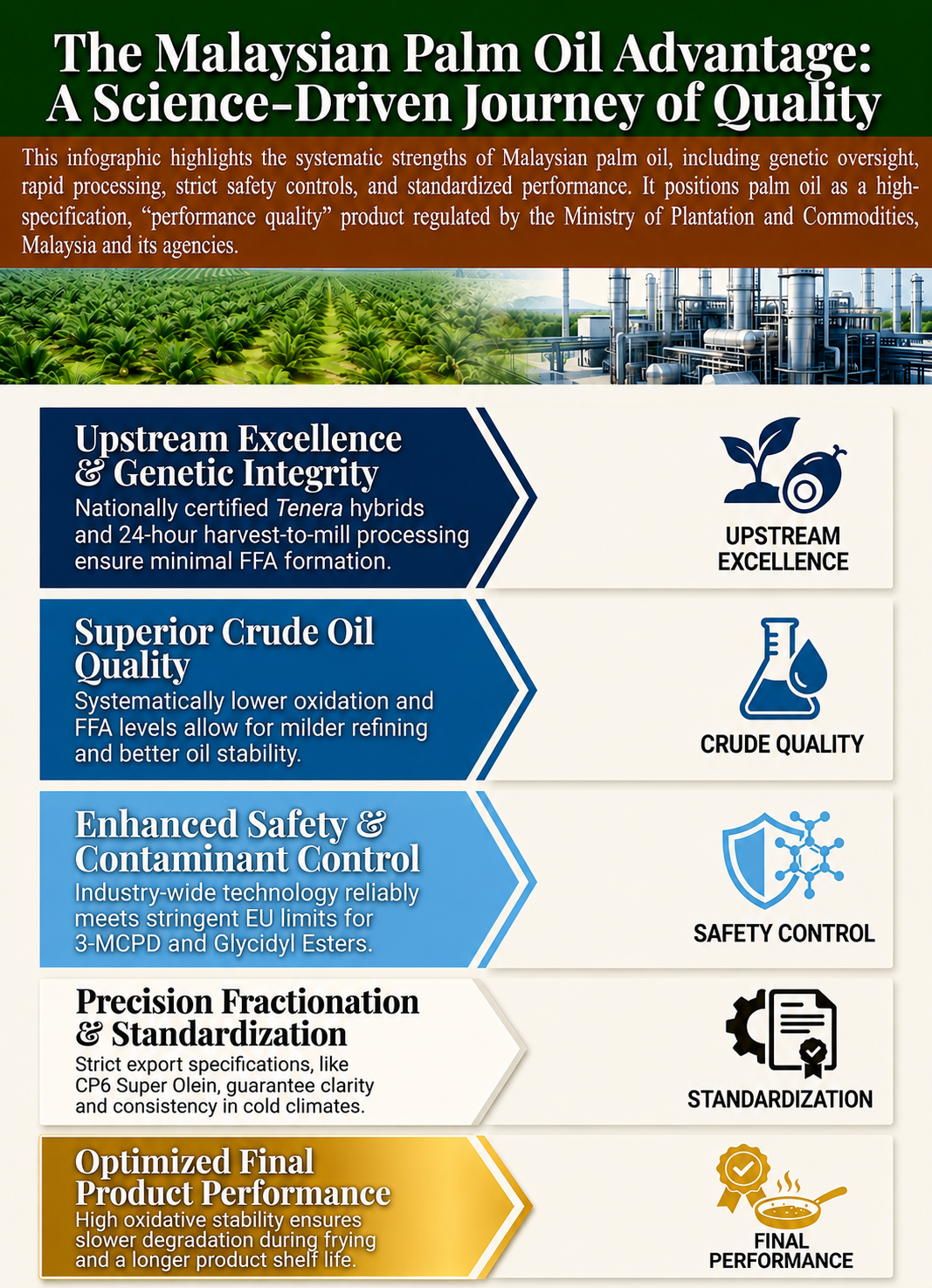
This section evaluates Malaysian Palm Oil (MPO) as a case study in how production systems influence oil quality, rather than as a general endorsement of any single origin.
Malaysia is the second largest producer of palm oil globally, but it has distinguished itself by developing high quality oils through strict agronomic practices, rapid harvest to mill logistics, and internationally recognised sustainability certification [20][21].
Malaysian Palm Oil (MPO) is one of the most widely consumed edible oils in the world and plays a central role in the diets of millions of people. It is extracted from the mesocarp of the oil palm (Elaeis guineensis) and provides a unique balance of saturated and unsaturated fatty acids, as well as nutrients such as tocotrienols and carotenoids.
This section synthesises scientific and industry evidence to explain why MPO is functionally and nutritionally superior to many other edible oils. Emphasis is placed on biochemical composition, digestive physiology, micronutrient content, and agricultural standards.
Why “Malaysian” Matters
Palm oil is often discussed as a single commodity, but for policy-grade evaluation it must be treated as a spectrum of oils whose final performance depends on (i) plantation genetics, (ii) harvest logistics and milling latency, (iii) crude oil quality (especially free fatty acids (FFA) and oxidation state), and (iv) refining and fractionation controls. This section focuses exclusively on MPO and its key refined fractions with particular emphasis on refined, bleached and deodorized (RBD) palm olein CP6 (“Super Olein”), as it represents one of the dominant import-grade liquid fractions used in India for frying applications and retail bottling.
4.1. Fatty Acid Composition and Nutritional Profile of Malaysian Palm Oil (MPO)
Palm oil is obtained from the fruit of Elaeis guineensis across multiple tropical regions. While the botanical species is the same, the delivered fatty acid profile, oxidation status, and functional performance of the oil are influenced by plantation genetics, harvest timing, milling speed, and quality control systems. This is where MPO distinguishes itself as a more consistent and specification-reliable product.
The nutritional and physiological behavior of MPO cannot be understood merely by listing its fatty acid percentages. MPO is the outcome of a nationally governed agricultural, processing, and quality-control system that begins with genetically selected oil palm material, enforces strict harvest-to-mill timelines, and applies tightly controlled refining and fractionation standards. These system-level controls shape not only the oil’s chemical purity and stability, but also its nutritional functionality.
Unlike many seed oils that enter the global market as largely undifferentiated commodities, MPO is characterised by high consistency in quality and composition. These attributes have direct consequences for how the oil is digested, metabolized, and behaves in both food systems and the human body.
Table 12: Fatty Acid Profile & Stability Comparison of Vegetable Oils
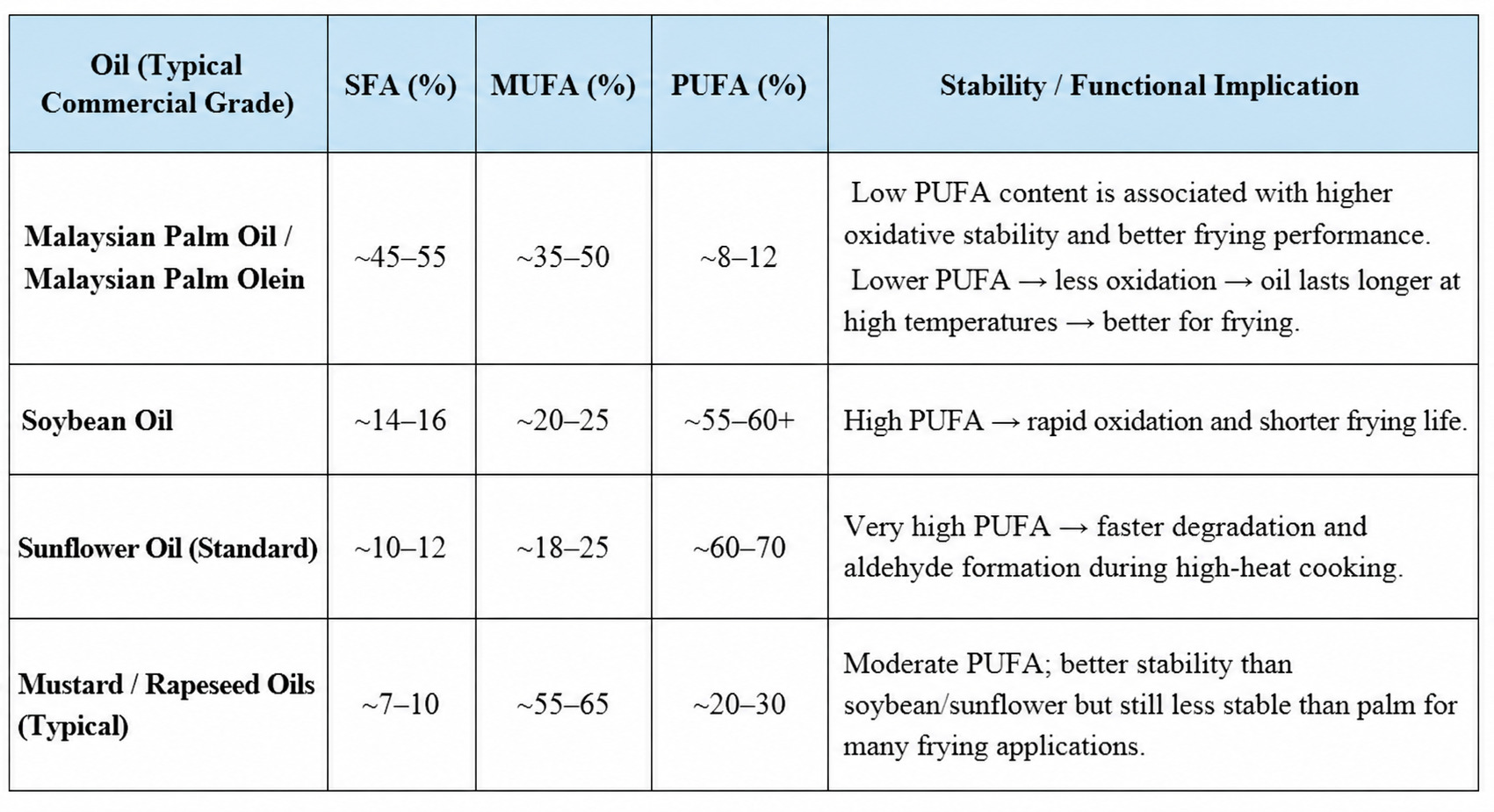 Source: Oxidative stability and fatty acid profile of vegetable oils [22]; Fatty acids profile of edible oils and fats in India [23]
Malaysian palm oil and Malaysian palm olein exhibit consistent fatty acid composition ranges, whereas palm oils from less regulated supply chains often display wider batch-to-batch variability and a higher oxidative and FFA burden, even when their nominal fatty acid percentages appear similar in specification sheets.
4.1.1. Naturally Trans Fat Free and Cholesterol Free by Biological Design
All vegetable oils are inherently cholesterol free; therefore, cholesterol absence is not a distinguishing feature of any single plant oil. The functional differentiator of MPO lies in its native semi-solid state and its ability to be cleanly fractionated into distinct components, namely liquid palm olein and solid palm stearin.
4.1.2. Phytonutrients: Tocotrienols, Tocopherols, and Carotenoids
MPO provides vitamin E in a distinctive mixture of tocopherols and tocotrienols, and authoritative reviews identify MPO as one of the world’s richest natural dietary sources of tocotrienols [9]. Crude and minimally processed Malaysian red palm oil contains very high concentrations of carotenoids, whereas conventional refining is deliberately designed to remove most carotenoids to achieve color neutrality for mass-market edible oil. vitamin E components, especially tocotrienols, are retained to a substantially greater extent, with final levels depending on refining severity and process design.
Key nutritional attributes follow directly from this profile: plant-based saturates (no cholesterol), naturally trans fat free because hydrogenation is not required for functional stability, and meaningful monounsaturated fat content that supports liquid handling and dietary balance. This gives MPO a dual advantage: technological functionality of refined oils and nutritional density in specialty red palm oil streams.
Table 13: Micronutrients in Crude/ Red Palm Oil and Refined Palm Oil
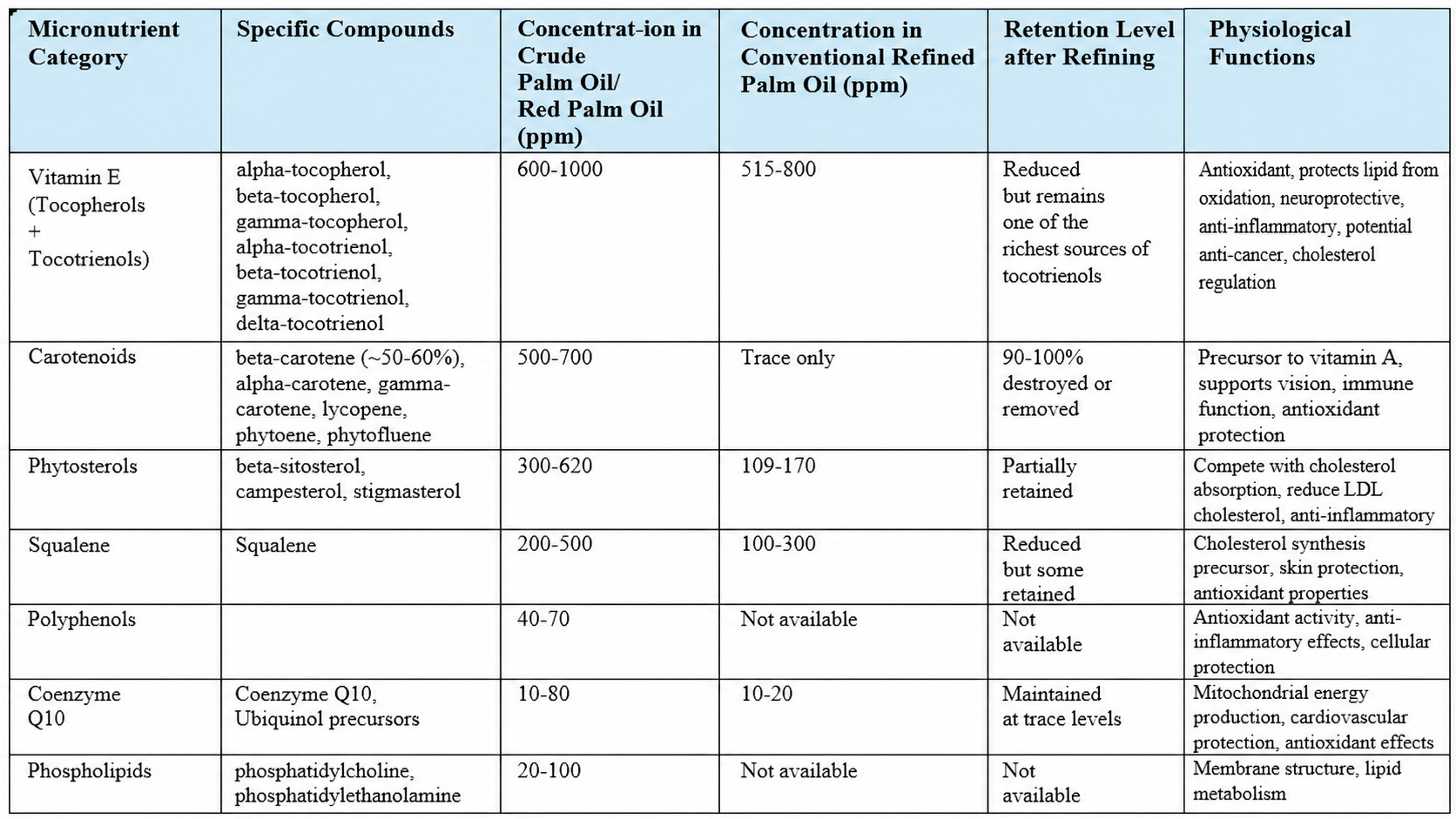 Source: European Journal of Lipid Science and Technology [24]; Food and Nutrition Bulletin [25]
The Natural Antioxidants in MPO: Tocotrienols and Tocopherols
A defining nutritional distinction of MPO is its natural vitamin E complex, which includes both tocopherols and tocotrienols, a form of vitamin E with particularly strong antioxidant and biological activity. These antioxidants perform two critical roles. From a food-system perspective, tocotrienols and tocopherols contribute directly to the exceptional shelf-life performance of MPO and MPO-based food products, reducing the rate of rancidity and degradation during storage and cooking. From a biological perspective, these compounds contribute to the body’s antioxidant defense mechanisms, helping protect cells from oxidative stress, which is a common underlying factor in metabolic disorders, vascular damage, and cellular aging.
Importantly, the retention and consistency of these antioxidants in MPO are the result of Malaysia’s best agricultural practices and technological advancement, which help to preserve sensitive minor components.
Red palm oil is a concentrated dietary source of provitamin A carotenoids, particularly β-carotene and α-carotene, which give the oil its characteristic red-orange colour. These carotenoids are converted in the human body into vitamin A (retinol), an essential micronutrient required for normal vision, immune function, growth, and the maintenance of healthy tissues. Because these carotenoids are naturally present within a lipid matrix, they have relatively high bioavailability, supporting efficient absorption and conversion. Adequate vitamin A intake helps maintain good eyesight and strengthens immune defence, whereas deficiency can lead to night blindness, weakened immunity, and serious eye issues including xerophthalmia - dryness and damage to the surface of the eyes.
Collectively, these characteristics show that MPO functions as both versatile and nutritious edible oil rather than just a generic commodity oil. Its balanced fatty acids profile, metabolic neutrality, and antioxidant functionality are the outcome of a nationally integrated production and quality-governance framework. This framework includes genetic selection of planting material, strict harvest-to-mill timelines, controlled crude oil quality (low FFA and low oxidation), and standardized refining and fractionation practices.
4.2. Why Malaysian CP6 “Super Olein” Matters for India
MPO is exported to India and other nations through a controlled refining and fractionation system that delivers standardised performance grades. Among these, RBD Palm Olein CP6 (“Super Olein”) is one of the most important products for retail and frying applications.
This makes CP6 a specification-led solution for tropical countries such as India: it ensures visual clarity in cooler climates, for a more consistent and stable frying performance in commercial kitchens and food manufacturing [26][27][28].
4.2.1. Oxidative Stability, Frying Performance, and Lower Unhealthy Byproducts
a) Why palm olein behaves as a ‘heavy-duty ’frying oil?
Thermal oxidation in frying oils is driven largely by the degree of unsaturation. PUFA-rich oils oxidize rapidly, generating peroxides, aldehydes, polymers, and polar compounds. MPO’s low PUFA content and higher saturation slow these pathways, extending usable fry-life. Comparative frying studies frequently report stronger stability performance for palm olein than for soybean or standard sunflower oil [29].
b) Polar compounds, polymerization, and equipment fouling
Studies comparing frying oils have shown that Malaysian palm olein accumulates the degradation products more slowly than PUFA-rich oils such as soybean or sunflower oil [29]. Total polar compounds (TPC) are widely used as an operational marker of frying-oil degradation. Frying-cycle literature indicates palm olein accumulates degradation products more slowly than PUFA-rich oils and is less prone to polymerization-related gumming because of lower linoleic/linolenic content. As a result, it is less prone to oxidation and polymerization during heating. This means it forms fewer sticky, high-molecular-weight compounds that cause oil thickening and gumming of frying equipment [14]. In real frying operations, this translates into slower oil deterioration, cleaner fryers, and longer usable frying life compared to commonly used soft oils [21][28].
c) Acrylamide Formation: Evidence from Studies Using Palm Olein
Acrylamide is a potential carcinogen and neurotoxic compound, and long-term dietary exposure is considered a public health concern. Acrylamide formation in fried foods is mainly influenced by the composition of the food (especially sugars and asparagine) and by cooking conditions such as temperature and time. The frying oil also plays an important role, because oxidation products from degraded oils can contribute to acrylamide formation.
Comparative frying studies show that Malaysian palm olein tends to yield lower acrylamide levels in fried foods than PUFA-rich soft oils such as soybean, sunflower, or canola oil under otherwise similar conditions. Lim et al. reported that sweet potato chips fried in palm olein had significantly lower acrylamide levels than those fried in soybean or canola oil [30].
Other frying-cycle studies similarly place Malaysian palm olein among the lower acrylamide outcomes when compared with other commonly used vegetable oils, a result that is consistent with its higher oxidative stability and lower formation of reactive lipid oxidation products during frying. [31][32]
d) Shelf life and sensory stability of fried and baked foods
Because oxidation is a primary driver of rancidity, MPO’s oxidation resistance improves shelf life of fried snacks and other fat-containing foods, especially compared with high-linoleic oils where off-flavor can occur earlier.
e) Liquid fraction vs solid fraction: clear role separation
Malaysian palm olein (including CP6) is optimised for frying and general cooking; palm stearin provides solid-fat functionality for bakery shortenings and confectionery fats, enabling replacement of partially hydrogenated oils without trans fats.
4.3. Malaysian Palm Oil (MPO): A Distinctive Compositional Profile
Palm oil’s botanical origin is shared globally, but functional and safety performance can diverge due to system-level quality drivers: genetic planting material [20], harvest-to-sterilization time, crude oil FFA, and refinery mitigation capacity for process contaminants. Malaysia’s advantage is best understood as a disciplined quality system that improves consistency at each step.
4.3.1. Harvest-to-mill Latency, Free Fatty Acids (FFA), and Oxidation Starting Point
FFA increase when fresh fruit bunches are delayed before sterilization. Malaysian Palm Oil Board (MPOB) technical publications indicate that fresh fruit bunches (FFB) should be delivered to mills within 24 hours and graded per MPOB manuals [33]. Peer-reviewed literature similarly notes processing within 24 hours to preserve quality [34]. Research on FFA formation shows delays materially raise FFA and can compromise downstream refined oil quality [35].
Table 14: System-Level Quality Drivers and Functional Significance
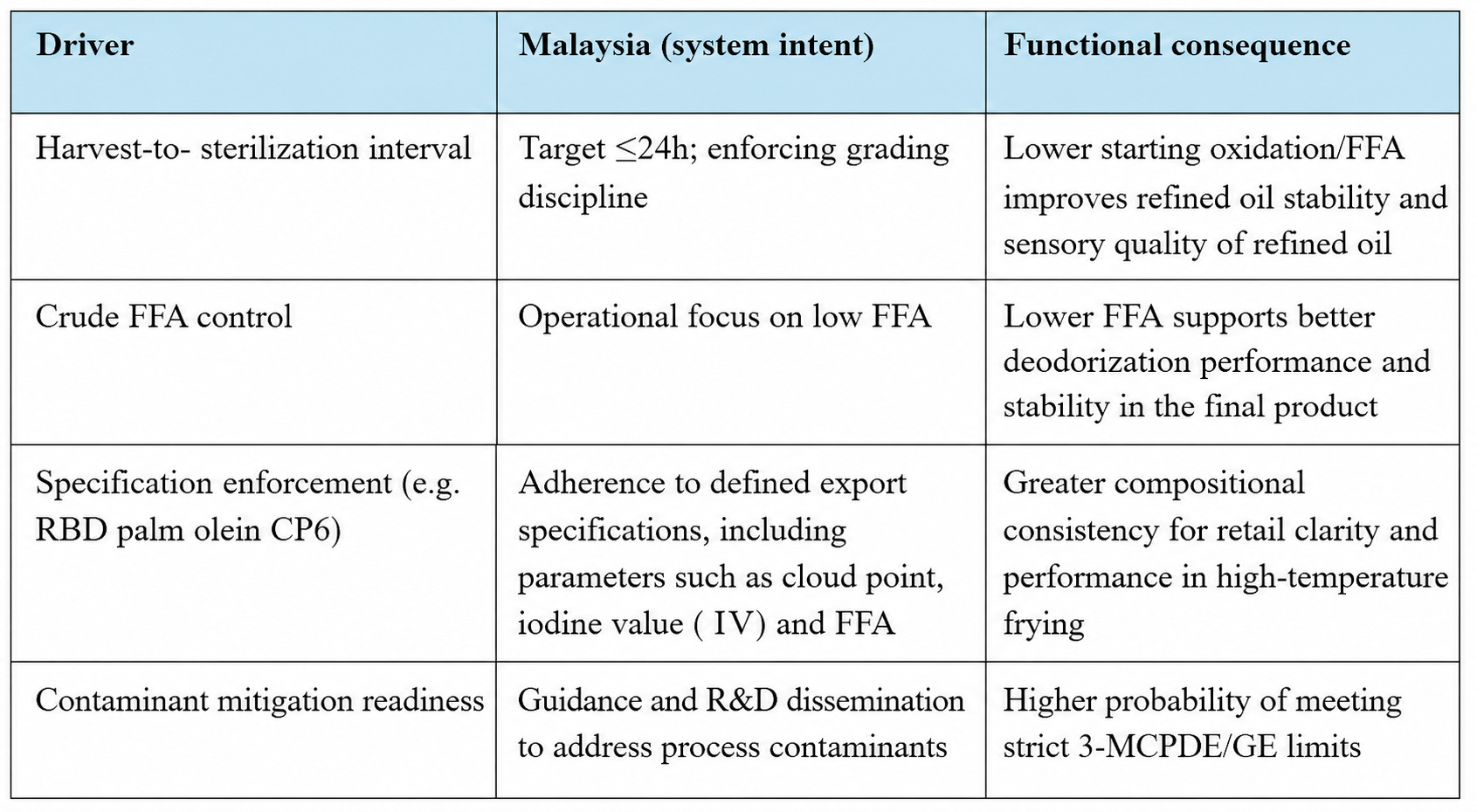 Source (s): Derived from MPOB processing standards, FAO edible oil guidelines, Codex specifications, and EFSA contaminant risk assessments.
-
Time Sensitivity: Malaysia's strict 24-hour window for sterilization is a critical factor in preventing oil degradation, particularly FFA formation.
-
Yield Efficiency: By focusing on low crude FFA, the system improves the efficiency of the refining process, specifically the deodorization stage.
-
Market Compliance: Ongoing technical guidance and clear export specifications (like CP6) help ensure that the final product remains competitive and meets global safety standards regarding contaminants.
4.3.2. Control of Process Contaminants in Palm Oil Refining
3-MCPD esters (3-MCPDE) and glycidyl esters (GE) are process contaminants formed primarily during high-temperature refining. Scientific reviews emphasize multi-step strategies (degumming/neutralization, bleaching choices, deodorization profiles) and highlight crude oil quality as a key determinant of compliance with regulatory limits [36][37]. MPOB publications document industry-wide guidance and best-practice measures used in Malaysia to control these substances and ensure compliance with international safety limits [38].
4.4. Structural Advantage of MPO
The way dietary fat behaves in the human body is influenced not only by which fatty acids it contains,
but also by how those fatty acids are arranged within the triglyceride molecule. Scientific reviews emphasize that triglyceride structure plays a meaningful role in digestion, absorption, and metabolic handling of dietary fats.
4.4.1. Triglyceride Structure and Digestion
In the case of MPO, this structural dimension is particularly important. MPO exhibits a highly consistent and predictable triglyceride architecture, a result of both the biological characteristics of the oil palm and Malaysia’s tightly controlled production system. This structural regularity underpins its use in structured lipid applications and specialised nutritional formulations.
This means that the physiological behavior of MPO cannot be inferred solely from a comparison of saturated and unsaturated fat percentages. Its molecular structure constitutes a second, independent layer of functional and metabolic behavior, influencing how the oil is emulsified, hydrolysed by digestive enzymes, and absorbed in the intestine. In effect, MPO should be understood not only in terms of its fatty acid composition, but also in terms of its triglyceride structure, which plays a significant role in determining how the fat is processed by the body.
4.4.2. Blood Lipids and Cholesterol: Evidence for Metabolic Neutrality of MPO
The health debate around saturated fats has often treated all sources as metabolically equivalent. However, controlled dietary studies and clinical nutrition reviews show that MPO behaves in a largely neutral manner with respect to blood lipid profiles when consumed under normal dietary conditions. When MPO is used to replace trans fat containing PHOs, its effects on total cholesterol, LDL cholesterol, and HDL cholesterol are generally beneficial or comparable to those of other commonly used edible oils such as soybean, sunflower, and canola (rapeseed) oil, while avoiding the adverse cardiovascular effects associated with trans fats. This reflects not only its balanced fatty acid composition, but also the presence of bioactive minor components and its specific triglyceride structure.
Malaysian Palm Oil Nutrition, Is Malaysian Palm Oil Healthy, What Makes Malaysian Palm Oil Different, Palm Oil Tocotrienols Health Benefits, Palm Oil Vitamin E Source, Does Palm Oil Contain Trans Fat, Palm Oil Fatty Acid Composition, Palm Oil vs Sunflower Oil Frying, Palm Oil Oxidative Stability Cooking, Palm Oil Acrylamide Formation Frying, Palm Oil Shelf Life Fried Food, Palm Oil Cholesterol Effects India, Palm Oil LDL HDL Evidence, Malaysian Palm Oil Quality Standards, Palm Oil CP6 Super Olein India, Palm Oil 3-MCPD Safety Standards, Palm Oil Contaminant Control Refining, Palm Oil Harvest to Mill Quality, Palm Oil Red Palm Oil Difference, Malaysian Palm Oil Board MPOB Standards