
Evaluating Palm Oil in India - Health Evidence, Dietary Context and Misconceptions | White Paper Part 1
Explore evidence-based insights on palm oil in India, highlighting its nutritional role, dietary relevance, saturated fat science and clinician perspectives.
Disclaimer
This white paper, "Evaluating Palm Oil in India," has been prepared by Makreo Research with support from the Malaysian Palm Oil Council (MPOC) for informational and educational purposes. It is intended to contribute to public understanding of dietary fats, edible oils, and related nutritional considerations in the Indian context.
The content of this paper is based on a review of publicly available peer-reviewed literature, regulatory publications, government and institutional reports, and qualitative interviews with clinicians across cardiology, gastroenterology, neurology, and nutrition science. Clinician perspectives reflect individual professional experience and should not be interpreted as formal clinical guidelines, consensus statements, or medical recommendations.
Nothing contained in this document constitutes medical, nutritional, legal, regulatory, or investment advice. Individuals with specific health conditions, dietary concerns, or clinical questions should consult a qualified healthcare professional before making changes to their diet or lifestyle.
Every effort has been made to ensure that the information is accurate and current at the time of publication. However, nutritional science, regulatory frameworks, and market data continue to evolve, and Makreo Research makes no representation or warranty, express or implied, regarding completeness, accuracy, reliability, or suitability of the information for any particular purpose. Makreo Research, its authors, and contributors disclaim any liability for actions taken, or not taken, on the basis of the content of this document.
References to specific organizations, products, brands, geographies of origin (including Malaysian Palm Oil), or industry bodies are made for analytical and illustrative purposes only and should not be interpreted as formal endorsement or commercial recommendation.
All figures, tables, and extracts reproduced from third-party sources remain the property of their respective copyright holders and are used here under fair-use principles for commentary and research. Rights to the original text and compiled analysis of this white paper are reserved by Makreo Research and MPOC. Reproduction or distribution in whole or in part requires prior written permission from both parties.
Executive Summary
Palm oil occupies a central yet controversial position in India’s food system. While it constitutes over one-third of the country’s edible oil consumption, it is frequently portrayed in public discourse as a uniquely unhealthy dietary fat. This white paper examines such perceptions and evaluates scientific integrity and clinical relevance of these notions.
India continues to face a substantial burden of malnutrition and micronutrient deficiencies, particularly of fat-soluble vitamins such as vitamins A and E. Adequate dietary fat intake is essential for the absorption of these nutrients. Against this backdrop, palm oil plays a pragmatic role in ensuring fat availability across income groups due to its affordability, functional stability, and scalability in large-scale food preparation.
A review of peer-reviewed scientific literature and interviews with clinicians across specializations including cardiology, gastroenterology, neurology, and nutrition science reveals that many prevailing beliefs about palm oil are rooted more in perception than in evidence. Palm oil is neither uniquely unhealthy nor equivalent to industrial trans fats. Its health effects depend primarily on quantity, frequency of consumption, cooking practices, and overall dietary patterns, rather than on its identity as a single ingredient.
The paper further examines how treating saturated fats as a monolithic health risk oversimplifies the underlying biology and obscures important metabolic distinctions among individual fatty acids. It highlights that categorizing "saturated fat" as a uniform health risk conceals meaningful biological differences among fatty acids. Palm oil’s dominant saturated fatty acid, palmitic acid, is metabolically distinct from industrial trans fat and does not exhibit a consistent or independent causal association with cardiovascular disease when consumed within the context of balanced dietary patterns.
Importantly, the white paper underscores that India’s transition away from partially hydrogenated oils, driven by public health imperatives, created a functional gap that palm oil has helped fill without generating trans fats. This transition should be understood as a process-level health intervention, not as an endorsement of overconsumption.
The white paper concludes that isolating palm oil as a primary dietary risk oversimplifies India’s complex nutritional challenges. Effective public health outcomes require shifting the conversation toward moderation, dietary balance, cooking practices, and evidence-based communication rather than demonizing individual ingredients.
Table of Contents
PART 1: ASSESSMENT OF DIETARY FAT CONSUMPTION IN INDIA
1.1 Dietary Fat Consumption Patterns in India
1.2 Influence of Cooking Styles and Socioeconomic Factors
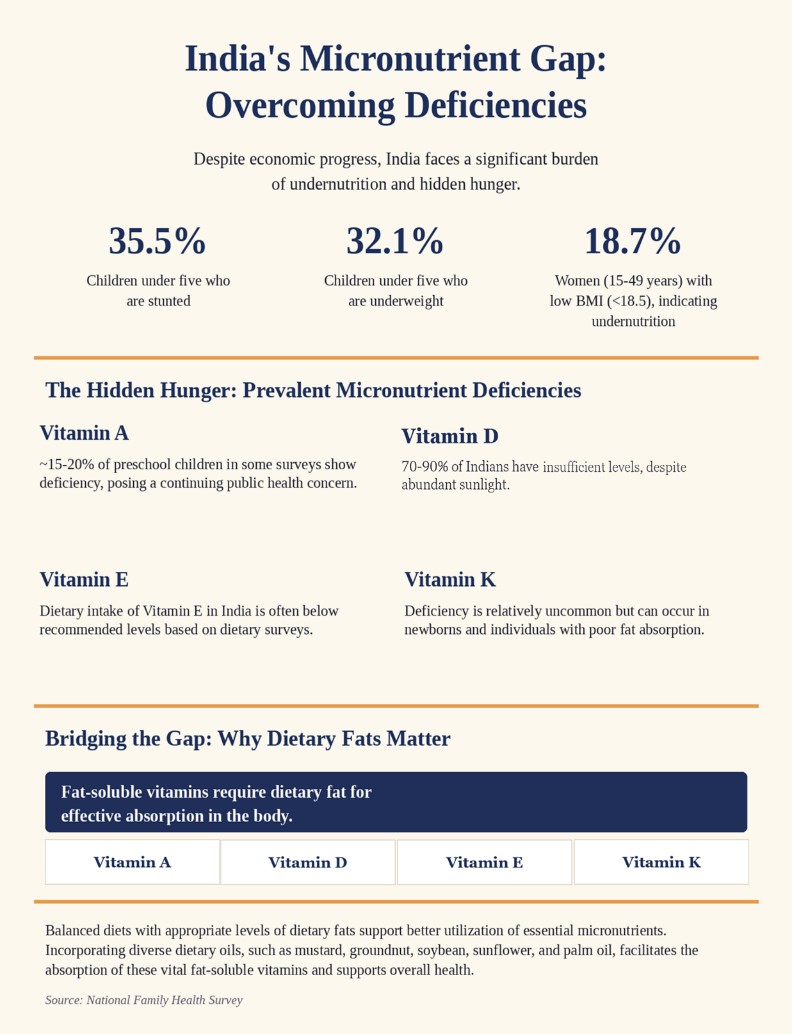
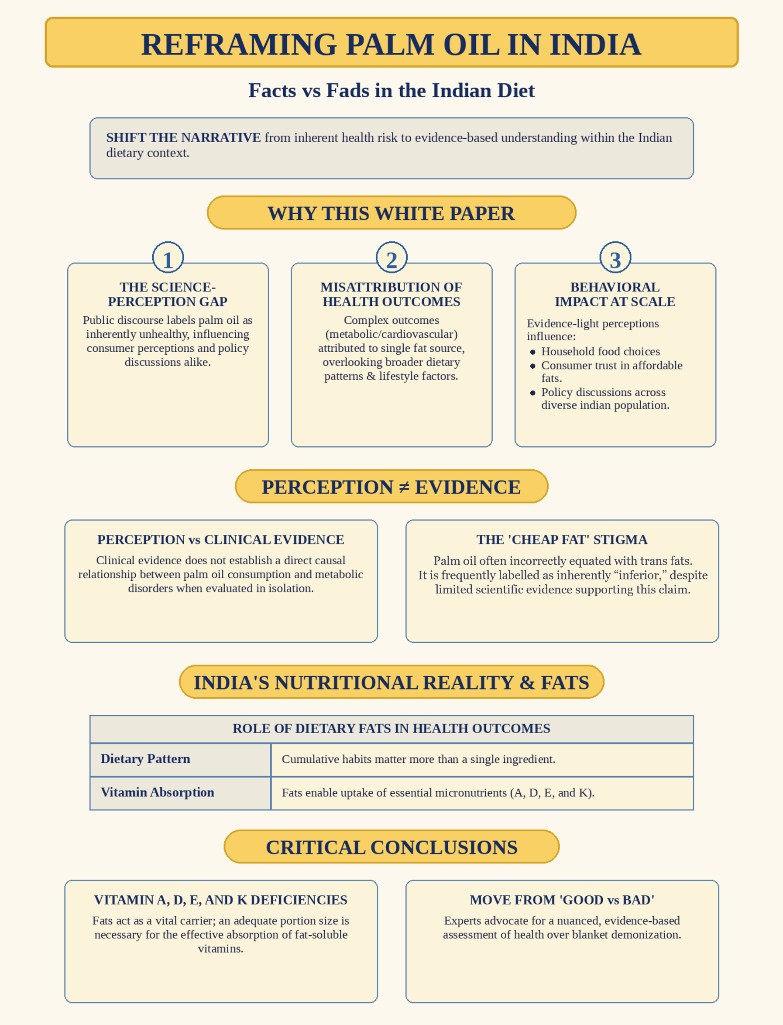
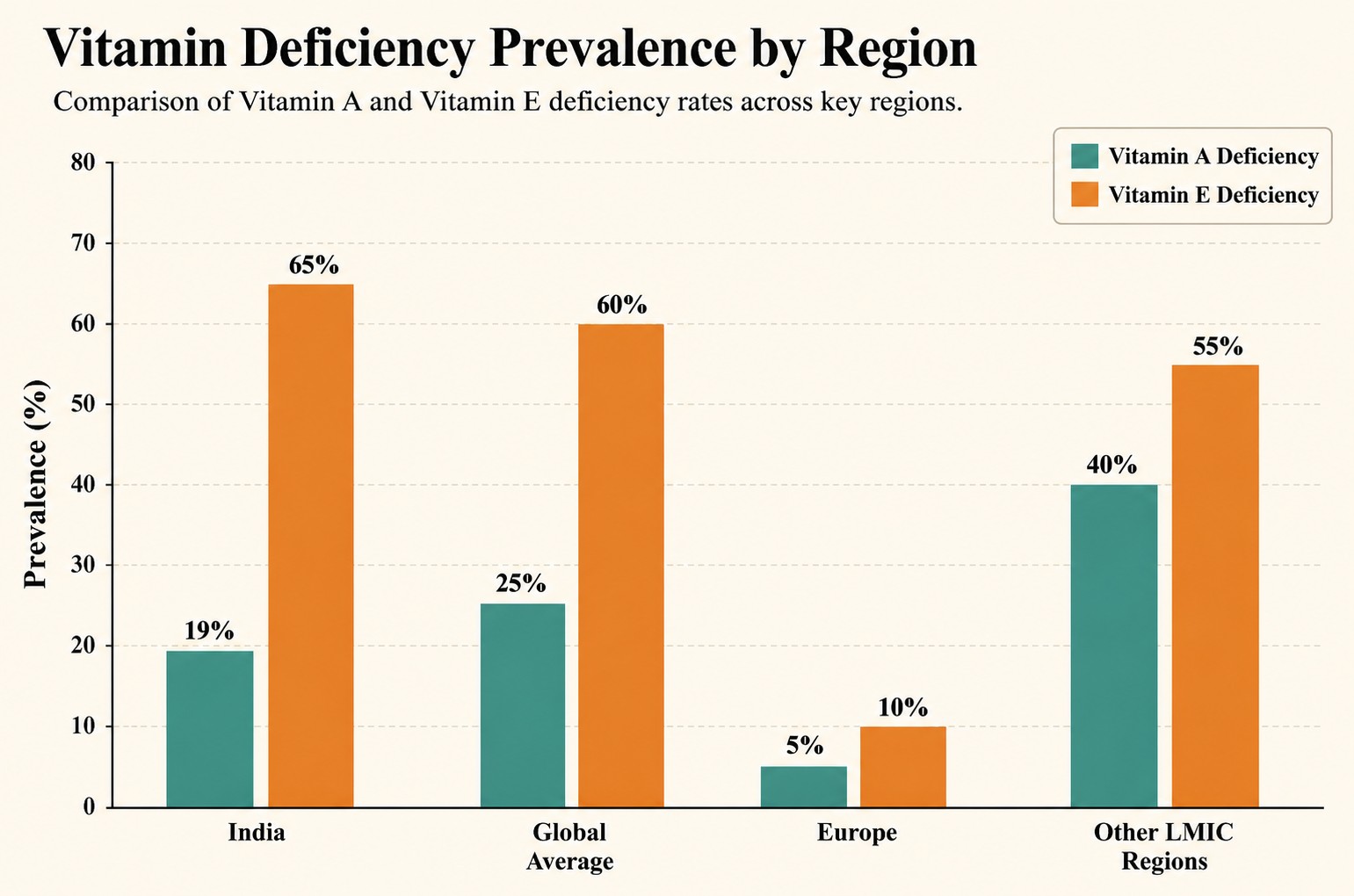
Figure 1: India vs Other Regions: Prevalence of Vitamin A and Vitamin E Deficiencies
 Source: FAO/WHO Codex Alimentarius; USDA FoodData Central; Malaysian Palm Oil Board (MPOB); AOCS; [1] (compiled and synthesized by Makreo Research)
The comparative prevalence of vitamin A and vitamin E deficiencies in India, relative to global and regional benchmarks, highlights a persistent nutritional vulnerability, particularly in the context of fat-soluble micronutrients. These deficiencies are not merely a function of inadequate intake, but also of suboptimal absorption linked to insufficient or inaccessible dietary fats.
Within this context, palm oil occupies a pragmatic role in India’s food system. Its widespread availability, affordability, and functional stability make it a consistent source of dietary fat across income groups and food products, especially in large-scale food preparation. While palm oil is often positioned negatively in public discourse, the evidence suggests that its role in supporting fat intake and thereby facilitating the absorption of fat-soluble vitamins, cannot be overlooked in a population facing systemic micronutrient gaps.
Addressing vitamin A and E deficiencies therefore require a broader, evidence-based perspective - one that recognizes dietary fats as enablers of nutrition rather than isolating individual oils as health risks. Reframing palm oil within this nutritional context is essential to moving the conversation from perception-driven narratives toward informed public health outcomes.
1.1. Dietary Fat Consumption Patterns in India
Evidence from literature review
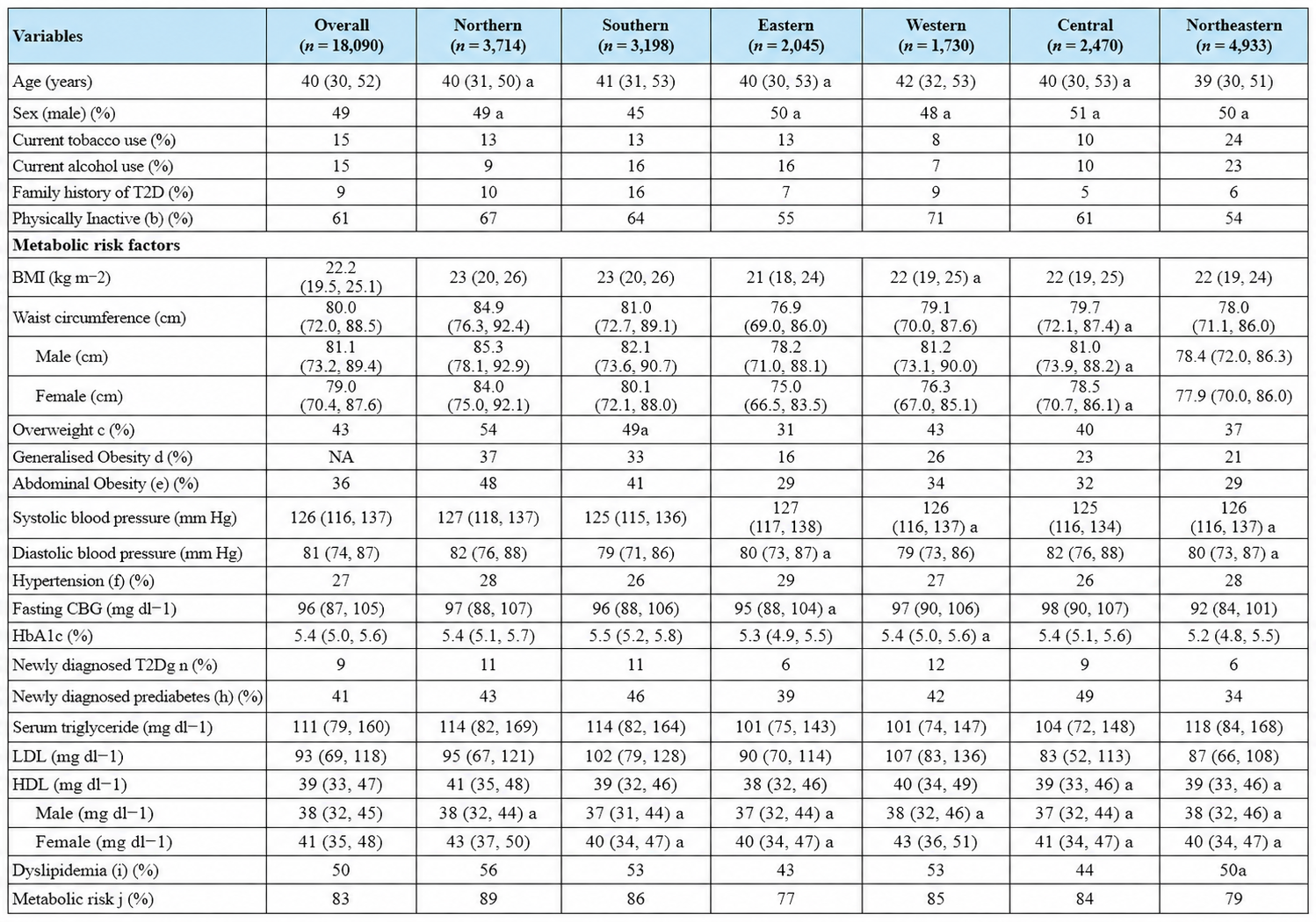
India has undergone a rapid nutrition transition over the past two decades, marked by a shift from traditional diets toward increased consumption of refined carbohydrates, processed foods, and higher total fat intake. National survey evidence indicates diets are increasingly characterised by high intake of low-quality carbohydrates, elevated saturated fat consumption, and inadequate protein intake. This transition coincides with a sharp rise in cardiometabolic risks, obesity, and non-communicable diseases across regions.
Table 1: Demographic Characteristics and Metabolic Risk Factors of the Study Population Stratified by Regions (n = 18,090)
 Notes:
a. Nonsignificant variables.
b. Physically inactive was defined as participants with sedentary PALs (1.40–1.69).
c. Overweight was defined as BMI ≥ 23 to <25 kg m−2.
d. Generalised obesity was defined as BMI ≥ 25 kg m−2.
e. Abdominal obesity was defined as waist circumference of ≥90 cm for males and ≥80 cm for females.
f. Hypertension was defined as systolic blood pressure ≥140 mm Hg and diastolic blood pressure ≥90 mm Hg.
g. Newly diagnosed T2D was defined as HbA1c ≥6.5% and/or if fasting CBG ≥126 mg dl−1 (≥7 mmol l−1) or 2-h post glucose load CBG ≥220 mg dl−1 (≥12.2 mmol l−1).
h. Newly diagnosed prediabetes was defined as HbA1c 5.7–6.4% or if fasting CBG was ≥100–125 mg dl−1 (≥5.6–6.9 mmol l−1) and/or if 2-h post load CBG value was ≥160 and <220 mg dl−1 (≥8.9 to <12.2 mmol l−1).
i. Dyslipidaemia was defined as serum cholesterol concentrations of ≥200 mg dl−1 (≥5.2 mmol l−1); serum triglyceride concentrations of ≥150 mg dl−1 (≥1.7 mmol l−1) or low HDL-C (male < 40 mg dl−1 (1.04 mmol l−1) and female < 50 mg dl−1 (1.3 mmol l−1)) and LDL-C concentrations of ≥130 mg dl−1 (3.4 mmol l−1).
j. Metabolic risk was defined as the presence of any one of the metabolic risk factors, including newly diagnosed T2D, newly diagnosed prediabetes, dyslipidaemia, hypertension, generalised obesity or abdominal obesity.
k. LDL-C, low-density lipoprotein cholesterol; HDL-C, high-density lipoprotein cholesterol; CBG, capillary blood glucose.
Source: Dietary profiles and associated metabolic risk factors in India from the ICMR–INDIAB survey-21 [2]
1. Dietary patterns across urban and rural populations
Dietary fat consumption patterns differ significantly between urban and rural populations. Urban households show higher per-capita edible oil consumption, greater use of sunflower and blended oils, and increased reliance on processed and out-of-home foods. Rural areas, while traditionally dependent on locally available oils, have increasingly incorporated palm oil and blended edible oils, particularly in Southern and Northern states, reflecting affordability and market penetration.
2. Sources and intake of dietary fats
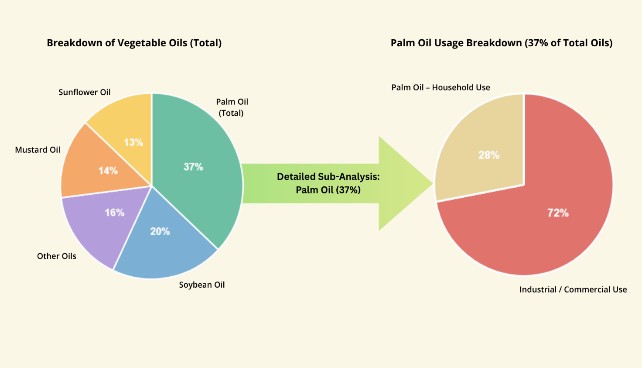
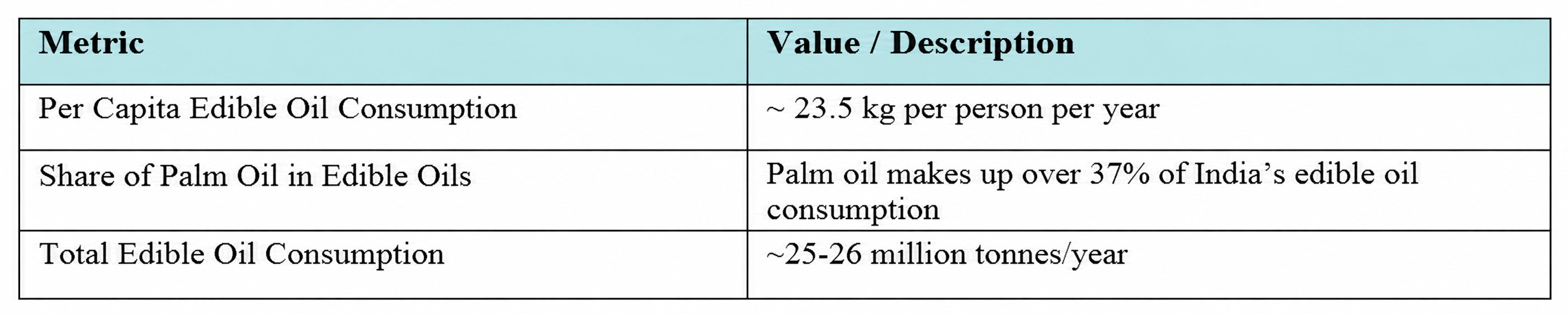
Vegetable oils constitute the primary source of dietary fat in Indian diets, followed by ghee and butter. Among the total vegetable oil consumption, palm oil accounts for one-third of total edible oil consumption, largely due to its extensive use in household cooking, food processing, and food service sectors.
Figure 2: Edible Oil Consumption in India: Share by Oil Type and Palm Oil End-Use Distribution, April 2025
Source (s): Computed consumption mix → SEA / Business Standard, demand projections → NITI Aayog and verified from Business Standard publication [4]
1.2. Influence of Cooking Styles and Socioeconomic Factors
Cooking styles in India, particularly deep-frying and repetitive oil use, play a critical role in dietary fat intake. Fried foods are integral to daily diets, street food culture, and festive consumption across regions. Socioeconomic factors such as urbanization, income growth, time constraints, and affordability strongly influence oil choice, with cost-efficient oils being preferred in low- and middle-income households and institutional food preparation.
Table 2: Key Metrics on Edible Oil Consumption and Production in India, 2025
 Source (s): Business Standard, NITI Aayog member statement [4]
Choice of cooking oils in Indian households and institutional consumption
Cooking oil selection in India is region-specific and culturally influenced. Mustard oil dominates northern states, coconut oil remains prominent in all southern regions, rapeseed oil is widely used in the eastern states and sunflower and blended oils are increasingly preferred in urban areas. Palm oil consumption has expanded notably in semi-urban and rural households and institutional settings due to price competitiveness, stability for frying, and availability through blends, while food service and Hotel, Restaurant and Catering (HoReCa) sectors rely heavily on palm oil for large-scale frying and processed food preparation.
Household Consumption of Oil-by-Oil Type
North Zone: In Northern states (e.g., in Uttar Pradesh, Haryana) mustard oil dominates strongly, followed by soybean, sunflower, and others. Mustard oil accounts for 61.1% of North Indian consumption across Delhi, Punjab, Haryana, J&K, HP, and UP. About 45% of all national mustard oil consumption happens in this zone. The market was valued at ~USD 1.2 billion in 2024.
-
In urban Uttar Pradesh (UP), per-capita monthly edible oil consumption has increased. Mustard oil has a major share; sunflower oil has also grown. The “other edible oils” category (which may include palm oil and blends) has increased three times from ~0.063 litres to ~0.182 litres per person per month over five years.
-
In rural UP, palm oil and safflower oil have recently made inroads into household consumption. That means households in rural UP are now using palm oil (or oils that include palm) more than before. Palm makes indirect inroads through blended/refined oils and vanaspati (plant-based ghee, ~1.2 million MT nationally). Growth is urban-led, price-driven, and happening via packaged food processing rather than direct household cooking oil.
South Zone: In the Agricultural Situation in India report, in the south zone it is noted that palm oil consumption (household level) has increased: in rural households of some southern states, from ~44.4% to ~50.4% in 5 years.
In southern coastal states (Kerala, Tamil Nadu) coconut oil has more presence. Also, groundnut oil, sunflower oil and palm oil in some southern and western states.
-
In Tamil Nadu urban areas, households majorly consumed sunflower oil, coconut oil, groundnut oil and palm oil with few consuming safflower and other edible oils. In Tamil Nadu, the tradition was a lot of peanut (groundnut) oil and coconut oil but there is a shift towards non-traditional oils like sunflower oil.
-
The rural areas of Tamil Nadu consume diverse types of oil, but the most dominant oils are palm oil, groundnut oil, sunflower, and coconut oil, with few others consuming canola, ramtil (Niger seed), sesame, safflower, and other oils. It is evident that the percentage of households consuming palm oil has increased from 44.4% to 50.4%.
East Zone: In eastern states such as West Bengal, Odisha, Bihar, Jharkhand, and Assam, household edible oil consumption is largely dominated by mustard oil, followed by soybean oil and sunflower oil. Mustard oil has traditionally been the preferred cooking medium in this region due to strong cultural preference and local production, particularly in West Bengal and Bihar, where it is widely used for frying and tempering in everyday cooking.
The region also supports palm oil processing through a strong refining ecosystem around the ports of Haldia and Paradip, where companies such as Adani Wilmar, Patanjali Foods, Budge Budge Refineries, Emami Agrotech and Cargill refine imported crude palm oil into edible oils. These refining hubs ensure a steady supply to households and food industries across Eastern, Northern, and Northeastern India, thereby strengthening the country’s edible oil supply chain.
West Zone: In western states such as Maharashtra, Gujarat, and Rajasthan, household edible oil consumption is relatively diversified, with groundnut oil, soybean oil, sunflower oil, and palm oil based refined oils being commonly used. Historically, groundnut oil dominated household consumption, especially in Gujarat and parts of Maharashtra, due to strong local production of peanuts.
However, over time, consumption patterns have shifted toward refined soybean and sunflower oils, particularly in urban households.
-
In urban Maharashtra and Gujarat, households increasingly prefer refined soybean, groundnut oils and sunflower oils because of price competitiveness and wider availability through packaged brands.
-
In rural areas of western India, groundnut oil continues to have a strong cultural and culinary presence, particularly in Gujarat.
Palm oil has significant indirect penetration in western India, largely through refined blended oils, bakery shortening, and processed food applications. The growth of QSR chains, packaged snacks, and food processing industries in western India has also supported increased demand for palm-based oils.
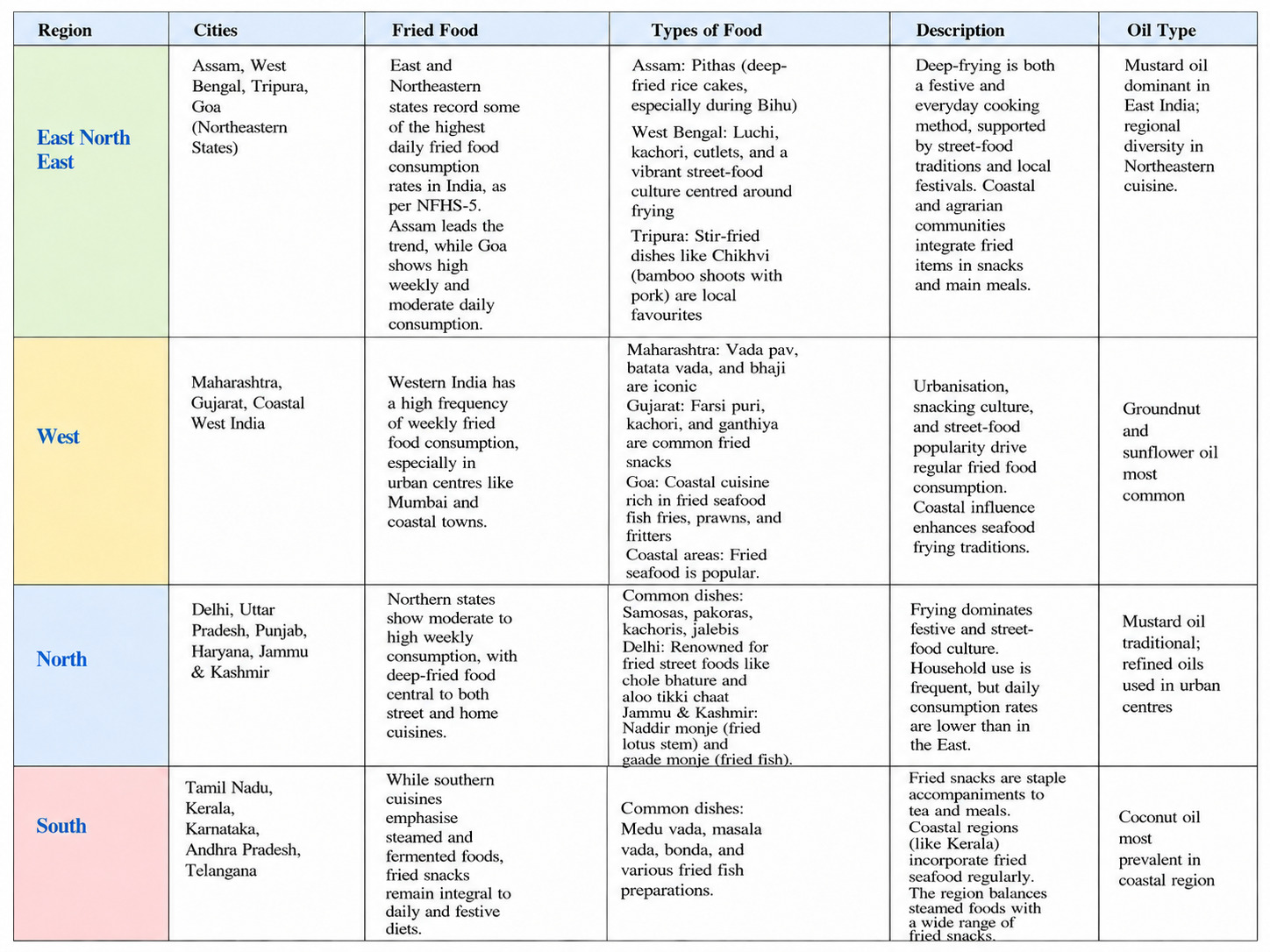
Table 3: Types of Oil Consumption in India based on Different Regions
Source(s): NFHS-5, 2019-21 Survey of per capita consumption of vegetable oil in India [5]
The regional patterns of fried food consumption and edible oil usage in India highlight that frying is a deeply embedded culinary practice across states, independent of any single oil type [6]. Traditional cooking oils, such as mustard oil in the North and North-East, groundnut oil in the West, and coconut oil in the South, continue to dominate household kitchens, while refined oils and palm-oil-based blends are more commonly used in commercial and industrial food preparation due to their functional properties, affordability, and scalability.
Importantly, health outcomes linked to fried food consumption cannot be attributed to palm oil in isolation, but rather reflect broader dietary patterns, frequency of intake, and overall nutritional balance. This distinction is often missing from public discourse, contributing to oversimplified narratives that single out palm oil while overlooking cultural food habits and systemic nutritional gaps prevalent across regions.
The discussion continues in Part 2 "Misconceptions About Palm Oil and Health Among Indian Consumers | White Paper Part 2"
Palm Oil India, Palm Oil Health Effects, Palm Oil Misconceptions, Palm Oil Saturated Fat, Diet and Socioeconomic Factors India, HoReCa Palm Oil India, Dietary Fat and Public Health India, Evidence Based Nutrition India, Urban Rural Dietary Patterns India, Dietary Fat Consumption in India, Fat-Soluble Vitamins, Dietary Pattern, Vitamin Absorption, Micronutrient Gaps, Metabolic Risk Factors, Edible Oil Consumption in India, Edible Oil Production in India, Average Oil Consumption in India