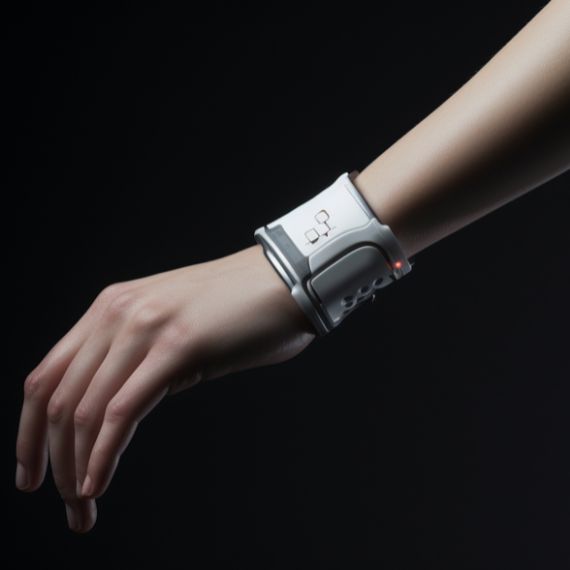
Global Smart Wearables Market and Forecast to 2030 - Analysis by Product Type (Smartwatches, Hearables, Fitness Bands, Smart Clothing, Smart Rings, Smart Glasses & Others), Connectivity, Distribution Channel, End-User, and Geography
Global Smart Wearables Market Size
The global smart wearables market recorded a CAGR of 15.24% between 2021 and 2025, driven by rising consumer focus on health monitoring, accelerating adoption of connected fitness devices, and rapid advances in sensor technologies and digital health platforms. Growing integration of wearables with smartphones, cloud-based health applications, and expanding 5G connectivity is reinforcing demand across both consumer and healthcare segments of the wearable technology market.
These developments are establishing smart wearables as a core component of the broader digital health ecosystem, supporting growth in preventive healthcare wearable devices, remote patient monitoring solutions, and technology-enabled wellness management globally.
Global Smart Wearables Market Growth Driven by Digital Health Integration and Connected Ecosystems
-
Demand for smart wearable devices remains robust globally, sustained by rising consumer focus on preventive healthcare, fitness tracking wearable devices, and real-time biometric monitoring, notwithstanding signs of market stabilisation in mature economies.
-
Although growth moderated slightly in 2024 as competition intensified among major wearable manufacturers, ongoing advancements in AI-enabled health monitoring, next-generation sensors, and integration with smartphone and IoT ecosystems are expected to maintain steady market expansion through 2030.
-
With nearly 6 billion internet users worldwide and over 4.3 billion accessing the internet via mobile devices, the increasing dependence of wearable technologies on mobile connectivity and digital health platforms is expected to further accelerate adoption across both developed and emerging markets.
Global Smart Wearables Industry Insights
Smart Wearables Market Expansion Driven by Digital Health and Connected Lifestyle Adoption
The global smart wearables market has expanded steadily in recent years, supported by rising consumer demand for health monitoring wearable technology, fitness tracking wearable devices, and connected lifestyle products. Market revenues have grown consistently since 2021, reaching an estimated value of nearly USD 90 billion by 2025, reflecting strong adoption of smartwatches, fitness trackers, and hearables across the consumer wearable technology market.
Supply chain adjustments and evolving semiconductor availability influenced wearable device shipment trends during certain periods. Sustained advances in wearable technology innovation and deepening integration of digital health wearable features have nonetheless established a strong foundation for continued growth, with market revenues projected to approach nearly USD 180 billion through the forecast period.
Key Developments Among Leading Global Smart Wearables Market Companies
-
In 2026, Huawei Technologies announced a partnership as official technology collaborator for the dsm-firmenich Running Team, home to marathon athlete Eliud Kipchoge, to advance sports performance technology through the integration of wearable devices and athlete performance data analytics.
-
In 2026, Apple Inc. directed expanded artificial intelligence investment and strategic partnerships toward AI capability upgrades for Siri, positioning future wearable devices to incorporate enhanced on-device AI functionality, with developments expected to extend into smart glasses and next-generation wearable technologies.
-
In 2025, Samsung Electronics completed the acquisition of Xealth, a digital health integration platform, to connect wearable health data with clinical care systems, extending its connected healthcare ecosystem across more than 500 hospitals globally and strengthening its position within the healthcare wearables market and remote patient monitoring segment.
-
In 2025, Xiaomi Corporation entered a multi-year collaboration agreement with Qualcomm Incorporated to integrate advanced chipsets into smartwatches and wireless earbuds, and accelerated internal research and development under its RMB 200 billion five-year investment plan, focusing on:
-
Self-developed semiconductor chips for wearable devices
-
AI-driven health monitoring features across its wearable product portfolio
-
Open-sourcing of the HyperOS wearable SDK to broaden its connected wearable ecosystem
-
Global Smart Wearables Product Type Analysis
The global smart wearables market is structurally dominated by smartwatches, which have emerged as the most widely adopted wearable device category. Rising consumer prioritisation of health monitoring wearable technology, fitness tracking, and smartphone integration has positioned smartwatches as the leading segment, accounting for well over half of total market demand.
Hearables have also gained substantial market traction, driven by rapid growth in wireless audio devices and voice-enabled assistant adoption. Fitness bands, smart clothing, and emerging wearable formats continue to contribute smaller shares across the wearable product segmentation analysis, collectively reflecting a gradually diversifying global wearable technology market ecosystem.
Global Smart Wearables Regional Analysis
The global smart wearables market is led by North America, which holds the largest regional share driven by high consumer adoption of connected health devices and mature digital ecosystems. The North America wearable technology market benefits from strong consumer spending on health and fitness wearable devices and well-established digital health infrastructure.
The Asia-Pacific smart wearables market has emerged as a significant growth hub, supported by expanding technology manufacturing capabilities and a rapidly growing base of health-conscious consumers across the region. Europe wearable devices market represents a substantial share of global demand, driven by rising wellness awareness and advancing digital health initiatives across key European economies. Other regions contribute a comparatively smaller share, with wearable technology adoption gradually expanding across emerging wearable markets worldwide.
Scope of the Study for Global Smart Wearables Market
Makreo Research has released a detailed report titled "Global Smart Wearables Market and Forecast to 2030 - Analysis by Product Type (Smartwatches, Hearables, Fitness Bands, Smart Clothing, Smart Rings, Smart Glasses & Others), Connectivity, Distribution Channel, End-User, and Geography", providing an extensive assessment of the rapidly expanding smart wearables industry. The report begins with a thorough review of the market’s historical and current performance, highlighting key growth drivers such as:
-
Rising adoption of health monitoring wearable technology, fitness tracking wearable devices, and connected lifestyle products driving wearable technology demand analysis
-
Growing influence of advanced sensor wearable technology, 5G wearable technology market expansion, and digital health wearable market integration on overall industry growth
-
Recent strategic developments including mergers, acquisitions, investments, and competitive expansion among leading wearable device manufacturers
-
Regional market expansion driven by increasing consumer adoption of wearables across the North America wearable technology market, Asia-Pacific smart wearables market, and Europe wearable devices market
-
Evolving smart wearable distribution channels including accelerating growth of online wearable device sales and brand-owned digital retail ecosystems
Global Smart Wearables Market - Competitive Landscape and Key Players Analysis
This section provides a structured overview of the competitive landscape of the global smart wearables market, examining the strategic positioning and technological capabilities of leading wearable device companies. The analysis benchmarks key players in the smart wearables market across revenue performance, wearable device shipment trends, product portfolio breadth, technology adoption, and digital engagement indicators, supported by detailed company profiles. Each profile covers four core dimensions:
-
Revenue performance and financial indicators of major wearable technology companies
-
Product portfolio breadth, wearable device categories, and pricing positioning
-
Geographic revenue distribution and regional market presence
-
Recent strategic developments including product launches, investments, partnerships, and innovation initiatives
Outlook and Strategic Insights for the Global Smart Wearables Market to 2030
The report concludes with an in-depth assessment of the key market trends, technological advancements, and structural challenges shaping the future trajectory of the global smart wearables market. It provides forward-looking perspectives across wearable technology demand analysis, wearable market investment opportunities, and innovation strategies through 2030, supporting strategic planning and competitive positioning within the evolving global wearable technology market.
-
2021 - 2025: Past and Present Scenario
-
2025: Base year of study
-
2025 - 2030: Outlook
Global Smart Wearables Market Segmentation
-
Smartwatches
-
Smart Earwear (Hearables)
-
Fitness Bands/ Activity Tracker
-
Smart Clothing & Apparel
-
Smart Rings
-
Smart Glasses
-
Others (Smart Helmets & AI Pendants)
-
Bluetooth
-
Wi-Fi
-
Cellular / LTE
-
GPS
-
NFC / Others
-
Individual Consumers
-
Healthcare Users (ESG Patches)
-
Industrial Users
-
Online
-
Offline
Geography Assessed
-
North America: USA, Canada, Mexico
-
Asia-Pacific: China, India, Japan, South Korea, Others (Oceania, SEA)
-
Europe: Germany, UK, France, Italy, Spain, Other European Countries
-
Other Regions (Latin America & Middle East & Africa)
-
Competition
-
Mergers, Acquisitions, and Investments
-
Funding Timeline
-
Company Profiles
Companies Covered in the Global Smart Wearables Market
-
Apple Inc.
-
Samsung Electronics
-
Xiaomi Corporation
-
Huawei Technologie
The study covers a total of 14 Global Smart Wearables Market Company Profiles. To know more, please reach out to [email protected]
Looking for a Section from Report? Start your Partial Purchase Request
Table of Contents
- 1.Global Smart Wearables Market Past, Present and Future Outlook
- 1.1.Global Smart Wearables Market Overview
- 1.1.1.Global Smart Wearables Market Past and Present Performance
- 1.1.2.Global Smart Wearables Market Growth Drivers
- 1.1.3.Global Share of Total Mobile Connections 5G Adoption
- 1.1.4.Global Economic Contribution of Mobile Technology
- 1.1.5.Global Digital Health Investments Funding
- 1.1.6.Global Wellness Industry Market Value Growth
- 1.1.6.1.Global Wellness Economy Benchmark Against Key Industry Sectors
- 1.1.6.2.Global Wellness Economy Sector Performance and Growth Outlook
- 1.1.6.3.Global Wellness Economy Regional Market Analysis
- 1.1.6.4.Global Wellness Economy Sectoral Market Analysis
- 1.1.Global Smart Wearables Market Overview
- 2.Global Smart Wearables Market Segmentation
- 2.1.Global Smart Wearables Market Segmentation
- 2.1.1.Global Smart Wearables Market Segmentation by Product Type
- 2.1.2.Global Smart Wearables Market Segmentation by Connectivity
- 2.1.3.Global Smart Wearables Market Segmentation by End User
- 2.1.4.Global Smart Wearables Market Segmentation by Distribution Channel
- 2.1.5.Global Smart Wearables Market Segmentation by Region
- 2.1.Global Smart Wearables Market Segmentation
- 3.North America Smart Wearables Market Past, Present and Future Outlook
- 3.1.North America Smart Wearables Past, Present and Future Outlook
- 3.1.1.North America Smart Wearables Market Overview
- 3.1.2.North America Smart Wearables Market Segmentation
- 3.1.2.1.North America Smart Wearables Market Segmentation by Country
- 3.1.2.2.North America Smart Wearables Market Segmentation by Product Type
- 3.1.2.3.North America Smart Wearables Market Segmentation by Distribution Channel
- 3.1.North America Smart Wearables Past, Present and Future Outlook
- 4.Asia - Pacific Smart Wearables Market Past, Present and Future Outlook
- 4.1.Asia - Pacific Smart Wearables Past, Present and Future Outlook
- 4.1.1.Asia - Pacific Smart Wearables Market Overview
- 4.1.2.Asia - Pacific Smart Wearables Market Segmentation
- 4.1.2.1.Asia - Pacific Smart Wearables Market Segmentation by Country
- 4.1.2.2.Asia - Pacific Smart Wearables Market Segmentation by Product Type
- 4.1.2.3.Asia - Pacific Smart Wearables Market Segmentation by Distribution Channel
- 4.1.Asia - Pacific Smart Wearables Past, Present and Future Outlook
- 5.Europe Smart Wearables Market Past, Present and Future Outlook
- 5.1.Europe Smart Wearables Past, Present and Future Outlook
- 5.1.1.Europe Smart Wearables Market Overview
- 5.1.2.Europe Smart Wearables Market Segmentation
- 5.1.2.1.Europe Smart Wearables Market Segmentation by Country
- 5.1.2.2.Europe Smart Wearables Market Segmentation by Product Type
- 5.1.2.3.Europe Smart Wearables Market Segmentation by Distribution Channel
- 5.1.Europe Smart Wearables Past, Present and Future Outlook
- 6.Global Macroeconomic Analysis
- 6.1.Global Economic Outlook and Macroeconomic Drivers
- 6.1.1.Global Developed and Developing Economies GDP Growth Rate
- 6.1.2.Global Developed and Developing Inflation Rate
- 6.2.Global Innovation Index Ranking
- 6.3.Global Technology Trends Driving Business Transformation
- 6.4.Global Middle-Class Expansion Across Key Regions
- 6.4.1.Global Middle Class Spending Trends
- 6.5.Global Supply Chain and Trade Environment
- 6.6.Global Semiconductor Sales Trends
- 6.6.1.Global Exports and Imports of Semiconductor Devices
- 6.7.Global Comparison of Data Privacy Regulations Across Key Regions
- 6.1.Global Economic Outlook and Macroeconomic Drivers
- 7.Global Smart Wearables Competitive Landscape
- 7.1.Comparative Analysis of Key Players – Based on Total Sales Revenue
- 7.2.Comparative Analysis of Top Global Wearable Brands – Market Share
- 7.3.Comparative Analysis of Top Global Wearable Brands – Based on Shipments
- 7.4.Comparative Overview of Leading Smart Wearables Companies
- 7.5.Comparative Analysis of Key Players - Technology Implemented
- 7.6.Leading Smart Wearables Brands - Digital Traffic and Engagement Comparison
- 7.7.Leading Smart Wearables Brands - Regional Traffic Distribution
- 8.Mergers/Acquisitions/Investments/Divestments
- 8.1.Mergers /Acquisitions/ Investments/ Disinvestments
- 9.Funding Timeline
- 9.1.Funding Timeline
- 10.Global Smart Wearables Market Company Profiles
- 10.1.Player 1 – Business Overview
- 10.1.1.Smart Wearables Product Portfolio
- 10.1.2.Company Timeline
- 10.1.3.Business Highlights
- 10.1.4.Business Financials
- 10.2.Player 2 – Business Overview
- 10.2.1.Smart Wearables Product Portfolio
- 10.2.2.Company Timeline
- 10.2.3.Business Financials
- 10.3.Player 3 – Business Overview
- 10.3.1.Smart Wearables Product Portfolio
- 10.3.2.Company Timeline
- 10.3.3.Business Highlights
- 10.3.4.Business Financials
- 10.4.Player 4 – Business Overview
- 10.4.1.Company Timeline
- 10.4.2.Business Highlights
- 10.4.3.Business Financials
- 10.5.Player 5 – Business Overview
- 10.5.1.Company Timeline
- 10.5.2.Business Highlights
- 10.5.3.Business Financials
- 10.6.Player 6 – Business Overview
- 10.6.1.Company Timeline
- 10.6.2.Business Highlight
- 10.6.3.Business Financials
- 10.7.Player 7 – Business Overview
- 10.7.1.Company Timeline
- 10.7.2.Business Highlights
- 10.7.3.Business Financials
- 10.8.Player 8 – Business Overview
- 10.8.1.Product Overview
- 10.8.2.Company Timeline
- 10.8.3.Business Highlights
- 10.8.4.Business Financials
- 10.9.Player 9 – Business Overview
- 10.9.1.Company Timeline
- 10.9.2.Business Financials
- 10.10.Player 10 - Business Overview
- 10.10.1.Business Highlights
- 10.10.2.Business Financials
- 10.11.Player 11 - Business Overview
- 10.11.1.Business Highlights
- 10.12.Player 12 - Business Overview
- 10.12.1.Company Timeline
- 10.12.2.Business Highlights
- 10.13.Player 13 - Business Overview
- 10.13.1.Company Timeline
- 10.13.2.Business Highlights
- 10.14.Player 14 - Business Overview
- 10.14.1.Company Timeline
- 10.14.2.Business Highlights
- 10.14.3.Business Financials
- 10.1.Player 1 – Business Overview
- 11.Global Smart Wearables Market Challenges
- 11.1.Global Smart Wearable Market Challenges Overview
- 11.1.1.Global Smart Wearables Market Challenges
- 11.1.Global Smart Wearable Market Challenges Overview
- 12.Global Smart Wearables Market Opportunities
- 12.1.Global Smart Wearable Market Opportunities Overview
- 12.1.1.Global Smart Wearables Market Opportunities
- 12.1.Global Smart Wearable Market Opportunities Overview
- Limitations of the Study
Related Reports - Consumer Products & Retail