Global Agrochemical Market Size and Forecast (2020–2030) – Analysis by Product, Fertilizer, Pesticide, Application, Crop, Distribution Channel, and Geography Report
Global Agrochemical Market Size
The global agrochemical market sustained steady growth, registering a CAGR of 4.07%, underpinned by the recovery of the fertilizers market following two consecutive years of contraction. According to the International Fertilizer Association (IFA), global fertilizer consumption increased by 4.3% in 2023, followed by a moderate rise of over 2% in 2024.
This positive momentum is projected to continue through 2025, supported by stabilizing input costs, enhanced supply chain efficiency, and renewed demand from major agricultural economies. Alongside this steady growth in core segments, the industry is also witnessing a parallel transformation driven by innovation in sustainable crop protection solutions.
Rise of Biopesticides and Biological Seed Treatments in Brazil Agritech Market
-
Syngenta Joint Venture (2025): Syngenta partnered with a European biocontrol startup to commercialize advanced biopesticides that target resistant pests while safeguarding beneficial insect populations.
-
Bayer Biological Insecticides (2028): Bayer is developing novel biological insecticides for arable crops in collaboration with Alpha Bio Control Coherent Market Insights.
-
ADAMA Next-Gen Fungicides (Feb–Dec 2024): ADAMA launched new fungicide formulations—MAGANIC, AVASTEL, MAXENTIS, and a new active ingredient Gilboa—highlighting a strategic focus on next-generation crop protection chemistries.
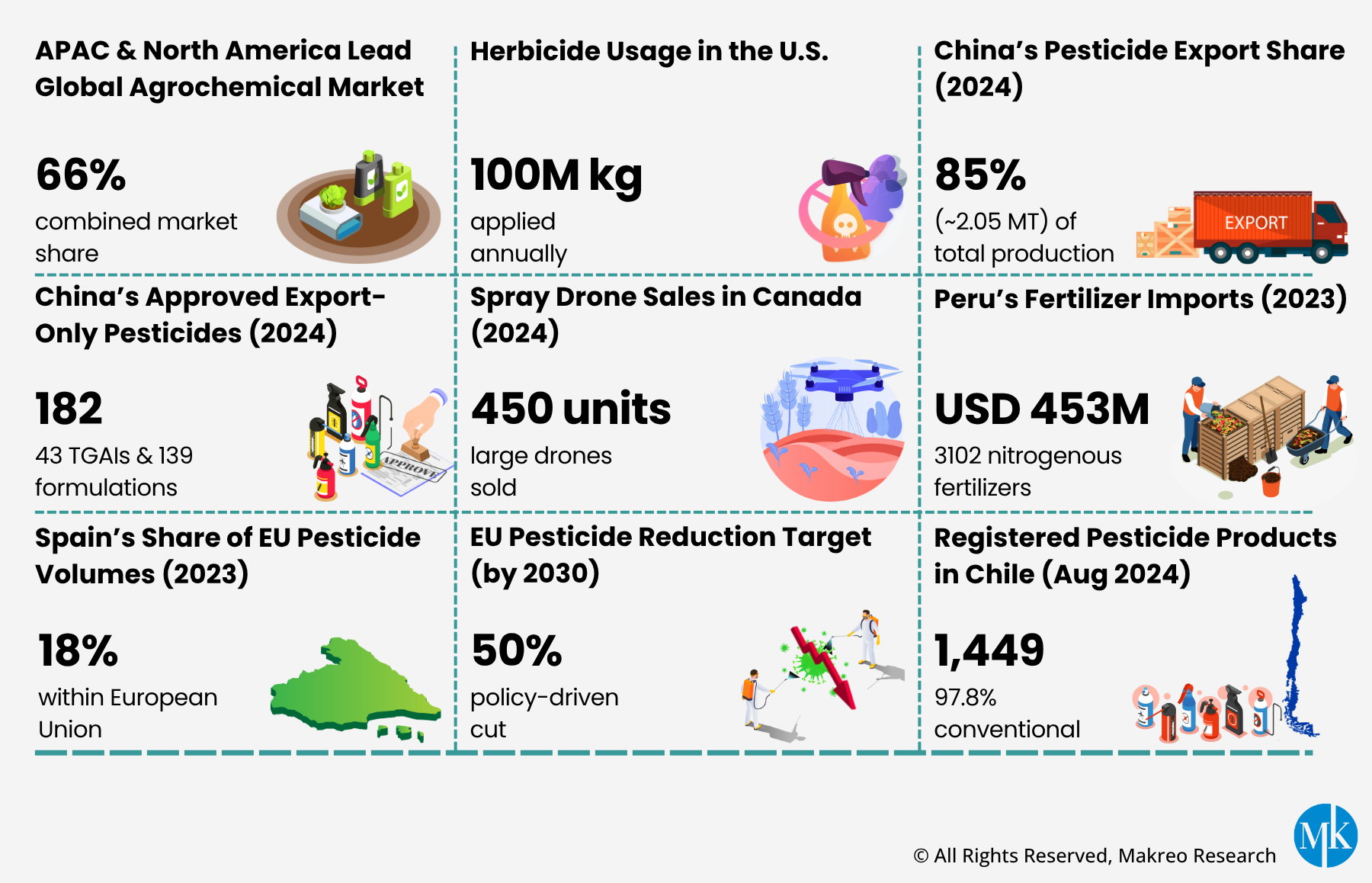
Global Agrochemical Industry Insights
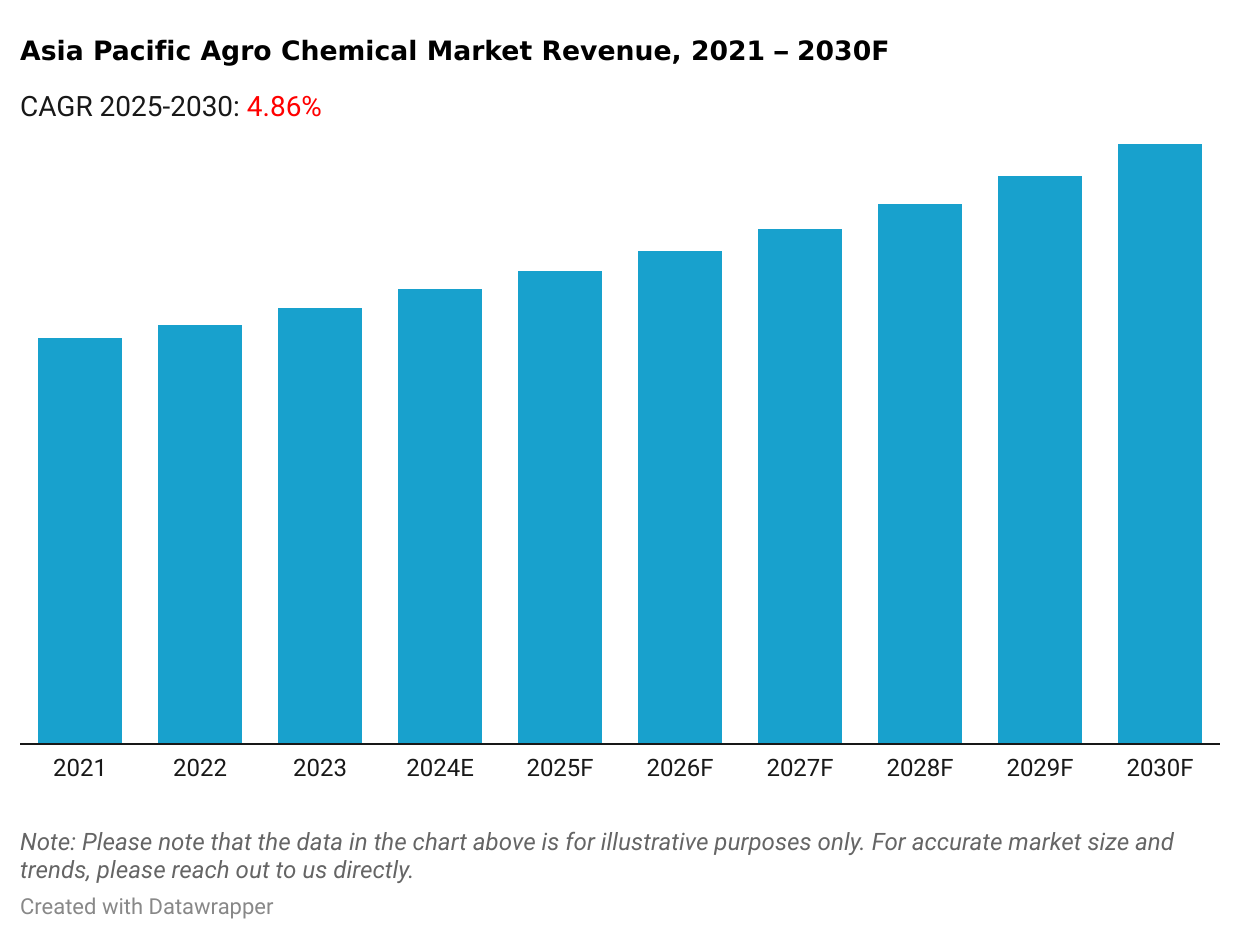
Export-Led Growth & Capacity Expansion in Agrochemical Market
-
India Pesticides Ltd: Revenue rose ~9–13% Y-o-Y in Q1 & Q3 FY’2025 (INR 224 cr and INR175 cr), backed by volume gains and backward integration.
-
Expansion of in-house intermediate (API) facilities reinforces India’s goal of import substitution under “Atmanirbhar Bharat”
-
PPQS registrations in H1’2024 include 333 technical and 83 formulations, adding 118
 Defensives.png)
Record Pesticide Approvals & Usage Trends in Brazil
-
Pesticide Approvals 2024: Brazil’s Ministry of Agriculture (MAPA) authorized 663 pesticide products, marking a 19% increase compared to 2023.
-
New Ingredients & Bio-Inputs: Approvals include 15 new active ingredients, 106 biological (bio-input) agents, and 541 generics, reflecting diversification in crop protection solutions.
-
Growth Trajectory: Since 2016, new pesticide registrations have shown consistent growth, remaining resilient despite pending 2023 pesticide regulations.
-
Pesticide Usage Volume (2023): Total application reached 1,424,588 tons, up 9.5% from 1,301,537 tons in 2022. Breakdown by type:
-
Herbicides: 47%
-
Fungicides: 22%
-
Insecticides: 22%
-
Seed treatments: 1%
-
Others: 8%
-
Scope of the Study for Global Agro Chemicals Market
Makreo Research has released a detailed report titled “Global Agrochemical Market Size and Forecast (2020–2030) – Analysis by Product Type (Fertilizers, Pesticides, Others), Fertilizer Type (Nitrogen, Phosphate, Potash, Specialty), Pesticide Type (Herbicides, Insecticides, Fungicides, Biologicals), Application, Crop Type, Distribution Channel, and Geography”, offering a comprehensive evaluation of the evolving agrochemical industry across key global regions. The report begins with an in-depth review of historical and current market performance, highlighting the following key aspects:
-
Impact of government policies and subsidies on fertilizer and pesticide markets
-
Production and consumption trends across major agrochemical categories
-
Pricing dynamics and investment flows influencing market competitiveness
-
Transition towards eco-friendly and sustainable agrochemical products
-
R&D activities shaping product innovation and market expansion opportunities
Global Agrochemical Market Drivers & Emerging Trends
This section outlines the key market forces shaping the industry’s trajectory, including:
-
Government Initiatives & Subsidy Programs driving adoption in agriculture
-
Technological Advancements in precision farming and agrochemical formulations
-
Shift Toward Biologicals and eco-friendly alternatives due to environmental concerns
-
Regional Consumption Trends in cereals, fruits, vegetables, and plantation crops
-
Investment & Trade Patterns influencing supply chains and pricing dynamics
Global Agrochemical Market Outlook & Strategic Insights
The report concludes with an assessment of structural challenges, market risks, and growth opportunities expected to influence the agrochemical industry through 2030. This section provides actionable insights for stakeholders, enabling informed decisions on product development, capacity expansion, and market entry strategies.
-
2020 – 2024: Past and Present Scenario
-
2024: Base Year of Study
-
2025 – 2030: Future Outlook
Global Agrochemical Market Segmentation
-
Fertilizers
-
Pesticides
-
Others
-
Nitrogen
-
Phosphate
-
Potash
-
Specialty Fertilizers
-
Herbicides
-
Insecticides
-
Fungicides
-
Biologicals
-
Others
-
Crop Protection
-
Soil Fertility Management
-
Others
-
Cereals & Grains
-
Fruits & Vegetables
-
Oilseeds & Pulses
-
Plantation Crops
-
Others
-
Direct Sales
-
Distributor/Dealer Network
-
Online Sales
Geography Assessed
-
Asia Pacific: China, India, Japan, Australia, Indonesia
-
North America: United States, Canada, Mexico
-
Europe: Germany, France, Italy, Spain, UK, Russia
-
South America: Brazil, Argentina, Chile, Peru
-
Middle East & Africa: Saudi Arabia, South Africa, Egypt, UAE, Iran
Global Agrochemical Market Outlook and Trends
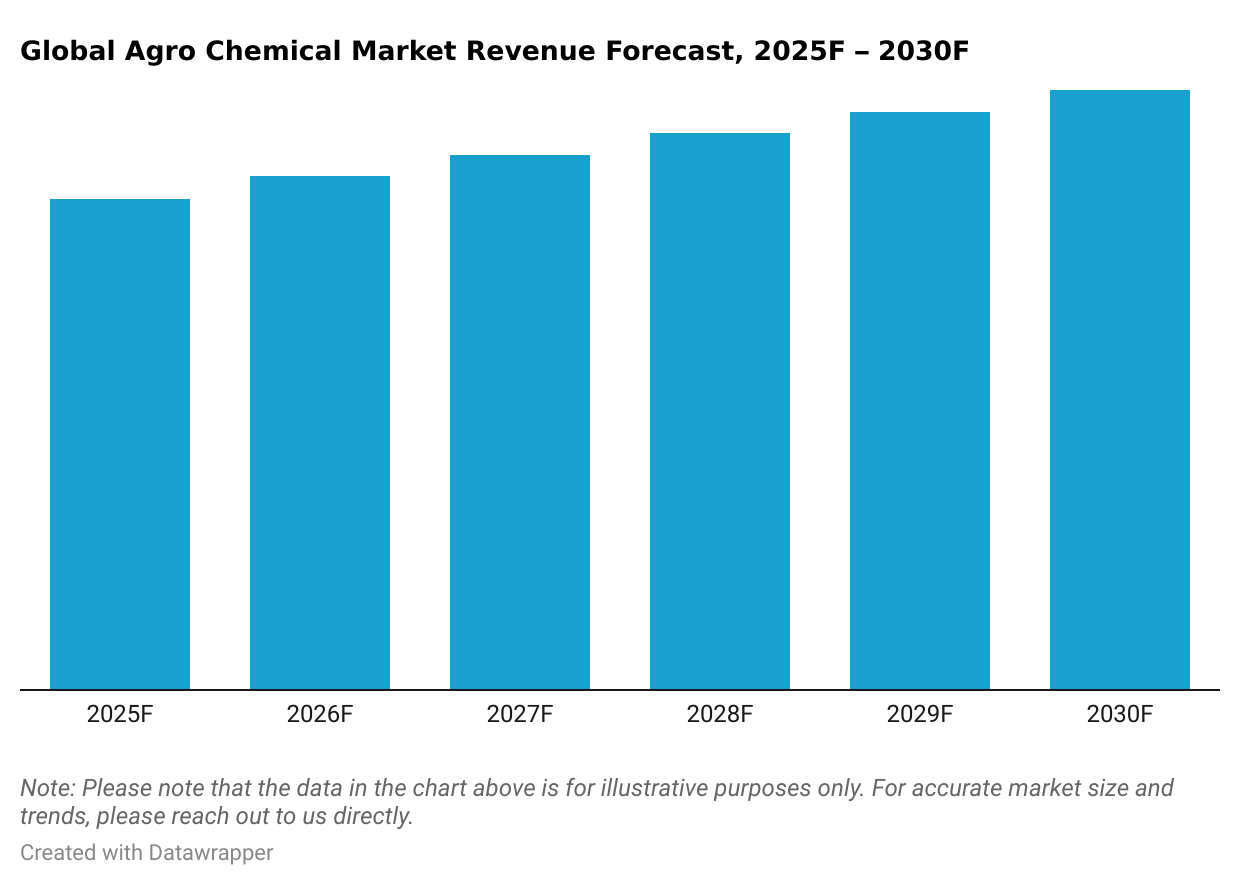
The global agrochemical market is projected to expand from approximately USD 253 billion in 2025 to around USD 309 billion by 2030, registering a steady CAGR of 4.09%.
Global Fertilizer Market Demand Forecast & Trends
Global fertilizer consumption is expected to exceed 200 million tonnes of nutrients in FY’2025, surpassing the previous peak reached in FY’2020, according to the International Fertilizer Association (IFA). However, growth is likely to slow, easing from around 4% in FY’2023 to just over 1% by FY’2027, reflecting market stabilization and slower global population growth.
Looking for a Section from Report? Start your Partial Purchase Request
Table of Contents
- 1.Research Methodology
- 1.1.Objective of the Study
- 1.2.Global Agro Chemical Market Definitions
- 1.3.Research Design and Procedure
- 1.4.Data Collection Methods
- 1.5.Analytical Framework
- 2.Global Agro Chemical Market Analysis
- 2.1.Global Agro Chemical Market Overview
- 2.2.Global Fertilizer Market Overview
- 2.2.1.Global Fertilizer Capability And Consumption
- 2.2.2.Global Fertlilizers Production by Product and Region
- 2.2.3.Global Fertlilizers Consumption by Type
- 2.2.4.Global Fertilizers Price Index
- 2.2.5.Global Fertlilizers Price Analysis by Type
- 2.3.Global Pesticides Market Overview
- 2.3.1.Shift Towards Biologicals and Eco-friendly Products in Pesticide Market
- 2.4.Global Agro Chemical Market Trends & Innovations
- 2.4.1.Global Agro Chemical R&D Pipelines, New Product Launches
- 2.4.2.Global Agro Chemical Market Past and Present Performance
- 2.4.3.Global Agro Chemical Market TAM, SAM, SOM
- 3.Global Agro Chemical Market Segmentation
- 3.1.Global Agro Chemical Market Segmentation
- 3.2.Global Agro Chemical Market Segmentation by Product Type
- 3.3.Global Agro Chemical Market Segmentation by Fertilizer Type
- 3.4.Global Agro Chemical Market Segmentation by Pesticide Type
- 3.5.Global Agro Chemical Market Segmentation by Application
- 3.6.Global Agro Chemical Market Segmentation by Crop Type
- 3.7.Global Agro Chemical Market Segmentation by Distribution Channels
- 3.8.Global Agro Chemical Market Segmentation by Region
- 4.Asia Pacific Agro Chemical Market Analysis
- 4.1.Asia Pacific Government Subsidies and Fertilizer Regulations for Agro Chemicals
- 4.2.Asia Pacific Agro Chemical Market Past and Present Performance
- 4.3.Asia Pacific Agro Chemical Market by Regions
- 4.4.China Agro Chemical Market Trends and Drivers
- 4.4.1.China Agro Chemical Market Production and Sales Trend
- 4.4.2.China Pesticide Innovation Trends
- 4.4.3.China Agro Chemical Market Price Analysis
- 4.4.4.China Agro Chemical Market Recent Investments and Development
- 4.5.India Agro Chemical Market Trends and Drivers
- 4.5.1.India Production and Consumption of Fertilizers
- 4.5.2.India Production and Consumption of Pesticides
- 4.5.3.India Top 10 States Consuming Pesticides
- 4.5.4.India Agro Chemical Market Pricing Analysis
- 4.5.5.India Agro Chemical Market Recent Investments and Development
- 4.6.Japan Agro Chemical Market Trends and Drivers
- 4.6.1.Japan Agro Chemical Market Shipment of Agricultural Chemicals
- 4.6.2.Japan Agro Chemical Market Price Analysis
- 4.6.3.Japan Agro Chemical Market Recent Investments and Development
- 4.7.Australia Agro Chemical Market Trends and Drivers
- 4.7.1.Australia Annual Expenditure by Farms on Agro Chemicals
- 4.7.2.Australia Agriculture (Pesticides) Product Sales
- 4.7.3.Australia Agro Chemical Market Recent Investments and Development
- 4.8.Indonesia Agro Chemical Market Trends and Drivers
- 4.8.1.Indonesia Agro Chemical Market Price Analysis
- 4.8.2.Indonesia Agro Chemical Market Recent Investments and Development
- 5.North America Agro Chemical Market Analysis
- 5.1.North America Government Subsidies and Fertilizer Regulations for Agro Chemicals
- 5.1.1.North America Agro Chemical Market Past and Present Performance
- 5.1.2.North America Agro Chemical Market by Regions
- 5.2.United States Agro Chemical Market Trends and Drivers
- 5.2.1.United States Manufacturers Value of Shipments
- 5.2.2.United States Agro Chemical Market Pricing Analysis
- 5.2.3.United States Agro Chemical Market Recent Investments and Development
- 5.3.Canada Agro Chemical Market Trends and Drivers
- 5.3.1.Canada Fertilizer Production Trends
- 5.3.2.Canada Fertilizer Shipments to Agriculture Markets
- 5.3.3.Canada Agro Chemical Market Pricing Analysis
- 5.3.4.Canada Agro Chemical Market Recent Investments and Development
- 5.4.Mexico Agro Chemical Market Trends and Drivers
- 5.4.1.Mexico Agro Chemical Market Recent Investments and Development
- 5.1.North America Government Subsidies and Fertilizer Regulations for Agro Chemicals
- 6.Europe Agro Chemical Market Analysis
- 6.1.Europe Government Subsidies and Fertilizer Regulations for Agro Chemicals
- 6.1.1.Europe Agro Chemical Market Past and Present Performance
- 6.1.2.Europe Agro Chemical Market by Regions
- 6.2.Germany Agro Chemical Market Trends and Drivers
- 6.2.1.Germany Agro Chemical Sales and Consumption Trends
- 6.2.2.Germany Agro Chemical Market Pricing Analysis
- 6.2.3.Germany Agro Chemical Market Recent Investments and Development
- 6.3.France Agro Chemical Market Trends and Drivers
- 6.3.1.France Agro Chemical Sales and Consumption Trends
- 6.3.2.France Agro Chemical Market Price Analysis
- 6.3.3.France Agro Chemical Market Recent Investments and Development
- 6.4.Italy Agro Chemical Market Trends and Drivers
- 6.4.1.Italy Agro Chemical Sales and Consumption Trends
- 6.4.2.Italy Agro Chemical Market Price Analysis
- 6.4.3.Italy Agro Chemical Market Recent Investments and Development
- 6.5.Spain Agro Chemical Sales and Consumption Trends
- 6.5.1.Spain Agro Chemical Market Trends and Drivers
- 6.5.2.Spain Agro Chemical Market Price Analysis
- 6.5.3.Spain Agro Chemical Market Recent Investments and Development
- 6.6.United Kingdom Agro Chemical Market Trends and Drivers
- 6.6.1.United Kingdom Agro Chemical Market Price Analysis
- 6.6.2.United Kingdom Agro Chemical Market Recent Investments and Development
- 6.7.Russia Agro Chemical Market Trends and Drivers
- 6.7.1.Russia Agro Chemical Market Recent Investments and Development
- 6.1.Europe Government Subsidies and Fertilizer Regulations for Agro Chemicals
- 7.South America Agro Chemical Market Analysis
- 7.1.South America Government Subsidies and Fertilizer Regulations for Agro Chemicals
- 7.1.1.South America Agro Chemical Market Past and Present Performance
- 7.1.2.South America Agro Chemical Market by Regions
- 7.2.Brazil Agro Chemical Market Trends and Drivers
- 7.2.1.Brazil Production and Sales of Fertilizers
- 7.2.2.Brazil Production and Sales of Pesticides
- 7.2.3.Brazil Agro Chemical Market Price Analysis
- 7.2.4.Brazil Agro Chemical Market Recent Investments and Development
- 7.2.5.Brazil Agro Chemical Market Price Analysis
- 7.3.Argentina Agro Chemical Market Trends and Drivers
- 7.3.1.Argentina Fertilizer Consumption and Import Trends
- 7.3.2.Argentina Agro Chemical Market Recent Investments and Development
- 7.4.Chile Agro Chemical Market Trends and Drivers
- 7.4.1.Chile Pesticide Sales Trends
- 7.4.2.Chile Agro Chemical Market Price Analysis
- 7.4.3.Chile Agro Chemical Market Recent Investments and Development
- 7.5.Peru Agro Chemical Market Trends and Drivers
- 7.5.1.Peru Import of Chemical Fertilizers
- 7.5.2.Peru Retail Sale Price of Nitrogen Fertilizers by Province
- 7.5.3.Peru Agro Chemical Market Recent Investments and Development
- 7.1.South America Government Subsidies and Fertilizer Regulations for Agro Chemicals
- 8.Middle East & Africa Agro Chemical Market Analysis
- 8.1.Middle East & Africa Government Subsidies & Fertilizer Regulations for Agro Chemicals
- 8.1.1.Middle East & Africa Agro Chemical Market Past and Present Performance
- 8.1.2.Middle East & Africa Agro Chemical Market by Regions
- 8.2.Saudi Arabia Agro Chemical Market Trends and Drivers
- 8.2.1.Saudi Arabia Agro Chemical Market Price Analysis
- 8.2.2.Saudi Arabia Chemical Market Recent Investments and Development
- 8.3.South Africa Agro Chemical Market Trends and Drivers
- 8.3.1.South Africa Agro Chemical Market Recent Investments and Development
- 8.4.Egypt Agro Chemical Market Trends and Drivers
- 8.4.1.Egypt Agro Chemical Market Price Analysis
- 8.4.2.Egypt Agro Chemical Market Recent Investments and Development
- 8.5.UAE Agro Chemical Market Trends and Drivers
- 8.5.1.UAE Agro Chemical Market Price Analysis
- 8.5.2.UAE Agro Chemical Market Recent Investments and Development
- 8.6.Iran Agro Chemical Market Trends and Drivers
- 8.6.1.Iran Agro Chemical Market Recent Investments and Development
- 8.1.Middle East & Africa Government Subsidies & Fertilizer Regulations for Agro Chemicals
- 9.Global Agro Chemical Market Challenges
- 10.Global Agro Chemical Market Opportunities
- 11.Global Agro Chemical Market Future Outlook
- 11.1.Global Agro Chemical Market Future Outlook
- 11.2.Global Agro Chemical Market Scenario Analysis
- 11.3.Global Agro Chemical Consumption Forecast by Regions
- Limitations of the Study
Related Reports - Agriculture