
U.S. Active Lifestyle Supplement Market 2026 - How Creatine, GLP-1 Nutrition, and TikTok Shop Are Redefining a $73 Billion Industry
U.S. supplement sales hit $73 billion in 2025. Sports nutrition grew 8%, creatine is reaching new consumers, and TikTok Shop is reshaping discovery. Here is what is driving market growth in 2026.
U.S. dietary supplement sales reached $72.88 billion in 2025 on 5.5% growth, with sports nutrition outpacing every other category. The consumer driving this growth is no longer the competitive athlete.
They are the 34-year-old CrossFit enthusiast ordering creatine gummies off TikTok Shop, the perimenopausal woman stacking protein for muscle preservation, and the teenager who swapped steroids for creatine because social media told them it was the smart move. Understanding who is actually buying active lifestyle supplements in America right now is not a demographics exercise. It is the most important product strategy question in the category.
Beyond $72.88 Billion - What's Fueling Active Supplement Growth?
Sports nutrition grew 8% that year, faster than vitamins, herbs, or meal replacements. Healthy aging posted the sharpest spike of all at 14.3% growth. Weight management was up 7.5%.
Those headline numbers matter. What matters more is where they are going.
A June 2026 NBJ report places the U.S. market on a trajectory toward $100 billion, with e-commerce channels, particularly TikTok Shop, cited as a fundamental structural shift in how consumers discover and purchase supplements. According to NBJ's 2026 consumer survey, 71% of supplement users and non-users alike say they view supplements as essential or important to daily health. Not helpful. Essential.
That is a different market than the one that existed five years ago.
The sports nutrition segment alone accounts for 15.6% of total U.S. supplement sales. Clear protein powders, creatine chews and gummies, and collagen-and-amino-acid shots are the format innovations NBJ identifies as driving the growth. Erika Craft, market research analyst at NBJ, noted that delivery format innovation is the primary accelerant in sports nutrition, not ingredient novelty.
Creatine's Shift from Sports Supplement to Everyday Wellness Product
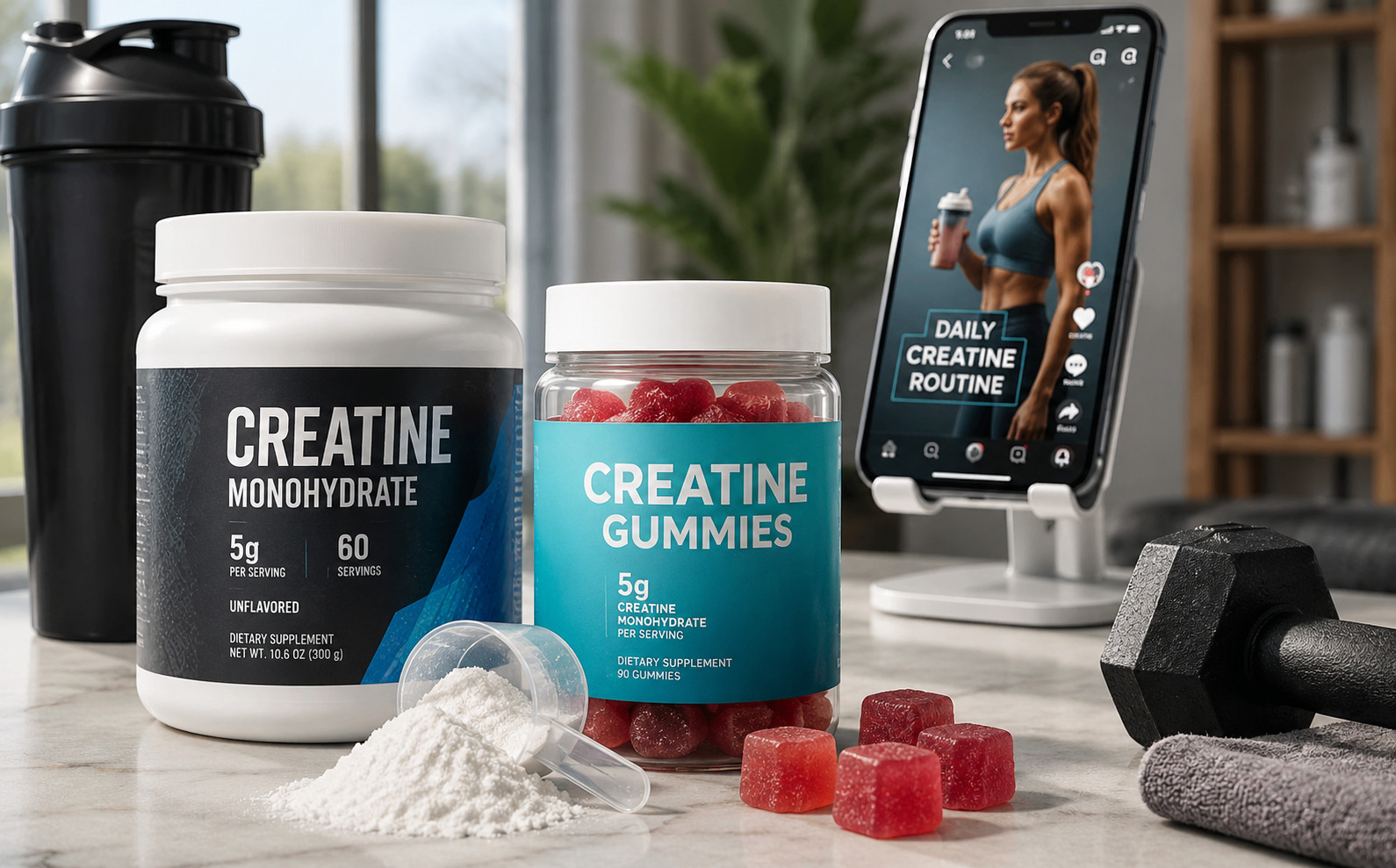
Creatine is no longer marketed solely as a performance supplement for athletes and bodybuilders. In January 2026, a CNN feature highlighted how TikTok has transformed creatine into a mainstream wellness product, particularly among millennials seeking benefits related to muscle recovery, mood, and overall health.
This shift reflects a broader change in positioning. Brands are increasingly promoting creatine for muscle health, cognitive function, bone density, healthy aging, and women's wellness. In April 2026, Zhou Nutrition introduced new creatine formulations, including Creatine for Her, designed specifically for female consumers. According to the company, women are becoming a major driver of creatine market growth.
The demographic expansion extends to younger consumers as well. A May 2026 study published in the Annals of Epidemiology found that creatine use among U.S. teenagers increased from 6.29% in 2001 to 9.68% in 2024. Between 2019 and 2024, usage among boys nearly doubled from 8.71% to 16.57%, while usage among girls rose from 1.22% to 3.27%. Researchers linked part of this growth to the rise of "looksmaxxing" culture, where appearance optimization, fitness, and supplementation are heavily promoted online.
Notably, adolescent steroid use declined during the same period, suggesting a shift toward legal and widely accessible performance-enhancing alternatives. While researchers continue to call for more evidence regarding long-term pediatric use, the commercial trend is evident: creatine's consumer base now spans women, active aging adults, wellness-focused consumers, and teenagers - far beyond its traditional bodybuilding audience.
Why Investors and Global FMCG Giants Are Betting on Active Nutrition
Create Wellness raised $20 million in April 2026 to expand its vegan creatine gummies and powdered drink portfolio, targeting three of the supplement industry's fastest-growing segments: GLP-1 nutrition, women's health, and longevity. The investment reflects growing confidence in brands that combine innovative delivery formats with broader consumer appeal beyond traditional sports nutrition.
Creatine gummies and chews are helping redefine the category by making supplementation more accessible to consumers who may find conventional powders inconvenient or intimidating. As a result, creatine is increasingly positioned as an everyday wellness product rather than a niche bodybuilding supplement.
Investor enthusiasm is also evident in industry consolidation:
-
Lactalis acquired Protein Works in June 2026, strengthening its position in the active nutrition segment.
-
Protein Works generates approximately £55 million in annual revenue and has sold over 500 million shakes globally through its direct-to-consumer business model.
-
The acquisition combines Protein Works' digital-first capabilities with Lactalis' dairy protein expertise and global distribution network.
-
Danone's acquisition of Huel signals growing interest in meal replacement and functional nutrition brands.
-
Nestlé's acquisition of Yfoods reflects increasing investment in functional foods and active lifestyle nutrition.
These transactions indicate that major FMCG companies now view active nutrition as a strategic growth category rather than a niche segment. Brands with strong consumer engagement, differentiated formats, and established DTC channels are becoming attractive acquisition targets for global food and nutrition companies.
How Consumers Discover and Buy Supplements Is Changing
The way consumers discover supplements has shifted significantly over the past few years, moving beyond traditional search engines and specialty retail stores.
-
TikTok Shop accounted for 3% of U.S. supplement sales in the year ending January 2026, growing 71% year-over-year.
-
Supplement sales through TikTok Shop surpassed $1 billion in 2025, highlighting the growing influence of social commerce.
-
Short-form creator content is reshaping purchasing behavior, with consumers increasingly relying on social proof and influencer recommendations rather than extensive product research.
-
Brands discovered through social media require different messaging, packaging, and call-to-action strategies than those competing through traditional search channels.
Another notable shift is the emergence of practitioner-led sales channels:
-
Practitioner-recommended supplements represented approximately 4% of total sales in 2026, up from a smaller share in 2021.
-
Growth in this channel is being driven by increasing interest in metabolic health, longevity, and GLP-1-related nutrition.
-
Although more resource-intensive to build, practitioner channels often deliver higher-value and higher-retention customers.
Consumer preferences are also evolving around trust and product validation:
-
Made in the USA certification ranked highest among consumers in 2026, influencing 48% of purchase decisions.
-
USDA Organic followed at 35%, while Non-GMO, Certified Gluten-Free, and USP Verification remained among the most sought-after certifications.
-
Third-party certifications are increasingly viewed as a baseline expectation rather than a premium differentiator in the active supplement market.
GLP-1 Users Are Creating New Demand for Active Supplements
The rapid adoption of GLP-1 medications is creating one of the most significant growth opportunities in the active supplement market.
-
52% of U.S. health and nutrition experts identified expanded GLP-1 use as the leading health trend for 2026, ahead of Food as Medicine and wearable technology.
-
While GLP-1 drugs support weight loss by reducing calorie intake, they can also increase the risk of protein and micronutrient deficiencies.
-
Studies suggest users may experience 25% to 40% muscle mass loss over 8 to 16 months, creating demand for muscle-preservation solutions.
This nutritional gap is driving increased interest in:
-
Protein supplements
-
Creatine
-
Muscle preservation and recovery products
-
Targeted micronutrient formulations
Recognizing this opportunity, Create Wellness raised $20 million in 2026 to expand products specifically positioned around GLP-1 user nutrition, women's health, and longevity.
Product innovation is also shifting to meet evolving consumer needs:
-
FrieslandCampina Ingredients and Lonza Capsugel identified protein as the most important nutrient in new product development for 2026 and beyond.
-
Fiber emerged as another key focus area, driven by the TikTok-led "fiber-maxxing" trend.
-
Consumer interest in fiber nearly doubled year-over-year, placing it among the top five nutrients Americans want to increase in their diets.
The active lifestyle supplement consumer is also evolving. Today's buyers are not solely focused on athletic performance. Increasingly, they are seeking solutions to:
-
Lose weight while preserving muscle mass
-
Support healthy aging and mobility
-
Improve recovery and daily wellness
-
Enhance cognitive performance and resilience
As a result, supplement brands are repositioning products beyond sports performance toward broader health, longevity, and metabolic wellness benefits.
The Consumer Insight Gap Many Supplement Brands Still Miss
Despite strong category growth and rising investment, many supplement brands still lack a deep understanding of why consumers buy, not just what they buy.
Different consumer groups often respond to different value propositions. For example, purchase drivers can vary significantly between:
-
GLP-1 users seeking muscle preservation
-
Teen consumers influenced by fitness and appearance trends
-
Women focused on bone health and healthy aging
-
Active adults using creatine for recovery and cognitive support
As a result, the same formulation may require entirely different positioning. A product marketed for muscle building can follow a different purchase path than one promoted for metabolic health, healthy aging, or cognitive performance.
This makes consumer-focused research increasingly important, including:
-
Concept testing to evaluate product-market fit
-
Claim validation to identify messages that drive purchase intent
-
Pack communication studies to assess packaging effectiveness
-
Shelf performance research to understand real-world competitiveness
The rise of e-commerce and social commerce has made these insights even more valuable. A supplement that performs well in specialty retail may not achieve the same success on TikTok Shop, where purchasing decisions are often influenced by a creator's 30-second explanation rather than in-store comparisons.
For brands entering or expanding within the U.S. active supplement market, key research questions include:
-
Which claims generate the highest purchase intent among GLP-1 users?
-
How do consumers respond to different formats such as gummies, powders, and capsules?
-
Which certifications most influence purchasing decisions across retail and DTC channels?
-
Is current brand communication driving trial, or creating confusion?
Understanding these factors can be the difference between participating in market growth and successfully capturing it.
U.S. Active Lifestyle Supplement Market Entry Strategy - Why Consumer Research Matters
Understanding that the U.S. active lifestyle supplement market is growing is not commercially useful on its own. The question that drives actual decisions is where within this market a new entrant or expansion-stage brand can build durable competitive position.
That requires knowing how consumers in specific target cohorts currently perceive the category you intend to enter, what claims architecture creates the clearest purchase path for your intended end user, and where your product will sit on shelf or screen relative to competitors whose positioning is already established.
Makreo Research and Consulting supports brands pursuing market entry, expansion, or new product development in the active supplements and nutraceuticals space through custom research and consumer market surveys. The scope covers concept testing to assess early-stage product and positioning hypotheses, pack communication studies to evaluate whether packaging delivers the intended message at point of decision, claim validation to identify which product claims drive purchase intent in target segments, and shelf performance research to understand how products compete in their actual retail or digital context.
For companies with a specific launch target in sports nutrition, weight management, or the healthy aging and active wellness adjacency, we work from ideation through to competitive benchmarking, using primary data from U.S. consumer segments that are directly relevant to your business questions.
This applies equally to companies entering the U.S. market from international positions, companies expanding active supplement lines into adjacent categories such as GLP-1 support or women's health, and companies trying to understand why an existing product is not performing against a category that the market data says should be growing.
Our Global Active Lifestyle Supplement Market and Forecast to 2030 report covers growth by application (Sports Supplement, General Health and Wellness, Weight Management), product form, distribution channel, end user, and geography, including the U.S. in regional context. If you are building a market entry thesis or validating an expansion hypothesis, the report provides the strategic baseline. Primary research provides what the numbers cannot: consumer intent, perception gaps, and the specific product and communication decisions that will determine whether your entry succeeds.
Access the full report: Global Active Lifestyle Supplement Market and Forecast to 2030 (Request Free Sample Report)
To discuss custom research on the U.S. active supplement market, contact us at [email protected].|
Frequently Asked Questions:
What is driving the growth of the U.S. active lifestyle supplement market in 2026?
Growth is being driven by multiple factors, including sports nutrition (8% growth in 2025), healthy aging (14.3% growth), product format innovation, and expanding consumer demographics. Creatine gummies, clear protein powders, and RTD products are attracting new users, while women, active aging adults, and GLP-1 users are broadening the consumer base. Social commerce platforms such as TikTok Shop are also accelerating product discovery and purchase. According to NBJ's 2026 survey, 71% of U.S. consumers consider supplements essential or important to daily health.
Why is creatine gaining so much attention in 2026?
Creatine's appeal now extends far beyond traditional sports performance. Growing research supporting its benefits for muscle health, cognitive function, healthy aging, and women's wellness has expanded its audience. Demand is rising among women, active aging consumers, and teenagers, while gummy and chewable formats have improved accessibility. Brands are increasingly positioning creatine around longevity, recovery, and overall wellness rather than solely bodybuilding.
What opportunities does the GLP-1 era create for active supplement brands?
GLP-1 medications can significantly reduce calorie intake, increasing the risk of protein deficiencies and muscle loss. Some studies estimate muscle mass reductions of 25% to 40% over 8 to 16 months without nutritional intervention. This is creating demand for protein supplements, creatine, and targeted nutrition products that support muscle preservation and recovery. Consequently, GLP-1 nutrition is emerging as a major growth opportunity within active nutrition.
How can brands determine whether their products and claims will resonate with consumers?
Category growth alone does not guarantee product success. Brands need primary research to understand consumer preferences, purchase drivers, and communication effectiveness. Methods such as concept testing, claim validation, pack communication studies, and shelf performance research help identify which product attributes, formats, and messages generate the strongest purchase intent across different consumer segments and sales channels.
Makreo Research and Consulting provides global market intelligence reports, custom research, and consumer market surveys across the global nutraceutical, functional food, and health and wellness sectors. To discuss your market entry, expansion strategy, or competitive benchmarking needs, contact us.
Active lifestyle supplement market report, US sports nutrition market research 2026, Global active lifestyle supplement market forecast, Active supplement market size and share, Sports nutrition market analysis USA, Nutraceuticals market research report, Weight management supplement market forecast, Dietary supplement market intelligence report, Active nutrition market forecast 2030, Sports supplement market segmentation, Creatine market research report, GLP-1 supplement market opportunity, US supplement market competitive landscape, Active lifestyle supplement market by application, Sports nutrition market by distribution channel, Dietary supplement market by end user, Active supplement market by product form, US nutraceuticals market forecast 2030, Healthy aging supplement market report, Sports nutrition market CAGR 2026, Active lifestyle supplement market geography, Supplement market custom research, US weight management supplement market size, Global sports nutrition market forecast, Active supplement market emerging opportunities